THE CLASSIC COLLECTION✦An outlaw’s diary: the CommuneCLASSIC FREE BOOKS
An outlaw’s diary: the Commune
Cécile Tormay
THE CLASSIC COLLECTION · 1908
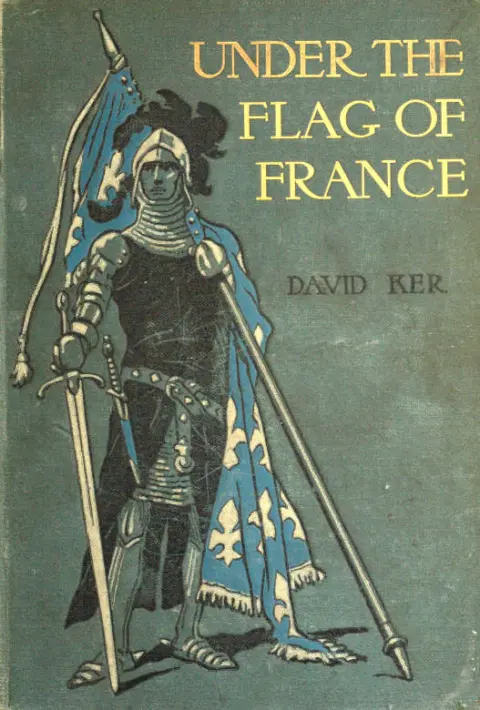
"Under the Flag of France: A Tale of Bertrand du Guesclin" by David Ker is a historical novel written in the early 20th century. The book centers around Bertrand du Guesclin, a young boy from Brittany in the 14th century, who faces ridicule due to his physical appearance but is destined for greatness. The narrative explores themes of heroism, destiny, and the struggles of the underdog as it unfolds during a tumultuous period marked by conflict between France and England. The opening of the tale introduces readers to a fourteen-year-old Bertrand, who is grappling with feelings of despair over his perceived ugliness and his longing for acceptance. Set against a serene backdrop of the Breton countryside, Bertrand's emotional turmoil leads to an inner confrontation as he expresses a wish for death due to his family's disdain. However, his fortunes begin to shift when he encounters a beautiful song that resonates deeply with him, followed by a fateful encounter where he demonstrates great valor by saving a simpleton from a wolf attack. This moment establishes Bertrand's character and foreshadows the greater legacy that awaits him as a defender of the weak. Additionally, the presence of Brother Michael, a holy monk who assures Bertrand of his destined greatness, paints a vivid picture of Bertrand's journey from a tormented youth to a future champion of France.
Introduction adapted from the source catalogue; source summaries may be automatically generated.
Free to read · English · 85,354 words · No account needed
MAKE TIME FOR A GOOD BOOK
On by default. Untick to stop anonymous reading totals. Each page counts after 10 seconds in view. How this works.
Anonymous counting is on unless you have switched it off.
“One night,” he resumed at length, “we were at the height of our mad revels, shouting and brawling over our liquor, singing ribald songs, and defying Heaven itself with mockery and blasphemy, when all at once there stood in the midst of us, full in the light of the fire—no man could tell whence or how—a little child clothed in white, with long, fair hair, and a face like that of the Holy Child in the great minster-church of Rouen.
“Then we all shrank back affrighted, thinking no less than that this must be our Lord Himself, appearing to us in the same form in which He first came on earth; and all the black deeds we had done rose up at once in our memory, blacker than ever.
“The child came forward as boldly as if it had no fear of our grim faces and bare blades, and, holding out her little hands to us, said pleadingly—
“‘Oh, please come quick to help my father; he is sore hurt!’
“Then I plucked up heart somewhat, seeing that it was but a little maid of mortal mould; and I made shift to ask—
“‘Who is thy father, fair child?’
“‘The Sire Robert de Raguenel,’ she replied.”
“Raguenel!” echoed Du Guesclin. “Then this child was the Demoiselle
Tiphaine herself!”
“Even she, and no other. Then she caught my wrist with both her tiny hands, as if to drag me with her by main force, and cried impatiently—
“‘Quick—quick to my father! I have not strength to drag the horse off
him myself!’
“We thought of our compact that the Evil One should carry us away if we ever spared knight or noble. We looked at each other, and at the child’s pleading face, and then—we were all hurrying to her father’s aid, one faster than another.”
“Well done! well done!” shouted the boy-noble, excitedly. “And what
befell next?”
“We found there an armed knight entangled beneath his steed, and all alone; for, as we learned later, he had outridden his train, and, losing his way in the darkness with but two followers, had got deeper into the wood instead of out. Then his horse, taking fright at the fire-glow and the din of our wild ado, had fallen with him and kept him down, while his two retainers, thinking themselves assailed by the forest-demons, had left their lord and taken flight, like chicken-hearted dastards as they were.”
“So, then,” cried Bertrand, with sparkling eyes, “this child came alone into the midst of a band of armed robbers to seek help for her father! In good truth, ’twas as bold a deed as ever was done!”
Your reading position is saved on this browser. Take it to another device with a library code. Reading pages adapt to text, rather than matching a printed edition.
BEHIND THE BOOK
This eBook is for the use of anyone anywhere in the United States and most other parts of the world at no cost and with almost no restrictions whatsoever. You may copy it, give it away or re-use it under the terms of the Project Gutenberg License included with this eBook or online at www.gutenberg.org. If you are not located in the United States, you will have to check the laws of the country where you are located before using this eBook. Read the source licence.
The original source file, including credits and licence, is retained by this library. Request an original-format copy at no charge. Please include the book title and Project Gutenberg identifier #46855.
KEEP YOUR CURIOSITY GOING
Cécile Tormay

Moritz Busch
Coulson Kernahan
John L. Ransom

Maurice Baring
Frances Wright