THE CLASSIC COLLECTION✦An outlaw’s diary: the CommuneCLASSIC FREE BOOKS
An outlaw’s diary: the Commune
Cécile Tormay
THE CLASSIC COLLECTION · 1908
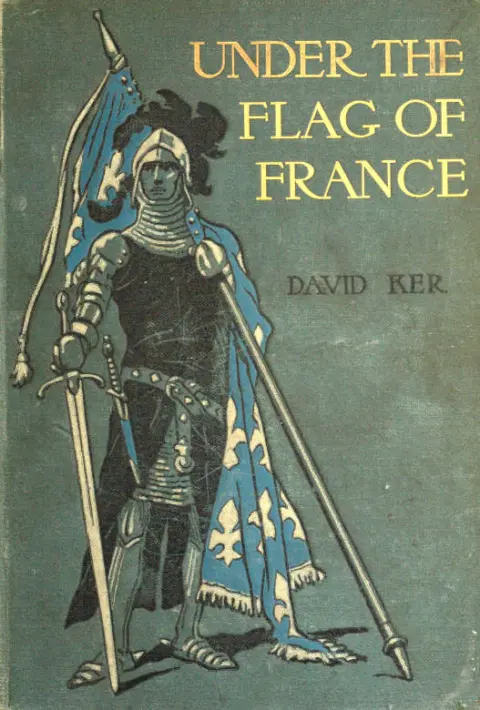
"Under the Flag of France: A Tale of Bertrand du Guesclin" by David Ker is a historical novel written in the early 20th century. The book centers around Bertrand du Guesclin, a young boy from Brittany in the 14th century, who faces ridicule due to his physical appearance but is destined for greatness. The narrative explores themes of heroism, destiny, and the struggles of the underdog as it unfolds during a tumultuous period marked by conflict between France and England. The opening of the tale introduces readers to a fourteen-year-old Bertrand, who is grappling with feelings of despair over his perceived ugliness and his longing for acceptance. Set against a serene backdrop of the Breton countryside, Bertrand's emotional turmoil leads to an inner confrontation as he expresses a wish for death due to his family's disdain. However, his fortunes begin to shift when he encounters a beautiful song that resonates deeply with him, followed by a fateful encounter where he demonstrates great valor by saving a simpleton from a wolf attack. This moment establishes Bertrand's character and foreshadows the greater legacy that awaits him as a defender of the weak. Additionally, the presence of Brother Michael, a holy monk who assures Bertrand of his destined greatness, paints a vivid picture of Bertrand's journey from a tormented youth to a future champion of France.
Introduction adapted from the source catalogue; source summaries may be automatically generated.
Free to read · English · 85,354 words · No account needed
MAKE TIME FOR A GOOD BOOK
On by default. Untick to stop anonymous reading totals. Each page counts after 10 seconds in view. How this works.
Anonymous counting is on unless you have switched it off.
“‘How fares my justice?’ said our king,
‘And my sheriff also?’
‘Sir, they be slain without leasing,
And many an officer mo’ (more).
“‘Who hath them slain?’ said then our king.
‘Anon that tell thou me.’
‘Adam Bell, and Clym of the Clough,
And William of Cloudeslee.’
“‘Alas for ruth,’ said then our king,
‘My heart is wondrous sore;
I had rather than a thousand pound
I had known of this before!
“‘For I have granted them my grace,
And that forthinketh (repenteth) me;
But had I known all this before,
They had been hanged all three.’
“The king he opened the letter anon,
Himself he read it tho (then)
And he found how these three outlaws had slain
Three hundred men and mo’.
“First the justice, and the sheriff,
And the mayor of Carlisle town
Of all the constables and catchipolls
Alive were left not one.
“The bailiffs and the beadles too,
And sergeants of the law,
And forty foresters of the fee
These outlaws had y-slaw (slain)
“And broke his parks, and slain his deer,
Over all they chose the best;
So perilous outlaws as they were
Walked not by east nor west.
“When as our king this letter had read,
In heart he sighed full sore;
‘Take up the table,’ anon he bade,
‘For now I may eat no more.’”
Just at this point (though many of the listeners knew the song as well as the minstrel himself) the growing laughter swelled into a full-mouthed, side-shaking roar that made the air ring. As it died away, a big spearman called out to the singer—
“Stand to it, Ralph! Here comes one of these French minstrels to have a bout with thee. At him boldly, for the honour of Old England!”
Into the circle of light cast by the fire came a thin, small, rather flighty-looking man in minstrel garb, with a lute slung at his back, beside whom stalked a huge form, a full head and shoulders taller, with a shaggy black beard, and clothes so tattered and grimed as to suggest a charcoal-burner’s shirt.
“What ho, friends! who are ye? The Wandering Jew and his brother, with the dust of ages on your clothes?” cried a big archer, winking to his comrades to watch how he would “chaff” the new-comers.
“Thou hast guessed it, good sir,” said the smaller man in French, with an impish grin; “we are, indeed, the Wandering Jew and his brother, who——Ha! what see I? that face—those eyes——Brother, brother! our weary penance is ended at last!”
And, throwing his arms round the bantering archer’s neck, he uttered a series of joyful howls worthy of a scalded cat.
Your reading position is saved on this browser. Take it to another device with a library code. Reading pages adapt to text, rather than matching a printed edition.
BEHIND THE BOOK
This eBook is for the use of anyone anywhere in the United States and most other parts of the world at no cost and with almost no restrictions whatsoever. You may copy it, give it away or re-use it under the terms of the Project Gutenberg License included with this eBook or online at www.gutenberg.org. If you are not located in the United States, you will have to check the laws of the country where you are located before using this eBook. Read the source licence.
The original source file, including credits and licence, is retained by this library. Request an original-format copy at no charge. Please include the book title and Project Gutenberg identifier #46855.
KEEP YOUR CURIOSITY GOING
Cécile Tormay

Moritz Busch
Coulson Kernahan
John L. Ransom

Maurice Baring
Frances Wright