THE CLASSIC COLLECTION✦Found in the Philippines: The Story of a Woman’s LettersCLASSIC FREE BOOKS
Found in the Philippines: The Story of a Woman’s Letters
Charles King
THE CLASSIC COLLECTION · 1894
"Under Fire" by Charles King is a novel written in the late 19th century. The narrative centers around Captain Wilbur Cranston, a soldier who is preparing to return to the frontier after a leave of absence at home, where he was reunited with his family and old friends. The story explores themes of military duty, family ties, and the contrast between civilized life and the harsh realities of army life on the American frontier. The opening of the book sets the scene with Captain Cranston's bittersweet departure from a bustling Western city, filled with fond memories of his time spent with his charming wife and their two energetic boys. As the narrative unfolds, Cranston's internal conflicts about his duty and his family's reactions to his departure become evident. The introduction of characters such as Mrs. Barnard, who seeks Cranston's assistance regarding her troubled son, hints at the wider social dynamics and personal struggles that will intersect with military life. The initial chapters vividly depict the disconnection between the glamorous life left behind and the challenging world awaiting him on the frontier, setting the stage for the unfolding drama as they grapple with personal and societal challenges amidst the backdrop of impending military conflict.
Introduction adapted from the source catalogue; source summaries may be automatically generated.
Free to read · English · 142,767 words · No account needed
MAKE TIME FOR A GOOD BOOK
On by default. Untick to stop anonymous reading totals. Each page counts after 10 seconds in view. How this works.
Anonymous counting is on unless you have switched it off.
For nearly a fortnight there was sunshine at the agency,--sunshine and prosperity, and then came manifestation of that pride which goeth before destruction. Because there were more of the Ogallalla tribe than of others herded there when originally established the agency on the Chasing Water had been given this name, but after the stirring events of the winter and the revolt of Red Dog, it happened that rather more of the Minneconjou and not a few of the Uncapapa backsliders were gathered among the grimy tepees. Two Lance and his people, having made their way to the fold of Spotted Tail, were permitted to abide with him as a result of the earnest plea made in their behalf by the general in command of the department. Young-Man-Afraid-of-His-Horses and some other chiefs of the wiser--the peace element, had also been transferred, and such Brules as remained under the wing of McPhail were of the class old Spot denounced as "devil-dreamers," men who would stir up a row in any community, men he wouldn't entertain among the lodges of his people. The Uncapapas were of Sitting Bull's own tribe, malcontents almost to a man, "mouth-fighters" who, like some recent exponents of Southern oratory, were far more conspicuous after than during the battle days, and between these breeders of devilment and the renegade Brules, there lay the village of Red Dog's reviving band,--three gangs of aboriginal jail-birds who looked upon Red Dog's release as virtual confession on part of the White Father that he dare not keep him, and they were only waiting until the grass sprouted and their ponies could wax fat and strong to take the war-path for another summer, and take all they could carry with them when they did it. April had come. The last vestiges of ice and snow were slipping away out of the broad, sun-kissed valley. Up at the cantonments a stalwart infantry major had a battalion of the Fortieth out along the prairie slopes for over two hours every morning, drilling, drilling, drilling, until officers and men came double-quicking in at 11.30, exuding profanity and perspiration from every pore, but owning up to it, after a rub down and a rest and a hearty dinner, that old Alex was a boss soldier who knew how to take the conceit out of the cavalry, even if he did nearly have to run his bandy-legs off, and the lean shanks of his men, in doing it. The cavalry major was far less energetic. He sent his troops out under their respective chiefs, and ambled around among them after a while making audible comment to this captain and that, but never drawing sabre himself. Cranston had a capital troop and was a born cavalryman who needed neither coach nor spur and there were others nearly as good as he, but each worked on his own system, whereas the doughboys pulled together. Not to be outdone, Davies laid out a riding-school back of the agency corral, and every day had his detachment out for a vigorous mounted gymnastic drill as well as another at platoon exercise. He was wiry, athletic, and an enthusiastic teacher, and presently it was noted that the Indians, who for a time hovered impartially all over the prairies and slopes, watching the manoeuvres of the soldiers, began gathering in daily augmenting crowds about the agency grounds, frequently applauding the leaping and hurdling, but only too readily jeering the awkwardness of some of the men in mounting and dismounting at the gallop, a thing they had learned and practised since early boyhood. Then Cranston and the other troop leaders got to working down toward the agency and, during the rests, moving close up to the corral and watching the riding-school. It was capital work, said Cranston and his contemporaries, though some jealous youngsters used to say to their cynical selves that Parson probably "put up a prayer-meeting as a stand-off." McPhail and his people began to come out and look on, and Mira to watch from the window, for she still trembled and shrank at sight of the savage painted faces and glittering eyes of the Indians, and equally shrank from meeting the Cranstons. But presently Mrs. Cranston and other women came driving over in their ambulances, the generic term by which army carriages were known in the days when a provident Congress first began curtailing the transportation facilities of the line where, sous entendu, all great reformatory experiments were tried, the staff being, of course, beyond even congressional suspicion, and so it resulted that about eleven o'clock every fine day the biggest gathering of the people, red and white, in all the broad valley of the Chasing Water, as far east as its confluence with the shadowy Niobrara and thence to the shores of the Big Muddy, was that to be found about the rectangular space where the Parson held forth to his faithful squad.
Your reading position is saved on this browser. Take it to another device with a library code. Reading pages adapt to text, rather than matching a printed edition.
Charles King

Charles King
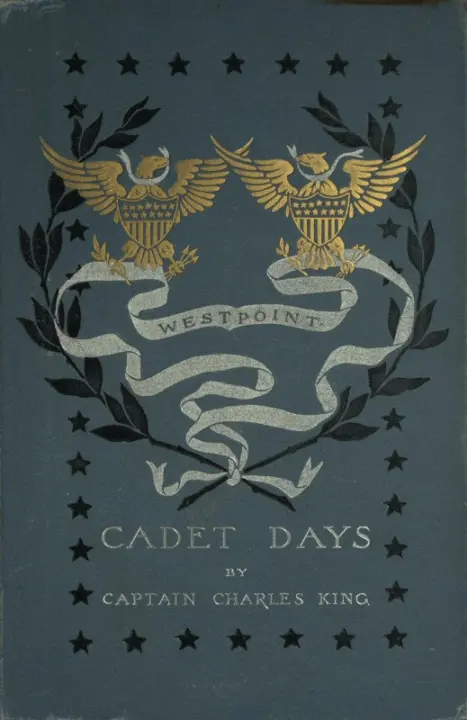
Charles King

Charles King
BEHIND THE BOOK
This eBook is for the use of anyone anywhere in the United States and most other parts of the world at no cost and with almost no restrictions whatsoever. You may copy it, give it away or re-use it under the terms of the Project Gutenberg License included with this eBook or online at www.gutenberg.org. If you are not located in the United States, you will have to check the laws of the country where you are located before using this eBook. Read the source licence.
The original source file, including credits and licence, is retained by this library. Request an original-format copy at no charge. Please include the book title and Project Gutenberg identifier #20101.
KEEP YOUR CURIOSITY GOING
Cécile Tormay

Moritz Busch
Coulson Kernahan
John L. Ransom

Maurice Baring
Frances Wright