
Uncle Sam’s Boys on Field Duty; or, Winning Corporal’s Chevrons
H. Irving (Harrie Irving) Hancock
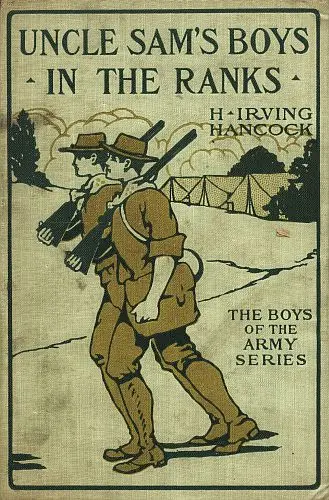
THE CLASSIC COLLECTION · 1910
"Uncle Sam's Boys in the Ranks; or, Two Recruits in the United States Army" by H. Irving Hancock is a novel written in the early 20th century. The story focuses on two young boys, Hal Overton and Noll Terry, who are eager to enlist in the United States Army, driven by a sense of patriotism and adventure. As they navigate the challenges of military life, they encounter a mix of camaraderie and the harsh realities of the discipline that comes with serving in the army. At the start of the book, we are introduced to the boys and their friends in a small New Jersey town, highlighting their differing opinions about soldiers and patriotism. After a heated debate, Hal and Noll resolve to enlist, despite the criticisms from others. The opening scenes depict their journey to the recruiting office, interactions with various characters, including a bully named Tip Branders, and their first experiences as recruits. Through humor and friendship, the narrative sets the stage for their transformation from inexperienced boys into disciplined soldiers, leading to adventures that await them in the army.
Introduction adapted from the source catalogue; source summaries may be automatically generated.
Free to read · English · 47,181 words · No account needed
MAKE TIME FOR A GOOD BOOK
On by default. Untick to stop anonymous reading totals. Each page counts after 10 seconds in view. How this works.
Anonymous counting is on unless you have switched it off.
"Why, we came here early in April and it's now past the middle of June," Hal went on. "Let me think. Why, it's just ten weeks to a day since we took the oath to serve the Flag."
"And a rook generally puts in three months here----" Noll began, when a soldier, close to the door of the squad room, called out:
"Attention!"
Instantly every man in the room rose and wheeled about, standing at the position of the soldier. An officer, followed by the first sergeant of A Company, was entering the room.
As the officer came to a halt the first sergeant called:
"Overton and Terry, step forward."
Hal and Noll approached the officer and the sergeant, then again stood at attention. The officer was the post adjutant, and now he spoke:
"Overton and Terry, your company commander is satisfied that you are now sufficiently instructed to go to your regiment. We have a draft for two men for the first battalion of the Thirty-fourth Infantry, stationed at Fort Clowdry, in the Colorado mountains. If you have any objections to that regiment, or station, I will listen to them."
"Colorado will very exactly suit me, sir, thank you," Hal replied, his pleasure showing in his face.
"And me also, sir," added Noll.
"Very good, then. You will both report to Sergeant Brimmer, on his return, that you are released from further duty here. You will report at my office at half-past two this afternoon for your instructions. That is all. Sergeant, follow me to the next squad room."
The instant that the door closed Hal and Noll began to execute a swift little dance of joy, while the other rookies looked on in grinning congratulation.
"What sort of regiment is the Thirty-fourth, Sergeant?" asked Hal, after he and Noll had reported to Sergeant Brimmer.
"Just like any other infantry regiment," replied Sergeant Brimmer. "They're all alike. The only difference is in the station, and the station of each infantry command is usually changed every two or three years. For that matter, though you join in the Rockies, your regiment, two months later, may be ordered to the Philippines."
That afternoon Hal and Noll reported at the post adjutant's office. Here they were provided with their railway tickets through to their new station, and were handed each a sum of money in place of rations. In addition they were granted four days' furlough before starting, this furlough to be spent at their homes. Then, each carrying his canvas case containing his surplus outfit, the young recruits started down to the dock to take the three-thirty boat to New York City.
Your reading position is saved on this browser. Take it to another device with a library code. Reading pages adapt to text, rather than matching a printed edition.
H. Irving (Harrie Irving) Hancock

H. Irving (Harrie Irving) Hancock

H. Irving (Harrie Irving) Hancock

H. Irving (Harrie Irving) Hancock
BEHIND THE BOOK
This eBook is for the use of anyone anywhere in the United States and most other parts of the world at no cost and with almost no restrictions whatsoever. You may copy it, give it away or re-use it under the terms of the Project Gutenberg License included with this eBook or online at www.gutenberg.org. If you are not located in the United States, you will have to check the laws of the country where you are located before using this eBook. Read the source licence.
The original source file, including credits and licence, is retained by this library. Request an original-format copy at no charge. Please include the book title and Project Gutenberg identifier #27680.
KEEP YOUR CURIOSITY GOING
Coulson Kernahan

Maurice Baring
Frances Wright
Cécile Tormay

Frederic Jesup Stimson

W. H. P. (William Henry Pope) Jarvis