
Uncle Sam’s Boys on Field Duty; or, Winning Corporal’s Chevrons
H. Irving (Harrie Irving) Hancock
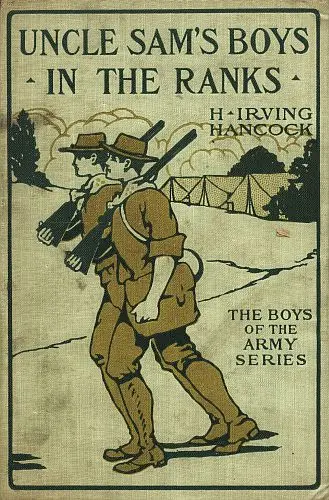
THE CLASSIC COLLECTION · 1910
"Uncle Sam's Boys in the Ranks; or, Two Recruits in the United States Army" by H. Irving Hancock is a novel written in the early 20th century. The story focuses on two young boys, Hal Overton and Noll Terry, who are eager to enlist in the United States Army, driven by a sense of patriotism and adventure. As they navigate the challenges of military life, they encounter a mix of camaraderie and the harsh realities of the discipline that comes with serving in the army. At the start of the book, we are introduced to the boys and their friends in a small New Jersey town, highlighting their differing opinions about soldiers and patriotism. After a heated debate, Hal and Noll resolve to enlist, despite the criticisms from others. The opening scenes depict their journey to the recruiting office, interactions with various characters, including a bully named Tip Branders, and their first experiences as recruits. Through humor and friendship, the narrative sets the stage for their transformation from inexperienced boys into disciplined soldiers, leading to adventures that await them in the army.
Introduction adapted from the source catalogue; source summaries may be automatically generated.
Free to read · English · 47,181 words · No account needed
MAKE TIME FOR A GOOD BOOK
On by default. Untick to stop anonymous reading totals. Each page counts after 10 seconds in view. How this works.
Anonymous counting is on unless you have switched it off.
"And you, Terry, will be eighteen years old to-morrow?"
"Yes, sir----" from Noll.
The lieutenant looked them both over keenly, as if to make up his own
mind about their ages.
"May I speak, sir?" queried Hal.
"Yes."
"To satisfy any doubt about our ages, sir, we have brought with us copies of our birth certificates, both certified to by the city clerk at home."
"You're intelligent lads," exclaimed the officer, with a gratified smile. "You go at things in the right way. Be good enough to turn over the certificates to me."
Hal took some papers from his pocket, passing two of them over to the recruiting officer, who examined the certificates swiftly.
"All regular," he declared. "Terry, of course, if he passes, cannot be sworn in until to-morrow. You have other papers there?"
"Yes, sir," Hal admitted. "The consent for our joining, signed by both our fathers and mothers, since we are under twenty-one."
"But I cannot know, until I have ascertained, that these are the genuine signatures of your parents. That investigation will take a little time."
"Pardon me, sir," Hal answered, laying the two remaining papers before the officer, "but you will find both papers witnessed under the seal of a notary public, who states that our parents are personally known to him."
"Well, well, you are bright lads--good enough to make soldiers of," laughed Lieutenant Shackleton almost gleefully, as he scanned the added papers.
"May I speak, sir?"
"Yes."
"We can't claim credit for bringing these papers. We are well acquainted with a retired sergeant of the Army, who suggested that these papers, in their present form, would save us a lot of bother."
"Then you don't deserve any of the credit?"
"No, sir."
"You deserve a higher credit, then, for you are both honest lads."
Again the lieutenant turned to look them over keenly, sizing them up, as it were. Both were plainly more than five-feet-four, and so would not be rejected on account of height. They seemed like good, solid youngsters, too.
"Smoke cigarettes?" suddenly shot out the lieutenant.
"No, sir!"
"Smoke anything else, or chew tobacco? Or drink alcoholic beverages?"
"We have never done any of these things, sir," Hal replied.
"I see that you express a preference for the infantry," continued the
recruiting officer.
"Yes, sir," Hal replied.
"I am almost sorry for that," continued the officer. "I would like to see two lads of your evident caliber going into my own arm of the service--the cavalry."
"We have chosen the infantry, sir," Hal explained, "because we will have more leisure time there than in the cavalry or artillery."
Your reading position is saved on this browser. Take it to another device with a library code. Reading pages adapt to text, rather than matching a printed edition.
H. Irving (Harrie Irving) Hancock

H. Irving (Harrie Irving) Hancock

H. Irving (Harrie Irving) Hancock

H. Irving (Harrie Irving) Hancock
BEHIND THE BOOK
This eBook is for the use of anyone anywhere in the United States and most other parts of the world at no cost and with almost no restrictions whatsoever. You may copy it, give it away or re-use it under the terms of the Project Gutenberg License included with this eBook or online at www.gutenberg.org. If you are not located in the United States, you will have to check the laws of the country where you are located before using this eBook. Read the source licence.
The original source file, including credits and licence, is retained by this library. Request an original-format copy at no charge. Please include the book title and Project Gutenberg identifier #27680.
KEEP YOUR CURIOSITY GOING
Coulson Kernahan

Maurice Baring
Frances Wright
Cécile Tormay

Frederic Jesup Stimson

W. H. P. (William Henry Pope) Jarvis