Switch off
Oliver Optic
THE CLASSIC COLLECTION · 1865
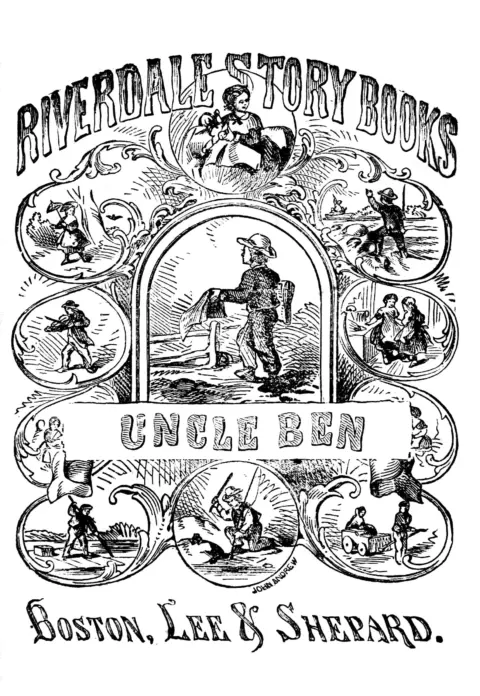
"Uncle Ben: A story for little folks" by Oliver Optic is a children's book written in the mid-19th century. It is a charming story that revolves around themes of kindness, understanding, and the transformation of relationships. The narrative captures the essence of childhood adventure and innocence against the backdrop of small-town life, illustrating the impact of compassion and friendship. The story follows a group of children who, on a hot July day, venture into the pasture to pick strawberries. While there, they encounter Uncle Ben, an old man known for his gruff demeanor and solitary life as a former sailor. Initially wary of him due to his reputation, two brave girls, Flora and Nellie, approach him to request water. In a surprising turn, Uncle Ben helps them and agrees to share a story from his past at sea. As the children assist him with his chores, they discover his kind nature beneath his crusty exterior. Through their genuine interaction, Uncle Ben transforms from an isolated and misunderstood figure into a beloved storyteller, promoting the idea that kindness can bridge generational gaps and change perceptions. The story concludes with the community embracing Uncle Ben, highlighting the importance of treating others with compassion and respect.
Introduction adapted from the source catalogue; source summaries may be automatically generated.
Free to read · English · 5,702 words · No account needed
MAKE TIME FOR A GOOD BOOK
On by default. Untick to stop anonymous reading totals. Each page counts after 10 seconds in view. How this works.
Anonymous counting is on unless you have switched it off.
When Flora and Nellie arrived at the well, there was no water in the bucket. It was drawn with a long pole, called a “sweep,” supported on a crotched post. The bucket was attached to a small pole, fastened to the end of the long one, which went down into the well.
As the bucket went down, one end of the long pole came down with it, while the other end went up—just as the beam does in a pair of scales. It was hard work to draw water with a sweep, and the little girls found that the strength of both of them was not enough to move it.
While they were trying, they saw Uncle Ben leave his work, and walk over to the well. They wondered what he was coming for, as they could not believe that one so cross as people said he was would think of helping them.
“That is rather too hard work for such little girls,” said he, as he pulled down the sweep, and then drew up the bucket full of water.
“Thank you, sir,” said Flora. “You are so kind!”
“What is your name, my little girl?” asked Uncle Ben, pleasantly.
“Flora Lee, sir; and this is Nellie Green.”
“You have been in the pasture—haven’t you?”
“Yes, sir; we have been trying to find some strawberries, but they were so scarce we couldn’t get many,” replied Flora, when she had taken a good drink of the pure cold water.
“There were more of you, I thought.”
“Yes, sir; my brother and Nellie’s brother and sister are waiting for us out there in the road.”
“I will tell you where you can find plenty of strawberries,” said Uncle Ben; and now, without a doubt, there was a smile on his wrinkled face.
“O, thank you, sir!” exclaimed Flora, with childlike pleasure.
“In my pasture, on the other side of the road, there are oceans of
them.”
“But will you let us pick them, sir?”
“You may; when that Joe Birch and such boys as he come round here, I always send them off, because they steal my fruit, and break down my fences. They are very bad boys,” replied Uncle Ben, who seemed to feel the need of telling them why he was so cross.
“Uncle”—Flora was going to say “Uncle Ben;” but she did not know that it would be quite proper for her to call him by this name.
“That’s right, little lady; call me ‘Uncle Ben.’ You needn’t be at all afraid of me. That’s just what the sailors used to call me on board ship.”
Your reading position is saved on this browser. Take it to another device with a library code. Reading pages adapt to text, rather than matching a printed edition.
BEHIND THE BOOK
This eBook is for the use of anyone anywhere in the United States and most other parts of the world at no cost and with almost no restrictions whatsoever. You may copy it, give it away or re-use it under the terms of the Project Gutenberg License included with this eBook or online at www.gutenberg.org. If you are not located in the United States, you will have to check the laws of the country where you are located before using this eBook. Read the source licence.
The original source file, including credits and licence, is retained by this library. Request an original-format copy at no charge. Please include the book title and Project Gutenberg identifier #72325.
KEEP YOUR CURIOSITY GOING
Coulson Kernahan

Maurice Baring
Frances Wright
Cécile Tormay

Frederic Jesup Stimson

W. H. P. (William Henry Pope) Jarvis