Switch off
Oliver Optic
THE CLASSIC COLLECTION · 1865
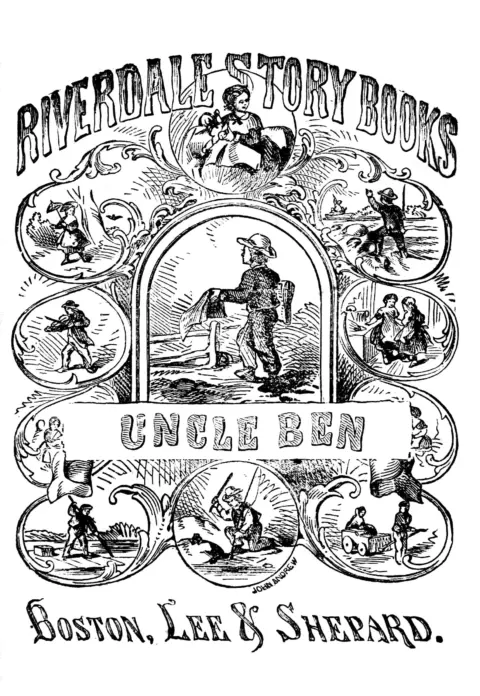
"Uncle Ben: A story for little folks" by Oliver Optic is a children's book written in the mid-19th century. It is a charming story that revolves around themes of kindness, understanding, and the transformation of relationships. The narrative captures the essence of childhood adventure and innocence against the backdrop of small-town life, illustrating the impact of compassion and friendship. The story follows a group of children who, on a hot July day, venture into the pasture to pick strawberries. While there, they encounter Uncle Ben, an old man known for his gruff demeanor and solitary life as a former sailor. Initially wary of him due to his reputation, two brave girls, Flora and Nellie, approach him to request water. In a surprising turn, Uncle Ben helps them and agrees to share a story from his past at sea. As the children assist him with his chores, they discover his kind nature beneath his crusty exterior. Through their genuine interaction, Uncle Ben transforms from an isolated and misunderstood figure into a beloved storyteller, promoting the idea that kindness can bridge generational gaps and change perceptions. The story concludes with the community embracing Uncle Ben, highlighting the importance of treating others with compassion and respect.
Introduction adapted from the source catalogue; source summaries may be automatically generated.
Free to read · English · 5,702 words · No account needed
MAKE TIME FOR A GOOD BOOK
On by default. Untick to stop anonymous reading totals. Each page counts after 10 seconds in view. How this works.
Anonymous counting is on unless you have switched it off.
Uncle Ben had not always been a common sailor while at sea. He had been the first mate of a ship—which is next to the captain—the two last voyages he had made. He had wanted to be a captain, but the owners, for some reason or other, would not trust him.
This made him gloomy and sad. He was disappointed, and this helped to make him cross. People used to vex and bother him, too, because he was so crusty, and this only made him worse. His wife was a very good woman, and all the neighbors liked her very much. They had no children.
The happy party were seated only a little way from the house of Uncle Ben; but the two boys thought they were as near as they wanted to be, for the old man seemed to hate children.
If he did, it was only because they gave him so much trouble. They knew he was cross, and they liked to plague him. On purpose to bother him, they used to steal his apples, even when they had enough of them. They would get into his lot, or his garden, only to see him run after them.
This was very naughty of them, for I have no doubt, if they had been kind to him, he would have been kind to them.
“I wish I had a drink of water,” said Flora Lee, as she glanced at the house of Uncle Ben. “I’m almost choked.”
“We can get some at the spring,” said Frank.
“Yes, but the spring is clear out at the other end of the pasture,”
added Charley.
“Why can’t we get some water at Uncle Ben’s?” asked Flora.
“He wouldn’t let you step on his land. He is a cross old fellow.”
“Why, he would let me have some water. Of course he would,” added Flora.
“No, he wouldn’t; he drives the fellows off when they come near his house,” said Charley Green.
“I’m almost sure, if I should ask him, he would give me some water.”
“No, he wouldn’t; he would drive you off, just as he has hundreds of others. There he is now, in the garden, picking his currants,” replied Charley, pointing to the place where the currant bushes lined the fence.
“I heard my father say the boys plague him almost to death; and that must be the reason why he is so cross.”
“That may be, but he is as cross as he can be, whatever the reason is.”
Your reading position is saved on this browser. Take it to another device with a library code. Reading pages adapt to text, rather than matching a printed edition.
BEHIND THE BOOK
This eBook is for the use of anyone anywhere in the United States and most other parts of the world at no cost and with almost no restrictions whatsoever. You may copy it, give it away or re-use it under the terms of the Project Gutenberg License included with this eBook or online at www.gutenberg.org. If you are not located in the United States, you will have to check the laws of the country where you are located before using this eBook. Read the source licence.
The original source file, including credits and licence, is retained by this library. Request an original-format copy at no charge. Please include the book title and Project Gutenberg identifier #72325.
KEEP YOUR CURIOSITY GOING
Coulson Kernahan

Maurice Baring
Frances Wright
Cécile Tormay

Frederic Jesup Stimson

W. H. P. (William Henry Pope) Jarvis