
One Woman: Being the Second Part of a Romance of Sussex
Alfred Ollivant
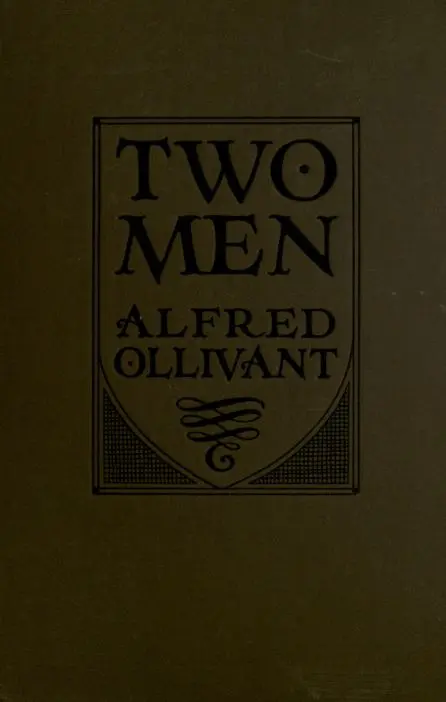
THE CLASSIC COLLECTION · 1919
"Two Men: A Romance of Sussex" by Alfred Ollivant is a novel written in the early 20th century. The narrative explores themes of familial dynamics, personal struggles, and the contrast between tradition and modernity against the picturesque backdrop of Sussex. The story introduces us to Edward Caspar, a reluctant heir, and his father Hans Caspar, a powerful railway contractor who grapples with the complexities of raising a son like Edward, who embodies sensitivity and artistic aspirations in a world that demands toughness and resilience. At the start of the novel, we are introduced to the setting of Beachbourne and the reverberating influence of the sea and the landscape on its inhabitants. The opening portrays a picturesque scene at Beau-nez, eventually shifting focus to the relationship between Hans and Edward. We witness a stark contrast in their characters and their lives; Hans, a confident and authoritative figure, stands in stark opposition to Edward, who struggles with self-doubt and a stutter. As the narrative unfolds, we find hints of deeper personal conflicts within their family with the introduction of Edward's wife, Anne, and their children. This opening segment captures the essence of evolving identities against the backdrop of establishment and the inherent struggles of their intertwined destinies.
Introduction adapted from the source catalogue; source summaries may be automatically generated.
Free to read · English · 86,291 words · No account needed
MAKE TIME FOR A GOOD BOOK
On by default. Untick to stop anonymous reading totals. Each page counts after 10 seconds in view. How this works.
Anonymous counting is on unless you have switched it off.
"Things are different there, my boy. In the Shiny a swoddy's a gentleman. Punkah-wallahs to pull the cords in the hot weather, a tiger curled at your feet to keep the snakes at bay, bearer to clean your boots, shooting parties, bubbly by the barrel, I don't know what all."
Because of this jewel that was for ever dangled before his eyes, Ernie bore a good deal without complaining.
A youth who had enlisted with him, and for much the same reason, induced his people to buy him out after six months.
Ernie made no such attempt.
"I'm going through with it now," he said. "Want to see a bit before I'm done and take em home a tale or two."
After a spell of service in Ireland, at the close of the South African War, when Ernie was turned twenty, the expected call came.
A draft was going out to join the First Battalion of the Hammer-men at Jubbulpore, and Ernie went with it.
The cheering transport dropped down the Thames one misty November afternoon, passing hay-laden barges, timber ships from the Baltic, and rusty tramps from all over the world.
The smell of the sea, so familiar and so good, thrilled Ernie's susceptible heart. It spoke to him of home, of the unforgotten things of childhood, of his passing youth, of much that was intimate and dear. He spent most of that first evening on deck, long after dark, in spite of the drizzle, watching the coast lights.
Once they passed quite close to a light-ship, swinging desolately on
the tide.
"What's that?" he asked a sailor.
"Sovereign Light," the man told him.
Ernie leapt to the name familiar to him from childhood.
How often had he not climbed the hill behind his home of winter evenings, and waited in the chalk-pit above the larch spinney for that far-off spark to leap out of the darkness and warm his expectant heart.
He swung about and stared keenly through the gloom at a light winking
at them from the land.
"Then that's the light-house under Beau-nez!" he said, pointing.
"That's it," the man answered. "And Beachbourne underneath. All them lights strung out like a necklace along the coast,--Bexhill, Hastings, Beachbourne. It's growing into a great place. D'you know it?"
Ernie's heart and eyes were full.
"My home's there," he said. "And my old dad."
He stayed on deck peering through the darkness, till the last light had disappeared and they had swung round Beau-nez into the Channel and he could see the Seven Sisters, the gap that marks the mouth of the Ruther, and the cliffs between Newhaven and Rotting-dean. Then he went below and turned in.
Your reading position is saved on this browser. Take it to another device with a library code. Reading pages adapt to text, rather than matching a printed edition.
Alfred Ollivant

Alfred Ollivant
Alfred Ollivant
Alfred Ollivant
BEHIND THE BOOK
This eBook is for the use of anyone anywhere in the United States and most other parts of the world at no cost and with almost no restrictions whatsoever. You may copy it, give it away or re-use it under the terms of the Project Gutenberg License included with this eBook or online at www.gutenberg.org. If you are not located in the United States, you will have to check the laws of the country where you are located before using this eBook. Read the source licence.
The original source file, including credits and licence, is retained by this library. Request an original-format copy at no charge. Please include the book title and Project Gutenberg identifier #57640.
KEEP YOUR CURIOSITY GOING
Coulson Kernahan

Maurice Baring
Frances Wright
Cécile Tormay

Frederic Jesup Stimson

W. H. P. (William Henry Pope) Jarvis