
One Woman: Being the Second Part of a Romance of Sussex
Alfred Ollivant
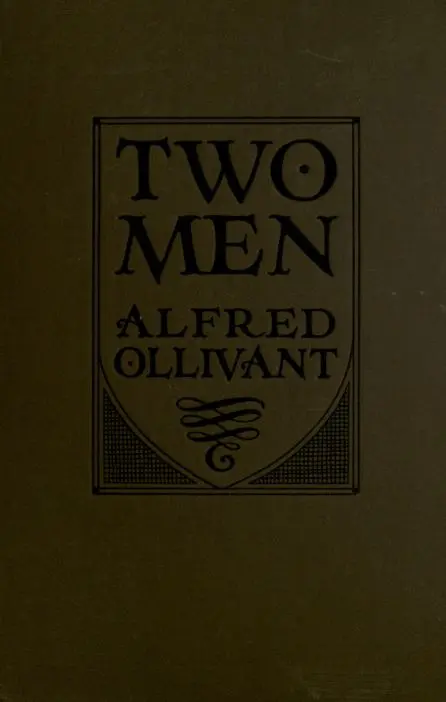
THE CLASSIC COLLECTION · 1919
"Two Men: A Romance of Sussex" by Alfred Ollivant is a novel written in the early 20th century. The narrative explores themes of familial dynamics, personal struggles, and the contrast between tradition and modernity against the picturesque backdrop of Sussex. The story introduces us to Edward Caspar, a reluctant heir, and his father Hans Caspar, a powerful railway contractor who grapples with the complexities of raising a son like Edward, who embodies sensitivity and artistic aspirations in a world that demands toughness and resilience. At the start of the novel, we are introduced to the setting of Beachbourne and the reverberating influence of the sea and the landscape on its inhabitants. The opening portrays a picturesque scene at Beau-nez, eventually shifting focus to the relationship between Hans and Edward. We witness a stark contrast in their characters and their lives; Hans, a confident and authoritative figure, stands in stark opposition to Edward, who struggles with self-doubt and a stutter. As the narrative unfolds, we find hints of deeper personal conflicts within their family with the introduction of Edward's wife, Anne, and their children. This opening segment captures the essence of evolving identities against the backdrop of establishment and the inherent struggles of their intertwined destinies.
Introduction adapted from the source catalogue; source summaries may be automatically generated.
Free to read · English · 86,291 words · No account needed
MAKE TIME FOR A GOOD BOOK
On by default. Untick to stop anonymous reading totals. Each page counts after 10 seconds in view. How this works.
Anonymous counting is on unless you have switched it off.
"I don't hardly myself," she said in the musing voice of the disturbed. "The gentlemen are that funny. Seem scarcely respectable, some of em. And the couples too. Might not be married the way they go on. London, I suppose."
He glanced at her covertly.
She met his eyes--so frank, so fearless.
What a man of the world Ernie felt beside this white ewe-lamb straying far from the fold in the hollow of its native coombe!
They were skirting now the fosse of the Redoubt.
Before them on the shore rose the great Hotel, like a brilliantly lighted mausoleum, blocking out a square patch of stars.
They made towards it.
"Ruth," said Ernie quietly, "if I was you I'd get Madame to change you. Second Floor's more your sort. More steadified. There's a Bishop there now and his wife and three-four daughters or so. Go to bed at ten, and get up at seven. I can hear em all a-snorin in chorus like so many hoggets in a stye when I take the lift down last turn at night."
"Hap I will," said Ruth thoughtfully. "Madame'd take me back herself, only she's got a German maid now, and I wouldn't do anything to put Madame out for worlds."
A struggle was taking place in Ernie's heart. If Ruth left the Third Floor for the Second he would still see her sometimes. If she left the Hotel altogether he might lose her.
"Ruth," he said at last. "I sometimes wonder why you stay on there at
all."
She glanced at him mischievously.
"Shall I tell you?" she asked, her voice deeper than ever.
"Yes."
"It's the bathin. I just do adore the swimmin. Madame arranges it nice for the maids. And the season's coming on. We start next week if this weather holds. When the season's over I shall cut my stick--if so be Madame wasn't to want me for her own maid again."
She chuckled at her own cunning.
They came to the servants' gate.
Ernie stopped.
"Good-bye, Ruth," he said. "I'll say good-night."
She looked up at him surprised.
"Aren't you comin then?" she asked.
"Yes," he said. "But I'm just a-goin to finish my fag first."
She gave him a delicious look.
Innocent as she was, she understood his consideration and thanked him
for it mutely.
She gave him her hand. He took it, shook it, and held it awhile, as though weighing it. It was firm and very capable.
Swiftly he lifted it to his lips and kissed it.
She made no protest, looking at him with kind eyes that knew no thought
of coquetry.
Then she vanished with her flowers.
Your reading position is saved on this browser. Take it to another device with a library code. Reading pages adapt to text, rather than matching a printed edition.
Alfred Ollivant

Alfred Ollivant
Alfred Ollivant
Alfred Ollivant
BEHIND THE BOOK
This eBook is for the use of anyone anywhere in the United States and most other parts of the world at no cost and with almost no restrictions whatsoever. You may copy it, give it away or re-use it under the terms of the Project Gutenberg License included with this eBook or online at www.gutenberg.org. If you are not located in the United States, you will have to check the laws of the country where you are located before using this eBook. Read the source licence.
The original source file, including credits and licence, is retained by this library. Request an original-format copy at no charge. Please include the book title and Project Gutenberg identifier #57640.
KEEP YOUR CURIOSITY GOING
Coulson Kernahan

Maurice Baring
Frances Wright
Cécile Tormay

Frederic Jesup Stimson

W. H. P. (William Henry Pope) Jarvis