THE CLASSIC COLLECTION✦An outlaw’s diary: the CommuneCLASSIC FREE BOOKS
An outlaw’s diary: the Commune
Cécile Tormay
THE CLASSIC COLLECTION · 1923
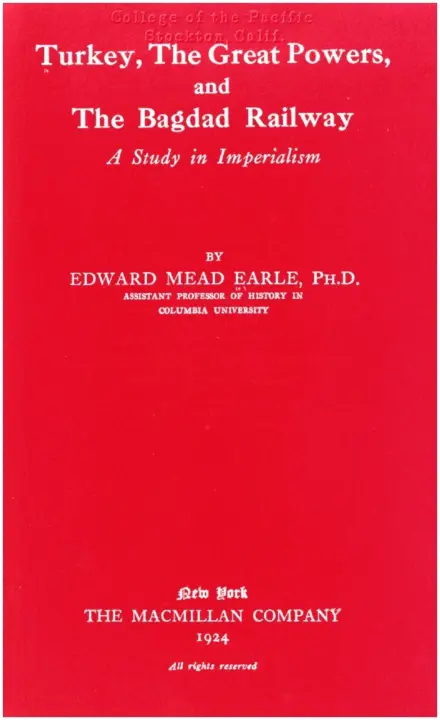
"Turkey, the Great Powers, and the Bagdad Railway: A Study in Imperialism" by Edward Mead Earle is a historical account written in the early 20th century. The book explores the intricate dynamics of imperialism as they relate to the rise of the Bagdad Railway project and its implications on Turkey and its global significance. Through meticulous analysis, it examines how various great powers engaged with the Ottoman Empire’s resources and strategic position. The opening of the book details the historical context leading to the significance of the Bagdad Railway, introducing it as an essential link reviving ancient trade routes during the 19th century. Earle outlines the broader implications of rail development on the economic and political stability of Turkey, emphasizing both the hopes tied to modernization and the inherent dangers posed by international rivalries. The narrative sets the stage for a deeper discussion on how this railway project emerged in a landscape fraught with imperial aspirations and the challenges the Ottoman Empire faced in asserting its sovereignty amidst foreign interests. Overall, the initial chapters lay a foundation for understanding the complexities that surrounded the construction of the Bagdad Railway as a symbol of both progress and contention in modern imperialism.
Introduction adapted from the source catalogue; source summaries may be automatically generated.
Free to read · English · 109,189 words · No account needed
MAKE TIME FOR A GOOD BOOK
On by default. Untick to stop anonymous reading totals. Each page counts after 10 seconds in view. How this works.
Anonymous counting is on unless you have switched it off.
American Federated Chambers of Commerce for the Near East, 344.
Anatolia, 280, 302, 305;
geography of, 10;
natural resources of, 13–14;
railways of, 29–30.
(See also Anatolian Railway, Smyrna-Cassaba Railway, Smyrna-Aidin
Railway, Black Sea Railways, etc.)
Anatolian Railway, 34, 53, 61, 63, 224, 248, 339;
concession of 1888, 32;
concession of 1893, 33;
agreement with Smyrna-Cassaba Railway, 59–60;
board of directors, 85;
irrigation enterprises, 98, 117;
economic achievements of, 230–232;
concessions of 1914, 248–249, 272.
Andrew, Sir William, 176–177.
Anglo-French Entente. (See Entente Cordiale.)
Anglo-French rivalry in the Near East, 318–329.
Anglo-German Agreement of June 15, 1914, 261–265.
Anglo-German rivalry, 138, 179–180, 203.
Anglo-Japanese Alliance, 204.
Anglo-Persian Oil Company, 259, 261, 283, 286.
Anglo-Russian Agreement (1907), 204.
Anglo-Turkish Agreements (1913), 254–258, 263–264.
Angora, 31, 32, 33, 34, 305, 339.
Angora Government. (See Grand National Assembly.)
Angora Treaty (October 20, 1921), 324–325, 333, 352.
Arabs, 9–10, 15, 87, 196, 207, 282–284, 294, 297, 299, 302, 305, 320.
Ardahan, 316.
Arghana, 246, 340;
copper mines of, 326, 334, 343.
Armenia, 2, 9, 44;
republic of, 302, 305;
proposed American mandate, 348.
Asia Minor. (See Anatolia.)
Atlas Line, 107.
Auguste Victoria, Kaiserin, 132.
Austria-Hungary, policies in Near East, 11;
railways in Turkey, 58;
trade with Turkey, 105–106;
annexation of Bosnia-Herzegovina, 218;
relations with Germany in Near East, 129–130.
(See also Drang nach Osten.)
Backshish, 94.
Bagdad, 2, 31, 32, 62, 71, 73–74, 261, 281, 286, 296, 336.
Bagdad Railway, 3, 7, 21, 34;
factor in Great War, 4, 172, 278, 288–289, 291, 299–300;
strategic importance to Turkey, 22, 152–153;
mileage, 90;
construction, 94–95, 113–114, 289;
political importance to Germany, 126–131;
opponents and friends of enterprise in Germany, 137–142;
economic success, 233–234;
disposition of by Allies, 301;
Angora Treaty, 325–326;
status in 1922, 326;
purchase by British bankers, 334.
(See also Germany, Great Britain, France, Russia.)
Bagdad Railway Company, incorporation of, 70, 92; concession of 1903, 22, 70–75, 77–84, 219; attempt to internationalize (1903), 92–93; board of directors, 93, 115, 256, 263; preliminary concession of 1899, 61–65, 68; financing concession of 1903, 77, 91, 93–94, 116; concession of 1908, 96–97; convention of March, 1911, 111–112, 228–229, 252; Franco-German agreement of 1914, 170, 247–252; contracts with Lord Inchcape, 259–260, 264; agreement with Smyrna-Aidin Railway Company, 260, 264; proposed liquidation, 301.
Bagtché tunnel, 289.
Bahrein Island, 283.
Balfour, A. J. (Earl Balfour), 93, 180–185, 202.
Balfour of Burleigh, Lord, 117.
Balkan States, 11, 152;
nationalism of, 7.
Balkan Wars, 246–275.
Ballin, Albert, 141, 281.
Banditry, 9, 12.
Bank für Handel und Industrie, 101, 116.
Bank für orientalische Eisenbahnen, 32, 334.
Banque d’Orient, 99.
Barrow, General Sir Edmond, 282.
Basra, 2, 19, 62, 74, 255, 263, 282, 284, 336.
Bassermann, Herr, 120, 129, 170, 256.
Beersheba, 298.
Beirut, 30, 62, 72, 299.
Belgium. Railway concessions of Belgians in Turkey, 30.
Berger, Léon, 91, 115.
Bergmann, Dr. Carl, 260.
Berthelot, Philippe, 320.
Bethmann-Hollweg, von, 249.
Beyens, Baron, 249.
Bieberstein, Baron Marschall von, 43, 55, 170, 218, 254.
Bismarck, 40–42, 54–55, 349.
Bitlis, 340.
Black Sea Basin Agreement, 65, 149.
Black Sea Railways, 245–246, 248–249.
Boer War, 61, 179, 203.
Boli, 246.
Bowles, Gibson, 190, 210.
Bozanti, 325.
Breslau (Cruiser), 278, 282.
Briand, Aristide, 329.
Brusa, 14.
Bulgaria, 288, 290.
Bulgurlu, 94, 96.
Bülow, Prince von, 48, 135.
Cadman, Sir John, 321.
Caillard, Sir Vincent, 31, 32.
Caliphate, 27, 64, 278–279, 296.
Cambon, Jules, 268.
Cambon, Paul, 225.
Capitulations, 10–11, 82, 153–154, 276, 303–306, 316, 332.
Carden, Admiral, 282.
Cassel, Sir Ernest, 209, 220–221, 225.
Chamberlain, Austen, 287.
Chamberlain, Joseph, 67, 178–179, 185.
Chéradame, André, 155, 215.
Chesney, Francis R., 176.
Chester, Rear Admiral Colby M., 15, 333.
Chester concessions, 334, 339, 353;
compared with Bagdad Railway concessions, 340–343;
political significance of, 350.
Chrome, 13, 337.
Churchill, Winston, 282.
Cilicia, 305, 325–326, 331;
French mandate for, 302, 325.
(See also Mersina-Adana Railway.)
Cilician Gates of the Taurus, 72, 113, 149, 325.
Cilician-Syrian Railway Company, 326.
Clémenceau, Georges, 310, 320, 351.
Coal, Heraclea mines, 14, 324.
Colonization, 84, 123–125.
Combes, Émile, 167.
Commercial Revolution, 1, 3–4, 73. (See also Trade routes.)
Committee of Union and Progress, 217, 219.
Constans, M., 60, 155.
Constantinople, 2, 10, 23, 281, 302.
Cotton, 16, 50–51, 294, 297, 326.
Cox, Sir Percy, 283–284, 286.
Cranborne, Lord, 69.
Crawford, Sir Richard, 221.
Crédit Lyonnais, 158.
Crewe, Lord, 282.
Crowe, Sir Eyre, 259.
Ctesiphon, 287.
Curzon, Lord, 23, 113, 192, 197–198, 199, 212–213, 283, 327.
Customs duties of Ottoman Empire, 95, 111, 180, 226–228, 256, 262.
Damascus, 12, 21, 30, 62, 72, 299.
Damascus-Homs-Aleppo Railway, 34, 246.
D’Arcy Exploration Company, 259, 261.
Dardanelles, 245, 280, 282, 285, 288–289.
Dawkins, Sir Clinton, 186.
Deir, province of, 294.
Deir es Zor, 248.
Delamain, General, 283–284.
Delcassé, Théophile, 66, 68, 155–157, 168–169.
De Lesseps, Ferdinand, 177.
Denby, Charles, 345.
Deschanel, Paul, 159, 172.
Your reading position is saved on this browser. Take it to another device with a library code. Reading pages adapt to text, rather than matching a printed edition.
BEHIND THE BOOK
This eBook is for the use of anyone anywhere in the United States and most other parts of the world at no cost and with almost no restrictions whatsoever. You may copy it, give it away or re-use it under the terms of the Project Gutenberg License included with this eBook or online at www.gutenberg.org. If you are not located in the United States, you will have to check the laws of the country where you are located before using this eBook. Read the source licence.
The original source file, including credits and licence, is retained by this library. Request an original-format copy at no charge. Please include the book title and Project Gutenberg identifier #66221.
KEEP YOUR CURIOSITY GOING
Cécile Tormay

Moritz Busch
John L. Ransom
Frances Wright
Cécile Tormay

Mabel Potter Daggett