THE CLASSIC COLLECTION✦Found in the Philippines: The Story of a Woman’s LettersCLASSIC FREE BOOKS
Found in the Philippines: The Story of a Woman’s Letters
Charles King
THE CLASSIC COLLECTION · 1896
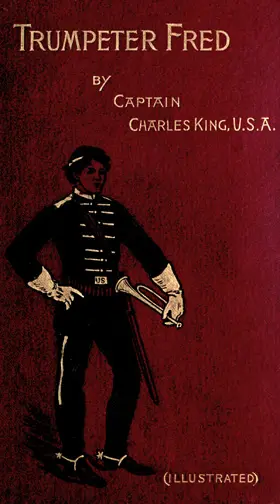
"Trumpeter Fred: A Story of the Plains" by Captain Charles King is a historical novel written in the late 19th century. The story is centered around a young boy named Fred Waller, who aspires to follow in his father's footsteps as a soldier while navigating the challenges of military life during a time of conflict with Native American tribes. The book captures the spirit of adventure and the harsh realities of frontier life in the American West. At the start of the narrative, Fred is introduced as a trumpeter in "B" Troop, stationed at the Niobrara River along with a young and inexperienced lieutenant, Blunt. The troop is thrust into a perilous situation after Fred mysteriously vanishes, apparently having deserted, alongside a significant sum of money that has gone missing. As the unfolding story reveals through the eyes of the soldiers and the old sergeant, Waller, Fred's father, there are hints of deeper treachery intertwined with the dangers they face from the surrounding tribes. The opening sets up a tension-filled adventure, with Fred's character shown to be both brave and determined, leading to questions about loyalty, honor, and the implications of choice amid the chaos of war.
Introduction adapted from the source catalogue; source summaries may be automatically generated.
Free to read · English · 20,452 words · No account needed
MAKE TIME FOR A GOOD BOOK
On by default. Untick to stop anonymous reading totals. Each page counts after 10 seconds in view. How this works.
Anonymous counting is on unless you have switched it off.
That afternoon the court room was crowded when Sergeant Dawson retook his seat and glanced for the first time at the prisoner before him. In front of the boy was a little table, on which was a number of slips of paper. One of these was quietly passed to the judge advocate, who took it, wheeled in his chair, and read aloud:
"What answer did you give Lieutenant Blunt when he asked if you had been outside the sentry-line the night the prisoner disappeared?"
"I told him that I had not, sir," was the prompt reply.
The judge advocate posted the reply on his record sheet, and wrote the answer below. Then came another slip.
"What answer did you give the captain when asked if any man had ridden
back toward the Niobrara the morning the troop left there for Red
Cloud?"
The sergeant's throat seemed to clog a little, but he gulped down the obstruction. "I said no man went back, sir."
"What buildings, if any, were there near the spot where the troop was in bivouac on the Niobrara?"
Dawson's face was losing its ruddy hue, but the beads of sweat were
starting afresh.
"An old empty log hut, sir. I didn't take much notice of it, sir."
"How far from the sentries was it?"
"I don't just know, sir. Two or three hundred yards perhaps." His lips were beginning to twitch, and his eyes to wander nervously from face to face.
"How much money did you lose with your wallet that night?"
"Over sixty dollars, sir; every cent I had."
"What answer did you give Captain Charlton at Red Cloud when he asked you if you had seen anything of it since that night?"
"I told him no, sir."
"With whose money were you playing cards then, below Red Cloud, on the Sunday the troop marched away, leaving you behind?"
Dawson's face was ghastly. He choked for a moment, then seemed to make a desperate effort to pull himself together. "It wasn't so, sir," he muttered; then more loudly, "It was just a few dollars I borrowed," he began, but looking furtively around he caught one glimpse of his captain's stern face, and just beyond him, through the open window, the sight of a tall, straight form in the uniform of the infantry. It was the provost sergeant from Fort Robinson.
"It wasn't mine," he weakly murmured.
Another slip, and in the same cool, relentless tone the judge advocate
read:
"What reason had you for taking your horse to the post blacksmith, instead of the cavalry farrier, to be shod the evening you reached Fort Robinson?"
Your reading position is saved on this browser. Take it to another device with a library code. Reading pages adapt to text, rather than matching a printed edition.
Charles King

Charles King

Charles King

Charles King
BEHIND THE BOOK
This eBook is for the use of anyone anywhere in the United States and most other parts of the world at no cost and with almost no restrictions whatsoever. You may copy it, give it away or re-use it under the terms of the Project Gutenberg License included with this eBook or online at www.gutenberg.org. If you are not located in the United States, you will have to check the laws of the country where you are located before using this eBook. Read the source licence.
The original source file, including credits and licence, is retained by this library. Request an original-format copy at no charge. Please include the book title and Project Gutenberg identifier #37415.
KEEP YOUR CURIOSITY GOING
Wilfrid Scawen Blunt
Wilfrid Scawen Blunt

E. W. (Edgar Watson) Howe
Cécile Tormay

Moritz Busch
Coulson Kernahan