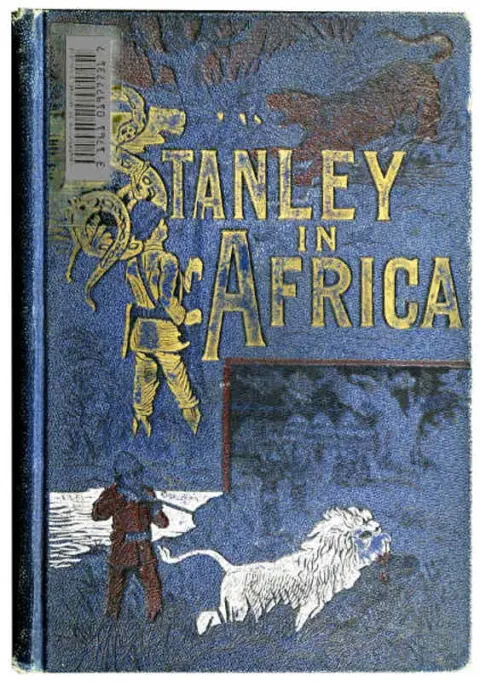
Stanley in Africa The Wonderful Discoveries and Thrilling Adventures of the Great African Explorer, and Other Travelers, Pioneers and Missionaries
James P. (James Penny) Boyd
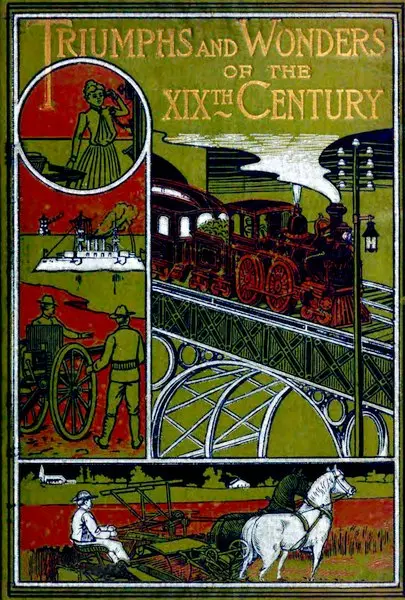
THE CLASSIC COLLECTION · 1899
"Triumphs and Wonders of the 19th Century: The True Mirror of a Phenomenal Era" by James P. Boyd is a historical account written in the late 19th century. This work aims to review and reflect on the significant achievements and advancements made during the 19th century, touching on various domains such as material, intellectual, social, and moral progress. It presents a comprehensive overview of the era's progress, showcasing the spirit and energy that defined the time and served to illustrate its remarkable contributions to human civilization. The opening of the book sets the stage for a grand examination of the incredible changes that took place throughout the 19th century, highlighting the transformation in numerous fields such as industry, science, art, and literature. Boyd emphasizes the unique character of the 19th century as a period of unparalleled innovation compared to prior eras, citing various advancements that have improved human life. Additionally, he explains the structure of the volume and introduces the numerous authors who will contribute to exploring these themes with specialized knowledge, promising readers an enlightening journey through the remarkable achievements of this phenomenal era.
Introduction adapted from the source catalogue; source summaries may be automatically generated.
Free to read · English · 300,037 words · No account needed
MAKE TIME FOR A GOOD BOOK
On by default. Untick to stop anonymous reading totals. Each page counts after 10 seconds in view. How this works.
Anonymous counting is on unless you have switched it off.
In planning this building the convenience of exhibitors and visitors in ready access to the exhibits of any desired country or class was given the preference over architectural effect. Here, again, was a diffusion of exhibits in detached buildings, and a noteworthy novelty was the reservation of ground on the park surrounding the main building for the erection by foreign exhibitors of special buildings for the display of articles that could not be accommodated in the main structure. This feature became the most popular one of the entire exhibition, for it gave a most graphic illustration of the architecture, manners, customs, and countless peculiarities of the peoples of the world.
The exhibition was opened by the Emperor on April 1, 1867, and was closed on October 31, following. The number of visitors was upward of 15,000,000, a daily average of nearly 70,000, and of exhibitors, 51,819. In all, 12,944 medals and grand prizes of honorable mention were awarded. From beginning to end the expenses were $4,596,764, and the receipts aggregated $2,822,000. The national and municipal governments contributed $1,200,000 each, which added to the receipts of the exhibition proper created a surplus over expenditure of $626,000.
London’s third exhibition, from May 1 till September 30, 1871, was projected as the first of an annual series that should separately promote a distinct branch of industrial effort. Thirty-three foreign countries were represented; there were approximately 4000 art and 7000 industrial exhibitors; and the visitors numbered 1,142,000. The second in the series, in 1872, was confined to printing, paper, music, musical instruments, jewelry, cotton goods, and fine arts; and the third, in 1873, was devoted to the general subject of cookery.
Great as was the universal exposition of Paris in 1867, that at Vienna in 1873 far surpassed it in extent and grandeur, although its pecuniary success was severely affected by an epidemic of cholera, a financial crisis, and local extortions. As each of the preceding international exhibitions had developed a distinctive feature, so this of Vienna introduced the custom of holding world’s congresses for the discussion of great problems of universal application.
The exhibition was opened on May 1 and closed on November 3, following. Turnstiles recorded the entrance of 7,254,687 visitors. There were about 70,000 exhibitors, whose display, in extent and costliness, exceeded that of Paris in 1867. The gross receipts were about $2,000,000, and expenditures about $9,850,000, making a deficiency of some $7,850,000, which the Government liquidated. The United States was represented by 643 exhibitors, more than half of whom were awarded prizes.
Your reading position is saved on this browser. Take it to another device with a library code. Reading pages adapt to text, rather than matching a printed edition.
BEHIND THE BOOK
This eBook is for the use of anyone anywhere in the United States and most other parts of the world at no cost and with almost no restrictions whatsoever. You may copy it, give it away or re-use it under the terms of the Project Gutenberg License included with this eBook or online at www.gutenberg.org. If you are not located in the United States, you will have to check the laws of the country where you are located before using this eBook. Read the source licence.
The original source file, including credits and licence, is retained by this library. Request an original-format copy at no charge. Please include the book title and Project Gutenberg identifier #55390.
KEEP YOUR CURIOSITY GOING
Cécile Tormay

Moritz Busch
John L. Ransom
Frances Wright
Cécile Tormay

Mabel Potter Daggett