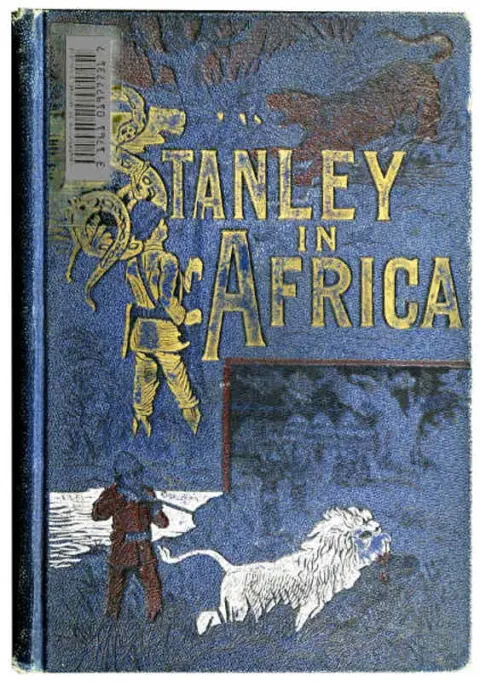
Stanley in Africa The Wonderful Discoveries and Thrilling Adventures of the Great African Explorer, and Other Travelers, Pioneers and Missionaries
James P. (James Penny) Boyd
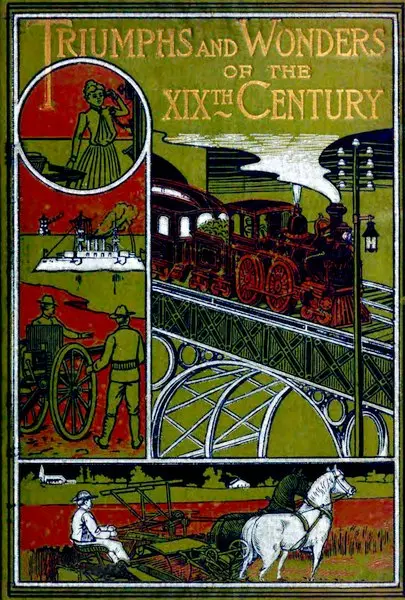
THE CLASSIC COLLECTION · 1899
"Triumphs and Wonders of the 19th Century: The True Mirror of a Phenomenal Era" by James P. Boyd is a historical account written in the late 19th century. This work aims to review and reflect on the significant achievements and advancements made during the 19th century, touching on various domains such as material, intellectual, social, and moral progress. It presents a comprehensive overview of the era's progress, showcasing the spirit and energy that defined the time and served to illustrate its remarkable contributions to human civilization. The opening of the book sets the stage for a grand examination of the incredible changes that took place throughout the 19th century, highlighting the transformation in numerous fields such as industry, science, art, and literature. Boyd emphasizes the unique character of the 19th century as a period of unparalleled innovation compared to prior eras, citing various advancements that have improved human life. Additionally, he explains the structure of the volume and introduces the numerous authors who will contribute to exploring these themes with specialized knowledge, promising readers an enlightening journey through the remarkable achievements of this phenomenal era.
Introduction adapted from the source catalogue; source summaries may be automatically generated.
Free to read · English · 300,037 words · No account needed
MAKE TIME FOR A GOOD BOOK
On by default. Untick to stop anonymous reading totals. Each page counts after 10 seconds in view. How this works.
Anonymous counting is on unless you have switched it off.
As might be expected, there has been an increase in the numbers of the domesticated animals held in the various countries of the world, but this increase has been far from uniform, and cannot be measured either by the growth of the population or the degree of prosperity. Evidently the density of population, the development of manufactures, and the fertility of the soil have had much influence.
In the United Kingdom there were 1,500,000 horses in 1800, and but 2,000,000 in 1898. During this time the cattle had increased from 5,000,000 to 11,000,000; the sheep from 25,000,000 to 31,000,000; and the swine from 3,000,000 to 3,700,000. Thus, while the cattle doubled in numbers during the century, the horses increased but one third, the sheep one fourth, and the swine one fourth. As in the same period the population of the country was augmented from 16,200,000 to 40,000,000, or two and one half times, it is not difficult to see why England has become the world’s greatest market for animals and animal products.
It is important to note the increase in animals in a few of the principal countries of Europe. In France there were 1,800,000 horses at the beginning of the century, and there were 3,418,000 in 1896. The cattle increased from 6,000,000 to 13,334,000; the swine from 4,500,000 to 6,400,000; the goats from 800,000 to 1,500,000; while the sheep decreased from 30,000,000 to 21,200,000. That is, in round numbers, the horses, cattle, and goats doubled, the swine increased nearly 50 per cent, but the sheep were diminished one fourth. The population advanced from 27,350,000 to 38,500,000, or about 40 per cent.
In Germany, from 1828 to 1892, the horses increased from 2,500,000 to 3,836,000; the cattle from 9,770,000 to 17,500,000; the goats from 700,000 to 3,000,000; the swine from 4,500,000 to 12,174,000; and the sheep decreased from 17,300,000 to 13,600,000. The population increased during the same time from 29,700,000 to 49,500,000.
In European Russia, from 1828 to 1888, the horses were increased from 12,000,000 to 20,000,000; the cattle from 19,000,000 to 23,840,000; the sheep from 36,000,000 to 47,500,000; while the swine decreased from 15,800,000 to 9,200,000. The population during this period increased from 45,000,000 to 90,000,000.
These are the countries in which there is most interest on account of their influence upon the markets of the world. In regard to Europe as a whole, owing to the lack of statistics, we can only estimate approximately as to the condition at the beginning of the century. From such data as are available it appears that there were about 20,600,000 horses, 61,800,000 cattle, 157,500,000 sheep, and 36,600,000 swine. The population of Europe at that time is placed at 175,000,000. In the year 1900 there will be in Europe not far from 44,250,000 horses, 108,000,000 cattle, 180,575,000 sheep, and 56,800,000 swine. The population will reach about 380,000,000.
Your reading position is saved on this browser. Take it to another device with a library code. Reading pages adapt to text, rather than matching a printed edition.
BEHIND THE BOOK
This eBook is for the use of anyone anywhere in the United States and most other parts of the world at no cost and with almost no restrictions whatsoever. You may copy it, give it away or re-use it under the terms of the Project Gutenberg License included with this eBook or online at www.gutenberg.org. If you are not located in the United States, you will have to check the laws of the country where you are located before using this eBook. Read the source licence.
The original source file, including credits and licence, is retained by this library. Request an original-format copy at no charge. Please include the book title and Project Gutenberg identifier #55390.
KEEP YOUR CURIOSITY GOING
Cécile Tormay

Moritz Busch
John L. Ransom
Frances Wright
Cécile Tormay

Mabel Potter Daggett