THE CLASSIC COLLECTION✦Little Guzzy, and other storiesCLASSIC FREE BOOKS
Little Guzzy, and other stories
John Habberton
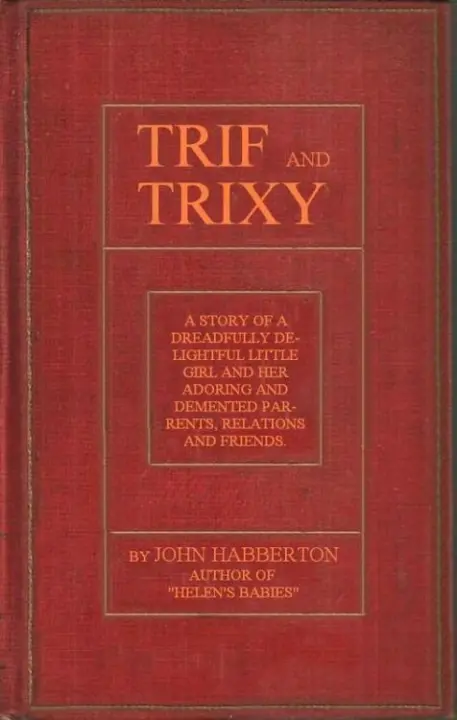
THE CLASSIC COLLECTION · 1897
"Trif and Trixy" by John Habberton is a novel written in the late 19th century. The story revolves around the delightful escapades of Trixy, a precocious seven-year-old girl, and her mother Trif, who navigates the challenges of parenthood amid Trixy's endearing antics. The narrative delves into the dynamics of family interactions, childhood innocence, and the various relationships that form around Trixy, who is often described as a "dreadfully delightful" character. At the start of the book, we are introduced to Trixy, who has recently turned seven, but her family continues to refer to her as the "baby." Her mother, Trif, is described as both proud and loving, handling her daughter's lively and unfiltered nature with a mixture of affection and exasperation. The opening chapters set up various family dynamics, including Trif's sister Fenie's infatuation with young men and the comedic situations arising from Trixy's candid observations and misunderstandings. Through Trixy's interactions with her family and the adult world around her, the reader gets a glimpse of the humor and warmth that characterize Habberton's storytelling, establishing a tone that suggests both lightheartedness and deeper explorations of relationships as the story unfolds.
Introduction adapted from the source catalogue; source summaries may be automatically generated.
Free to read · English · 60,373 words · No account needed
MAKE TIME FOR A GOOD BOOK
On by default. Untick to stop anonymous reading totals. Each page counts after 10 seconds in view. How this works.
Anonymous counting is on unless you have switched it off.
"Oh, not at all!" said Phil. "A man can't forge his own writing or drawing. Besides, there's no question of morals involved. The company is willing to give the stock, in payment for services rendered, the services made by you gentlemen, showing how to get water to property which would be worthless without it. No other man, should he find the originals, can possibly present them or use them in any way, for he would not know what they signified, nor could he find any one but the existing company who could apply them to the property in question. Neither of you have talked of the matter elsewhere?"
"I don't believe," said the Admiral, with a long sigh, a shake of the head, and a reminiscent wink at Jermyn, "that any matter which affected business has ever been kept close by two men--eh, Jermyn?"
"Quite right, Admiral. Still, as to duplicating my sketch----"
"You can't prevent me, at least," the Admiral replied, "so I shall beg Mrs. Highwood to re-write the letter at once. If Jermyn chooses to throw away fifty thousand dollars--oh, Miss Trewman, you have more influence over him than any one else; do reason with him. Better still, command him. Don't let him throw good money to the dogs."
"What dogs? Who's throwin' money to 'em?" drawled Trixy, who had begun
to fall asleep.
"Mr. Jermyn, my dear, is doing it," said Phil, "and all because your own father stupidly lost a couple of pictures."
"Gracious!" exclaimed the child, yawning and rubbing her eyes.
"What shall I do, my dear?" asked Jermyn, as Kate turned an anxious face toward him. "The money, should I get it, will be practically yours; that is, it will enable me to support my wife far better than my unaided salary will."
The Admiral, Fenie and Harry looked intently at Kate. Trif, at a table in the sitting room, had been writing rapidly with her husband looking over her shoulder. When she had finished Phil took the pen and did something to the letter, at which Trif nodded approvingly and then slyly drew Phil's face down to her and kissed it. Then she tore the two leaves of the sheet apart, and gave one to each of the despoiled men, saying,
"Admiral, this is the portion which you used. Jermyn, this is yours. Kate, have you brought him to his senses?"
"Shall I?" asked Jermyn.
"Yes," said Kate, "if you think it right."
"But I don't."
"Then you shan't" exclaimed Kate, snatching the paper from him. "No one shall ever blame you, though, for 'tisn't you who are throwing away the money; it is I."
Your reading position is saved on this browser. Take it to another device with a library code. Reading pages adapt to text, rather than matching a printed edition.
John Habberton
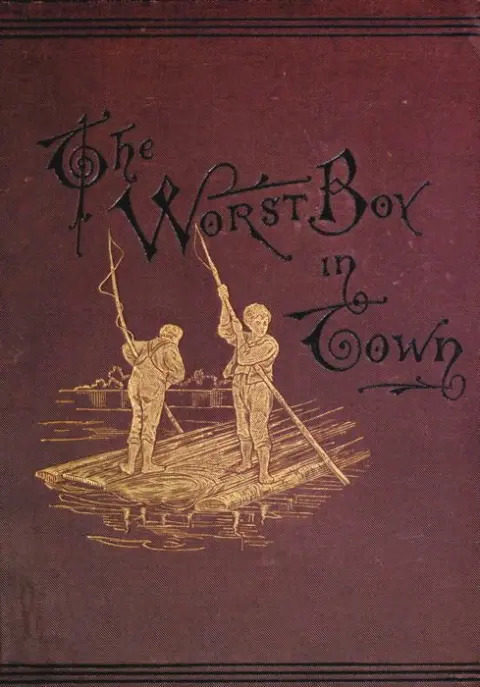
John Habberton
John Habberton
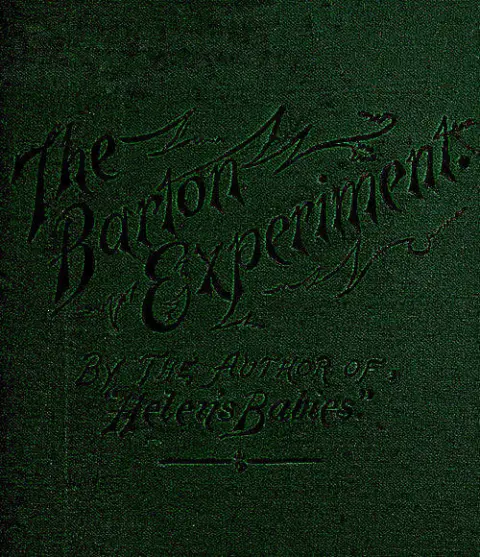
John Habberton
BEHIND THE BOOK
This eBook is for the use of anyone anywhere in the United States and most other parts of the world at no cost and with almost no restrictions whatsoever. You may copy it, give it away or re-use it under the terms of the Project Gutenberg License included with this eBook or online at www.gutenberg.org. If you are not located in the United States, you will have to check the laws of the country where you are located before using this eBook. Read the source licence.
The original source file, including credits and licence, is retained by this library. Request an original-format copy at no charge. Please include the book title and Project Gutenberg identifier #51788.
KEEP YOUR CURIOSITY GOING
Coulson Kernahan

Maurice Baring
Frances Wright
Cécile Tormay

Frederic Jesup Stimson

W. H. P. (William Henry Pope) Jarvis