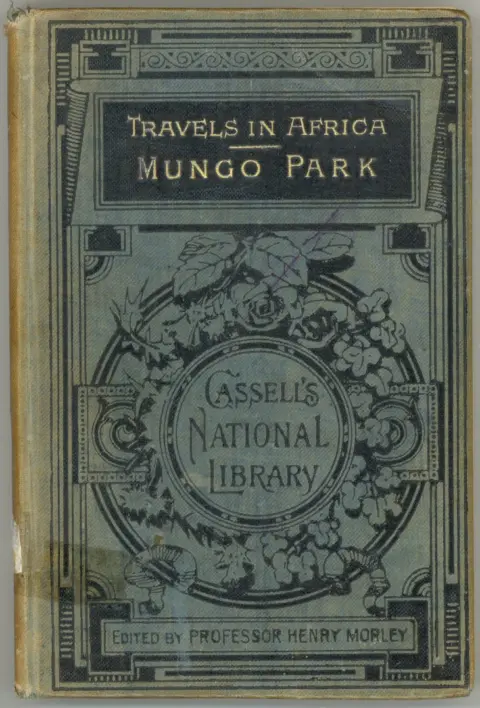
Travels in the interior districts of Africa: performed under the direction and patronage of the African Association, in the years 1795, 1796, and 1797
The skin is now taken off, and extended on the ground with pegs, to dry; and such parts of the flesh as are most esteemed, are cut up into thin slices, and dried in the sun, to serve for provisions on some future occasion. The teeth are struck out with a light hatchet, which the hunters always carry along with them; not only for that purpose, but also to enable them to cut down such trees as contain honey; for though they carry with them only five or six days provisions, they will remain in the woods for months, if they are successful; and support themselves upon the flesh of such elephants as they kill, and wild honey.
The ivory thus collected, is seldom brought down to the Coast by the hunters themselves. They dispose of it to the itinerant merchants, who come annually from the Coast with arms and ammunition, to purchase this valuable commodity. Some of these merchants will collect ivory in the course of one season, sufficient to load four or five asses. A great quantity of ivory is likewise brought from the interior, by the slave coffles; there are, however, some Slatees, of the Mahomedan persuasion, who, from motives of religion, will not deal in ivory; nor eat of the flesh of the elephant, unless it has been killed with a spear.
The quantity of ivory collected in this part of Africa, is not so great, nor are the teeth in general so large as in the countries nearer the Line: few of them weigh more than eighty, or one hundred pounds; and, upon an average, a bar of European merchandise may be reckoned as the price of a pound of ivory.
I have now, I trust, in this and the preceding Chapters, explained with sufficient minuteness, the nature and extent of the commercial connection which at present prevails, and has long subsisted, between the Negro natives of those parts of Africa which I visited, and the nations of Europe; and it appears, that slaves, gold, and ivory, together with the few articles enumerated in the beginning of my work, viz. bees-wax and honey, hides, gums, and dye woods, constitute the whole catalogue of exportable commodities. Other productions, however, have been incidentally noticed as the growth of Africa; such as grain of different kinds, tobacco, indigo, cotton-wool, and perhaps a few others; but of all these (which can only be obtained by cultivation and labour), the natives raise sufficient only for their own immediate expenditure; nor, under the present system of their laws, manners, trade and government, can any thing farther be expected from them. It cannot, however, admit of a doubt, that all the rich and valuable productions, both of the East and West Indies, might easily be naturalized, and brought to the utmost perfection, in the tropical parts of this immense continent. Nothing is wanting to this end, but example, to enlighten the minds of the natives; and instruction, to enable them to direct their industry to proper objects. It was not possible for me to behold the wonderful fertility of the soil, the vast herds of cattle, proper both for labour and food, and a variety of other circumstances favourable to colonization and agriculture; and reflect, withal, on the means which presented themselves of a vast inland navigation, without lamenting that a country, so abundantly gifted and favoured by nature, should remain in its present savage and neglected state. Much more did I lament, that a people of manners and dispositions so gentle and benevolent, should either be left as they now are, immersed in the gross and uncomfortable blindness of pagan superstition, or permitted to become converts to a system of bigotry and fanaticism; which, without enlightening the mind, often debases the heart. On this subject many observations might be made; but the reader will probably think that I have already digressed too largely; and I now, therefore, return to my situation at Kamalia.