THE CLASSIC COLLECTION✦My diaries, being a personal narrative of events 1888-1914, Part 2 (1900-1914)CLASSIC FREE BOOKS
My diaries, being a personal narrative of events 1888-1914, Part 2 (1900-1914)
Wilfrid Scawen Blunt
THE CLASSIC COLLECTION · 1911
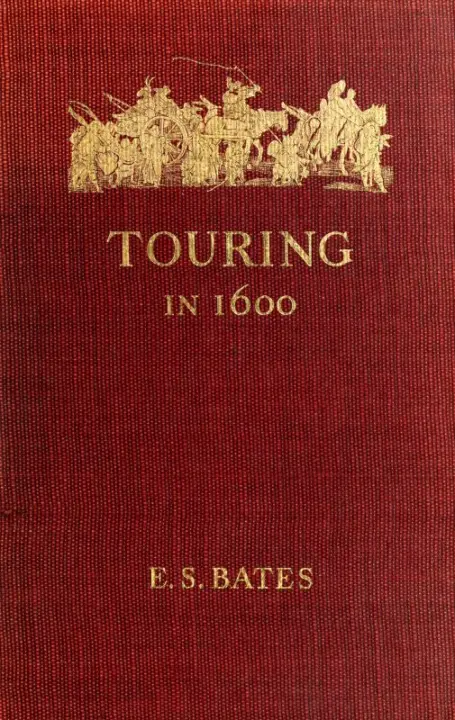
"Touring in 1600: A Study in the Development of Travel as a Means of Education" by E. S. Bates is a historical account written in the early 20th century. The book explores the evolution of travel during the 17th century, particularly focusing on its significance as a form of education, outlining various types of travelers and their motivations in that era. It presents a detailed examination of the cultures, experiences, and writings of notable tourists from this time, highlighting the impact of their journeys on their personal and philosophical development. The opening of the book introduces a variety of travelers from the late 16th and early 17th centuries, emphasizing their differing motivations and backgrounds. It features prominent figures such as Michel de Montaigne, who sought health through travel; Fynes Moryson, a meticulous observer of cultures; and Pietro della Valle, whose romantic adventures intertwined with his explorations. The narrative reflects on the diversity of experiences, from the philosophical inquiries of some travelers to the more practical endeavors of those motivated by trade or diplomacy. Through profiles and anecdotes, the author sets the stage for a broader exploration of travel as a means of acquiring knowledge and understanding, establishing the historical context that facilitates the reader's engagement with the topic.
Introduction adapted from the source catalogue; source summaries may be automatically generated.
Free to read · English · 101,535 words · No account needed
MAKE TIME FOR A GOOD BOOK
On by default. Untick to stop anonymous reading totals. Each page counts after 10 seconds in view. How this works.
Anonymous counting is on unless you have switched it off.
[117] Whitehead, Gaspard de Coligny, p. 25.
[118] Röhricht, p. 293. Cf. also Solerti's Vita di Tasso, i, 137, note I, for Cardinal Luigi d'Este's expenses in France (1570).
[119] H. Weber, J. G. von Aschhausen, Fürstbischof, Wurzburg, 1889,
p. 30.
[120] Smith, Sir Henry Wotton, i, 48 note.
[121] In Bacon's advice to Villiers, Spedding's Life, vi, 43. Cf. "She [i. e. Queen Elizabeth] hath had many Secretaries that have been great Travaylers," from a dialogue by Sir John Davies, in Grosart's edition of his poems, I, 18.
[122] Brit. Mus. MS. Lansdown, 720.
[123] Both in Röhricht, p. 269.
[124] Bodleian MS., Rawlinson, D. 122, at the end.
[125] Röhricht, p. 293.
[126] T. Tobler, Denkblätter, 1853, p. 569.
[127] Cf. references collected in Variorum ed. of Shakespeare's Tempest, p. 180, and in Ben Jonson's Works (1875), ii, 70 ("Every Man out of his Humour"); also Davies' Epigrams, no. 42 (Grosart's ed., p. 343). Writers on insurance ignore all these references and usually content themselves with borrowing without acknowledgement what Hendriks wrote in his Contributions to the History of Insurance (pp. 35-37) as long ago as 1851. Hamon's Histoire Générale de l'Assurance (p. 107) and Journal of the Institute of Actuaries, vol. 25, p. 121, give detail previously unprinted. For ransom-insurance, see also Walford's Insurance Cyclopædia, under "Captivity" and "Casualty." Not one of these authors or editors refers to Tobler (see previous note), or mentions any actual transaction, not even Henry Moryson's. For the other transaction here quoted, see an extract from George Stoddard's MS. accounts in H. Hall's Society in the Elizabethan Age, P. 53.
[128] Hatfield MSS., x, 135.
[129] Cal. S. P. For. 1581-82, p. 43; confirmed by Bodl. MS.,
Rawlinson, C. 799.
[130] Brit. Mus. MS. Harleian, 943.
[131] Cal. S. P. Ven., xiv, 569.
[132] By Gölnitz, pp. 665, 666.
[133] Brit. Mus. MS. Harleian, 943.
[134] Bodl. MS., Rawlinson, C. 799.
[135] Cal. S. P. Ven., 392.
[136] Brit. Mus. MS. Harleian, 943.
[137] Giustiniani.
[138] Hakluyt Soc., 87, pp. 114, 115.
[139] Moryson, the main authority for the tourists' money matters, mentions the practice, but an actual instance of its usefulness will be found related by Sobieski in the extract printed by Liske.
[140] Hatfield MSS. (1595), p. 184.
[141] Hatfield MSS., x, 460; cf. Duke of Buccleugh's Winwood Papers (Hist. MSS. Com., 1899, 46), i, 188.
[142] Röhricht, pp. 273, 274.
[143] Cal. S. P. Ven., ix, 237.
[144] Montagu Papers (Hist. MSS. Com., 1900, 45), p. 124.
[145] Bodl. MS., Rawlinson, C. 799.
[146] Brit. Mus. MS., Sloane, 4217.
[147] Tommaseo, Relations des Ambassadeurs Vénitiens sur ... France,
1838, ii, 284.
[148] See note 11.
[149] Röhricht, pp. 248, 249.
[150] Bodl. MS., Rawlinson, C. 799.
[151] Birch, Court and Times of James I, i, 139.
[152] Locatelli.
[153] J. A. Fischer, Scots in Germany, p. 45. Cf. also A. Schultze's Ueber Gästerecht und Gastgerichte in den deutschen Städten des Mittelalters in Historische Zeitschrift, 1908, pp. 473-528.
[154] Taylor, International Law, sub voce.
[155] De Villers (see Bibliography under Aarssen).
[156] E. Nys, op. cit. vol. 16, p. 189.
[157] Cf. Helmolt's History of the World, vii, 122-133.
Your reading position is saved on this browser. Take it to another device with a library code. Reading pages adapt to text, rather than matching a printed edition.
BEHIND THE BOOK
This eBook is for the use of anyone anywhere in the United States and most other parts of the world at no cost and with almost no restrictions whatsoever. You may copy it, give it away or re-use it under the terms of the Project Gutenberg License included with this eBook or online at www.gutenberg.org. If you are not located in the United States, you will have to check the laws of the country where you are located before using this eBook. Read the source licence.
The original source file, including credits and licence, is retained by this library. Request an original-format copy at no charge. Please include the book title and Project Gutenberg identifier #48594.
KEEP YOUR CURIOSITY GOING
Wilfrid Scawen Blunt
Wilfrid Scawen Blunt

E. W. (Edgar Watson) Howe
Cécile Tormay

Moritz Busch
John L. Ransom