THE CLASSIC COLLECTION✦A Moslem seeker after GodCLASSIC FREE BOOKS
A Moslem seeker after God
Samuel Marinus Zwemer
THE CLASSIC COLLECTION · 1902
"Topsy-Turvy Land: Arabia Pictured for Children" by Samuel M. Zwemer and Amy E. Zwemer is a children’s book written in the early 20th century. This engaging work combines vibrant illustrations with whimsical stories and factual information about Arabian culture, providing a unique blend of entertainment and education. Aimed at young readers, the book presents the contrasts and peculiarities of life in Arabia, entertainingly portraying oddities in customs, geography, and daily living that are perceived as "topsy-turvy" compared to Western norms. The opening portion of the book introduces readers to the concept of Topsy-Turvy Land, where customs and daily life diverge significantly from Western practices. It describes various modes of transportation, emphasizes the unique reading direction of Arabic, and contrasts eating habits, greetings, and other social norms. The authors express a sense of wonder and humor as they depict children's daily lives, including prayer practices and family roles in a society that is both richly cultural and deeply traditional. Ultimately, the text aims to foster understanding and compassion toward the diverse lifestyles in Arabia while encouraging readers to reflect on their values and beliefs.
Introduction adapted from the source catalogue; source summaries may be automatically generated.
Free to read · English · 24,104 words · No account needed
MAKE TIME FOR A GOOD BOOK
On by default. Untick to stop anonymous reading totals. Each page counts after 10 seconds in view. How this works.
Anonymous counting is on unless you have switched it off.
The people of Topsy-turvy Land, like all orientals, are very fond of proverbs and short, bright sayings. You know that even to-day there are men who go about in the coffee shops of Arabia to tell stories, just as you have read in the Arabian Nights. Some of their stories are very interesting and some of their proverbs are wise. Others are not interesting and many of their stories are too bad to repeat. Even some of their proverbs bear the mark of their topsy-turvy religion and are only half true. Judge them for yourself. Here are fifty examples; which do you think is the best proverb among them? Are they all good?
First seek your neighbour, then build your house.
First get a companion, then go on the road.
Whoever dies in a strange land, dies a martyr.
When the judge is oppressive, the very air is, too. Don't cut your head
off with your tongue.
Keep your dog hungry and he will follow you.
Leave off sin, then ask forgiveness.
Every horse knows its rider.
Talk is feminine, but a good answer is masculine.
With little food a bed tastes good.
A trotting dog is better than a sleeping lion.
Every girl is beautiful in her father's eyes.
His tongue is sweeter than dates but his hands are as hard as sticks.
There is no perfume after the wedding.
Clouds do not fear the barking of dogs.
A bird catches a bird.
Poverty is the mother of deceptions.
The fruit of haste is repentance.
That man is like the Kaaba; he goes nowhere but every one comes to him.
The tongue of a fool is the key to his destruction.
The needle clothes others but is itself naked.
If the owl were game to eat, the gunner would not have passed by the
ruined castle.
Happy is the man whose enemy is wise.
Time is stingy of honour.
The best generosity is quick.
If your neighbour is honey, don't lick him all up.
If you don't know a man's parents look at his appearance.
What a strange world if all wool were red!
Fall but don't bawl.
Your enemy will love you when the ass becomes a doctor.
Wait, donkey, till the grass grows.
A loaned garment is not warm.
He is a hard man; his name is Rock, son of a Cliff.
The oppression of a cat is better than the justice of a rat.
While I was fishing, I was caught.
A blacksmith came to shoe the Pasha's horse and a frog in the pond stuck
out her foot too.
One nettle seed will ruin a garden.
Your reading position is saved on this browser. Take it to another device with a library code. Reading pages adapt to text, rather than matching a printed edition.
Samuel Marinus Zwemer

Samuel Marinus Zwemer
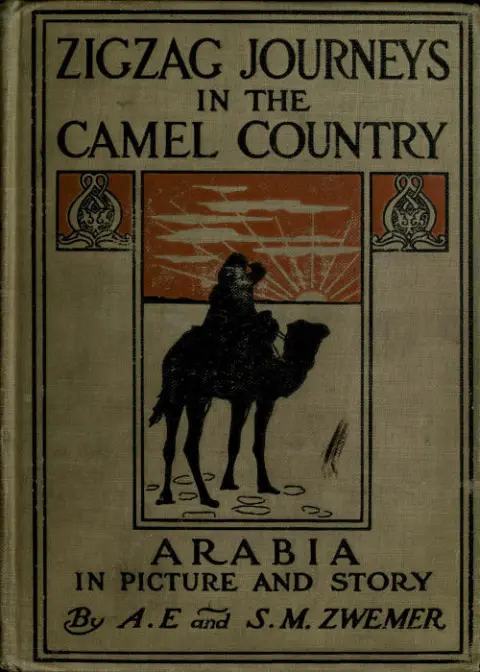
Samuel Marinus Zwemer & Amy E. Zwemer
BEHIND THE BOOK
This eBook is for the use of anyone anywhere in the United States and most other parts of the world at no cost and with almost no restrictions whatsoever. You may copy it, give it away or re-use it under the terms of the Project Gutenberg License included with this eBook or online at www.gutenberg.org. If you are not located in the United States, you will have to check the laws of the country where you are located before using this eBook. Read the source licence.
The original source file, including credits and licence, is retained by this library. Request an original-format copy at no charge. Please include the book title and Project Gutenberg identifier #15658.
KEEP YOUR CURIOSITY GOING
Wilfrid Scawen Blunt
Wilfrid Scawen Blunt

E. W. (Edgar Watson) Howe
Francis Greenleaf Allinson & Anne C. E. (Anne Crosby Emery) Allinson
Cyrenus Cole

John Martineau