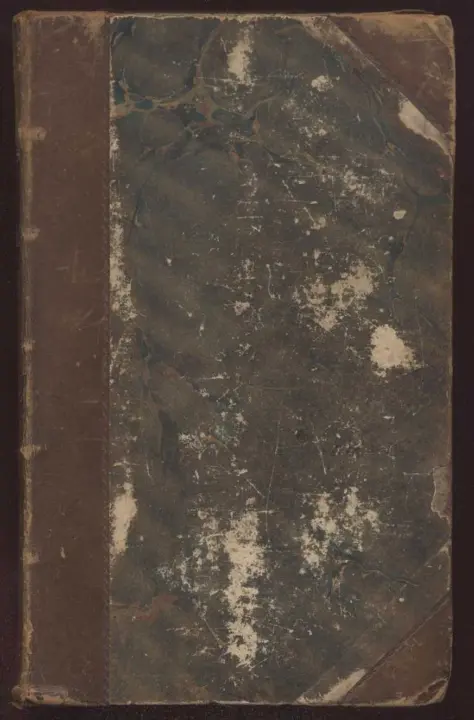
THE CLASSIC COLLECTION✦Sir Jasper Carew: His Life and ExperienceCLASSIC FREE BOOKS
Sir Jasper Carew: His Life and Experience
Charles Lever
THE CLASSIC COLLECTION · 1896
"Tony Butler" by Charles James Lever is a novel written in the late 19th century. The story revolves around the life of Tony Butler, a young man who comes from a modest background, living with his widowed mother in a secluded cottage in Northern Ireland. As Tony grapples with his own limitations and aspirations, the narrative explores themes of identity, class, and ambition in a society with rigid social structures. The opening of the novel sets up the picturesque yet isolating setting of the Butler cottage, highlighting the close bond between Tony and his mother as she dedicates herself to his education. Despite her optimism, Tony struggles with learning and feels a deep sense of inadequacy, wondering how to carve out a meaningful career in a world that seems beyond his reach. The narrative introduces several secondary characters, including the influential Lyle family and the looming expectations they place upon Tony. As he prepares to venture to Liverpool for an uncertain future, the family dynamics and societal pressures become central to understanding Tony's ambitions, fears, and the complex world he must navigate.
Introduction adapted from the source catalogue; source summaries may be automatically generated.
Free to read · English · 199,606 words · No account needed
MAKE TIME FOR A GOOD BOOK
On by default. Untick to stop anonymous reading totals. Each page counts after 10 seconds in view. How this works.
Anonymous counting is on unless you have switched it off.
“I certainly reckon on your accompanying me wherever I deem it essential to proceed in furtherance of my object. Your General said as much when he offered me your services.”
“No man disposes of M'Caskey but the Sovereign he serves.”
“Then I can't see what you have come for!” cried Skeff, angrily.
“Take care, take care,” said the other, slowly.
“Take care of what?”
“Take care of Skeffington Darner, who is running his head into a very considerable scrape. I have the most tenacious of memories; and there's not a word--not a syllable--falls from you, I 'll not make you accountable for hereafter.”
“If you imagine, sir, that a tone of braggadocio--”
“There you go again. Braggadocio costs blood, my young fellow.”
“I'm not to be bullied.”
“No; but you might be shot.”
“You 'll find me as ready as yourself with the pistol.”
“I am charmed to hear it, though I never met a fellow-brought up at a
desk that was so.”
Skeff was by no means deficient in courage, and, taken with a due regard to all the conventional usages of such cases, he would have “met his man” as became a gentle-man; but it was such a new thing in his experiences to travel along in a carriage arranging the terms of a duel with the man who ought to have been his pleasant companion, and who indeed, at the very moment, was smoking his cheroots, that he lost himself in utter bewilderment and confusion.
“What does that small flask contain?” said M'Caskey, pointing to a straw-covered bottle, whose neck protruded from the pocket of the carriage.
“Cherry brandy,” said Skeff, dryly, as he buttoned the pocket-flap over
it.
“It is years upon years since I tasted that truly British cordial.”
Skeff made no reply.
“They never make it abroad, except in Switzerland, and there, too,
badly.”
Still Skeff was silent.
“Have you got a sandwich with you?”
“There is something eatable in that basket,--I don't know what,” said Skeff, pointing to a little neatly corded hamper. “But I thought you had just finished supper when I drove up.”
“You 're a Londoner, I take it,” said M'Caskey.
“Why so, sir? for what reason do you suppose so?”
“The man who reminds another of the small necessity there is to press him to take something--be it meat or drink--must be a Cockney.”
“I am neither a Cockney, nor accustomed to listen to impertinence.”
“Hand me your flask and I 'll give you my opinion of it, and that will be better than this digression.”
Your reading position is saved on this browser. Take it to another device with a library code. Reading pages adapt to text, rather than matching a printed edition.
BEHIND THE BOOK
This eBook is for the use of anyone anywhere in the United States and most other parts of the world at no cost and with almost no restrictions whatsoever. You may copy it, give it away or re-use it under the terms of the Project Gutenberg License included with this eBook or online at www.gutenberg.org. If you are not located in the United States, you will have to check the laws of the country where you are located before using this eBook. Read the source licence.
The original source file, including credits and licence, is retained by this library. Request an original-format copy at no charge. Please include the book title and Project Gutenberg identifier #33604.
KEEP YOUR CURIOSITY GOING
Coulson Kernahan

Maurice Baring
Frances Wright
Cécile Tormay

Frederic Jesup Stimson

W. H. P. (William Henry Pope) Jarvis