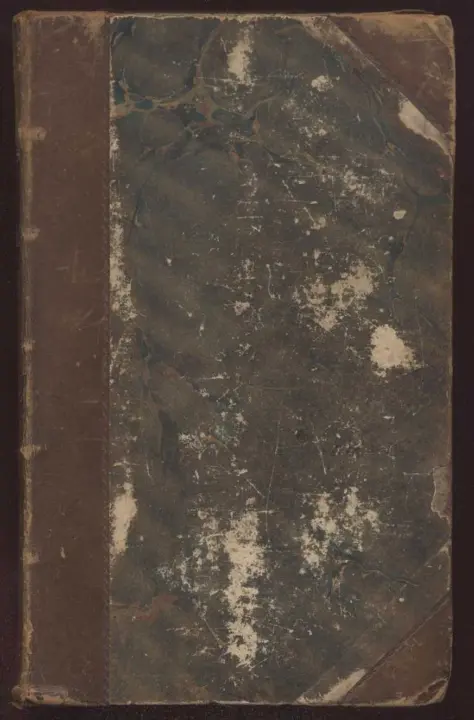
THE CLASSIC COLLECTION✦Sir Jasper Carew: His Life and ExperienceCLASSIC FREE BOOKS
Sir Jasper Carew: His Life and Experience
Charles Lever
THE CLASSIC COLLECTION · 1896
"Tony Butler" by Charles James Lever is a novel written in the late 19th century. The story revolves around the life of Tony Butler, a young man who comes from a modest background, living with his widowed mother in a secluded cottage in Northern Ireland. As Tony grapples with his own limitations and aspirations, the narrative explores themes of identity, class, and ambition in a society with rigid social structures. The opening of the novel sets up the picturesque yet isolating setting of the Butler cottage, highlighting the close bond between Tony and his mother as she dedicates herself to his education. Despite her optimism, Tony struggles with learning and feels a deep sense of inadequacy, wondering how to carve out a meaningful career in a world that seems beyond his reach. The narrative introduces several secondary characters, including the influential Lyle family and the looming expectations they place upon Tony. As he prepares to venture to Liverpool for an uncertain future, the family dynamics and societal pressures become central to understanding Tony's ambitions, fears, and the complex world he must navigate.
Introduction adapted from the source catalogue; source summaries may be automatically generated.
Free to read · English · 199,606 words · No account needed
MAKE TIME FOR A GOOD BOOK
On by default. Untick to stop anonymous reading totals. Each page counts after 10 seconds in view. How this works.
Anonymous counting is on unless you have switched it off.
Skeff held out his cigar-case, and the other coolly emptied it, throwing the contents into his hat, which lay on the cushion in front of him.
“When old Olozaga was Captain-General of Cuba, he always supplied me with havannahs; but when O'Donnell's party came into power, I came down to cheroots, and there I have been ever since. These are not bad.”
“They are considered particularly good, sir,” said Skeff, coldly.
“That I will not say; but I own I am not easy to please either in wine, women, or tobacco.”
“You have had probably large experiences of all three?”
“I should like much to meet the man who called himself my equal.”
“It might be presumptuous in me, perhaps, to stand forward on such ground; but I, too, have seen something of life.”
“You! you!” said M'Caskey, with a most frank impertinence in his tone.
“Yes, sir, I, I,--Mr. Skeffington Darner, Her Majesty's Representative and Chargé d'Affaires at this Court.”
“Where the deuce was it I heard your name?
Darner--Darner--Skeff--Skeffy--I think they called you? Who could it be
that mentioned you?”
“Not impossibly the newspapers, though I suspect they did not employ the familiarity you speak of.”
“Well, Skeff, what's all this business we're bent on? What wildgoose chase are we after here?”
Darner was almost sick with indignation at the fellow's freedom; he nearly burst with the effort it cost him to repress his passion; but he remembered how poor Tony Butler's fate lay in the balance, and that if anything should retard his journey by even an hour, that one hour might decide his friend's destiny.
“Might I take the liberty to observe, sir, that our acquaintance is of the very shortest; and until I shall desire, which I do not anticipate, the privilege of addressing you by your Christian name--”
“I am called Milo,” said M'Caskey; “but no man ever called me so but the late Duke of Wellington; and once, indeed, in a moment of enthusiasm, poor Byron.”
“I shall not imitate them, and I desire that you may know me as Mr.
Damer.”
“Damer or Skeffy--I don't care a rush which--only tell me where are we going, and what are we going for?”
Skeff proceeded in leisurely fashion, but with a degree of cold reserve that he hoped might check all freedom, to explain that he was in search of a young countryman, whom he desired to recall from his service with Garibaldi, and restore to his friends in England.
“And you expect me to cross over to Garibaldi's lines?” asked M'Caskey,
with a grin.
Your reading position is saved on this browser. Take it to another device with a library code. Reading pages adapt to text, rather than matching a printed edition.
BEHIND THE BOOK
This eBook is for the use of anyone anywhere in the United States and most other parts of the world at no cost and with almost no restrictions whatsoever. You may copy it, give it away or re-use it under the terms of the Project Gutenberg License included with this eBook or online at www.gutenberg.org. If you are not located in the United States, you will have to check the laws of the country where you are located before using this eBook. Read the source licence.
The original source file, including credits and licence, is retained by this library. Request an original-format copy at no charge. Please include the book title and Project Gutenberg identifier #33604.
KEEP YOUR CURIOSITY GOING
Coulson Kernahan

Maurice Baring
Frances Wright
Cécile Tormay

Frederic Jesup Stimson

W. H. P. (William Henry Pope) Jarvis