Lillian Morris, and Other Stories
Henryk Sienkiewicz
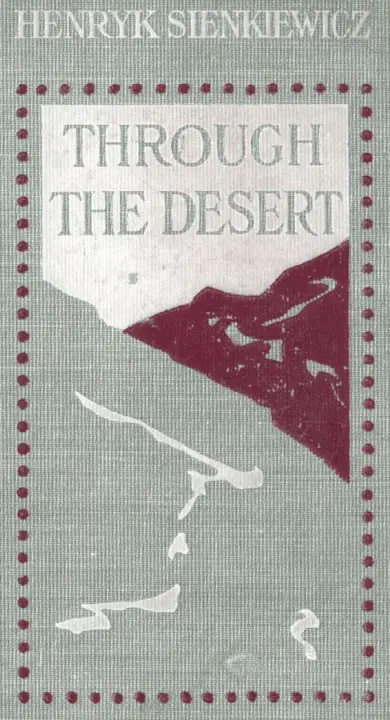
THE CLASSIC COLLECTION · 1912
"Through the Desert" by Henryk Sienkiewicz is a novel written in the early 20th century. The book centers around the adventures of two children, Stasch Tarkowski and Little Nell, as they navigate a tumultuous landscape of political unrest and personal danger in Egypt during the Mahdist revolt. With elements of friendship, bravery, and exploration, the narrative delves into themes of loyalty and the innocence of youth amidst perilous circumstances. At the start of the story, Stasch and Nell are introduced as close friends living in Port Said, Egypt. The narrative begins with their discussions about the Mahdi and the political upheaval affecting their lives, particularly regarding the imprisonment of the wife and children of a government overseer. As the children prepare to accompany their fathers on a journey to inspect canal works in Medinet, their excitement quickly shifts into tension when they realize they are being watched by suspicious figures. The opening chapters set the stage for their eventual kidnapping, revealing the dire circumstances they are thrust into as they navigate their fears and rely on each other for support and protection.
Introduction adapted from the source catalogue; source summaries may be automatically generated.
Free to read · English · 129,408 words · No account needed
MAKE TIME FOR A GOOD BOOK
On by default. Untick to stop anonymous reading totals. Each page counts after 10 seconds in view. How this works.
Anonymous counting is on unless you have switched it off.
Mr. Rawlison and Mr. Tarkowski were really waiting for the children, but not in the midst of the sandy heights of Wadi Rayan, for they had no reason or wish to go there, but in a quite different place, in El-Fasher, a town on the canal of that name, where they were inspecting work done during the preceding year. The distance between El-Fasher and Medinet is about forty-five kilometers in a straight line, but as there is no direct communication, one is obliged to travel by El-Wasta, which almost doubles the distance. Mr. Rawlison consulted the time-table and calculated as follows:
“Chamis went away the day before yesterday,” he said to Mr. Tarkowski, “and in El-Wasta he took the train coming from Cairo, so he must have been in Medinet this morning. The children only need an hour to pack their things. But supposing they left at noon, they would have had to wait for the night train, which runs along the banks of the Nile, and, as I have forbidden Nell to travel by night, they probably started early this morning, and they will reach here a little after sunset.”
“Yes,” said Mr. Tarkowski. “Chamis must rest a little; it is true, Stasch is hot headed, but in anything that concerns Nell he can be relied on. Besides, I sent him a card telling him that they were not to leave at night.”
“He is a capable boy and I have full confidence in him,” replied Mr.
Rawlison.
“Yes, indeed, so have I. In spite of his many faults, Stasch is a boy of good character and never lies, for he is brave, and only a coward lies. He does not lack energy, and later, when his judgment develops, I think he will be able to fight his way through the world.”
“Certainly; but just think if you ever acted with deliberation at his
age?”
“I must confess that I did not!” replied Mr. Tarkowski, laughing; “but perhaps I was not so self-conscious as he is.”
“He will get over that. Meanwhile, be glad that you have such a boy.”
“And you that you have such a sweet, dear little soul as Nell.”
“God bless her,” answered Mr. Rawlison, much affected.
The two friends clasped hands, and then began to examine the plans and cost of the water-works, and so the time passed quickly until evening.
At six o’clock, at night-fall, they went to the station, walked up and down the platform, and continued talking about the children.
“Lovely weather, but cool,” Mr. Rawlison said. “I wonder if Nell has taken warm enough clothing with her?”
“Stasch doubtless thought of it, and Dinah, too.”
Your reading position is saved on this browser. Take it to another device with a library code. Reading pages adapt to text, rather than matching a printed edition.
Henryk Sienkiewicz
Henryk Sienkiewicz
Henryk Sienkiewicz
Henryk Sienkiewicz
BEHIND THE BOOK
This eBook is for the use of anyone anywhere in the United States and most other parts of the world at no cost and with almost no restrictions whatsoever. You may copy it, give it away or re-use it under the terms of the Project Gutenberg License included with this eBook or online at www.gutenberg.org. If you are not located in the United States, you will have to check the laws of the country where you are located before using this eBook. Read the source licence.
The original source file, including credits and licence, is retained by this library. Request an original-format copy at no charge. Please include the book title and Project Gutenberg identifier #60177.
KEEP YOUR CURIOSITY GOING
Cécile Tormay

Moritz Busch
Coulson Kernahan
John L. Ransom

Maurice Baring
Frances Wright