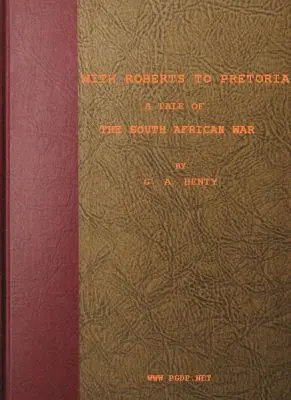
With Roberts to Pretoria: A Tale of The South African War
G. A. (George Alfred) Henty
THE CLASSIC COLLECTION · 1895
"Through Russian Snows: A Story of Napoleon's Retreat from Moscow" by G. A. Henty is a historical novel written in the late 19th century. This work vividly recounts the harrowing retreat of Napoleon's army from Moscow, depicted through the eyes of a central character, Sergeant Julian Wyatt, who embodies the spirit and challenges faced during this tumultuous time. Henty is known for his engaging storytelling that combines adventure with historical detail, making this novel likely to appeal to readers interested in both historical narratives and character-driven plots. At the start of the narrative, we are introduced to the Wyatt brothers, Julian and Frank, following the death of their father, Colonel Wyatt. The opening chapter sets up their contrasting personalities and roles within their family dynamic, particularly highlighting Julian's carefree spirit and Frank's more serious demeanor. The preface mentions the complexity and scale of the campaign against Russia, suggesting a historical backdrop of significant events. As Julian's character unfolds, we see tensions between responsibility and youthful exuberance, setting the stage for his eventual involvement in the historical events that will link back to the retreat from Moscow. The narrative promises a journey filled with wild adventures and moral quandaries against the larger canvas of history.
Introduction adapted from the source catalogue; source summaries may be automatically generated.
Free to read · English · 116,513 words · No account needed
MAKE TIME FOR A GOOD BOOK
On by default. Untick to stop anonymous reading totals. Each page counts after 10 seconds in view. How this works.
Anonymous counting is on unless you have switched it off.
"I think that very likely," the lieutenant replied.
"Had you yourself been struck as the prisoner was struck, Captain
Downes, what course do you think it would have been proper for you to
pursue?"
"I don't know what would have been proper, but I know what I should have done. Magistrate or no magistrate, I should have knocked my assailant down, or at any rate I should have tried to."
"As a naval man, Captain Downes, you have had some experience of the conduct gentlemen generally observe to their prisoners. I presume that it is not their custom to strike them, even if they did make a somewhat free use of their tongues?"
"Certainly not," Captain Downes said emphatically.
"Would you go so far as to say that you would consider it to be a
disgraceful and cowardly act?"
"I should so consider it."
There was again a murmur of applause in court, which was instantly arrested when Mr. Probert held up his hand deprecatingly. "Thank you, Captain Downes," he went on. "Now we come to the question of the quarrel that gave rise to this affair. Mr. Faulkner has not thought fit to ask you any questions about it. Were you standing close enough to hear what passed?"
"I was standing close by, and both Mr. Faulkner and the prisoner spoke loudly enough to be heard at such a distance."
"The magistrate first began the conversation?"
"He did."
"He used very strong language, did he not?"
"Very strong."
"Did you think that he was justified in using such strong language?"
"Certainly not; I thought that it was most improper."
"And do you think that a gentleman accosted so improperly is to be greatly blamed if he uses strong language in return?"
"It would no doubt have been better if he had held his tongue at the time, and have called him to account afterwards."
"Still the provocation was very strong, Captain Downes, and you could
not altogether blame him."
"I did not blame him at all," the witness said curtly.
"And what did you think when Mr. Faulkner suddenly struck his prisoner
in the face?"
"Am I to answer that question?" the witness asked the bench.
"I do not think that it is an improper question," the chairman replied.
"Very well, sir. Then, if I must say it, I thought it was one of the most blackguardly and cowardly things I ever saw done."
"Thank you, Captain Downes. I do not think it necessary to ask you any
further questions."
"Have you any more witnesses to call, Mr. Faulkner?" the chairman asked
coldly.
Your reading position is saved on this browser. Take it to another device with a library code. Reading pages adapt to text, rather than matching a printed edition.
G. A. (George Alfred) Henty
G. A. (George Alfred) Henty
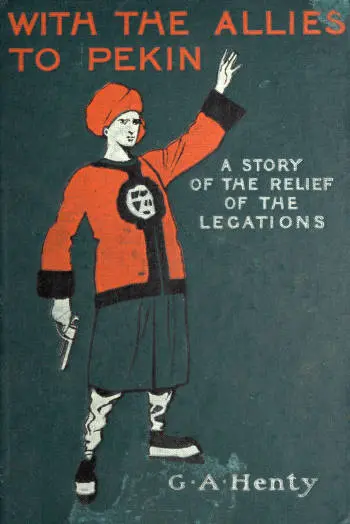
G. A. (George Alfred) Henty
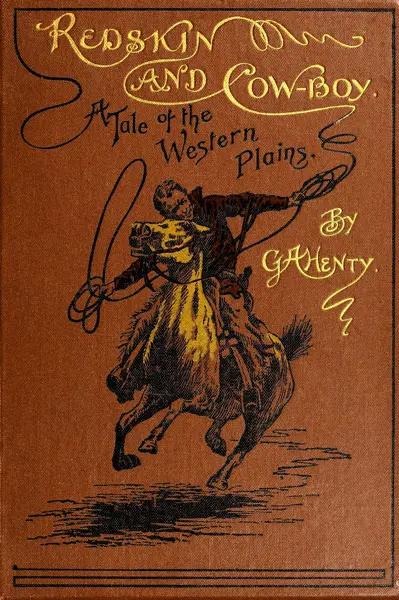
G. A. (George Alfred) Henty
BEHIND THE BOOK
This eBook is for the use of anyone anywhere in the United States and most other parts of the world at no cost and with almost no restrictions whatsoever. You may copy it, give it away or re-use it under the terms of the Project Gutenberg License included with this eBook or online at www.gutenberg.org. If you are not located in the United States, you will have to check the laws of the country where you are located before using this eBook. Read the source licence.
The original source file, including credits and licence, is retained by this library. Request an original-format copy at no charge. Please include the book title and Project Gutenberg identifier #30457.
KEEP YOUR CURIOSITY GOING
Cécile Tormay

Moritz Busch
Coulson Kernahan
John L. Ransom

Maurice Baring
Frances Wright