Piccino, and other child stories
Frances Hodgson Burnett
THE CLASSIC COLLECTION · 1881
"Through One Administration" by Frances Hodgson Burnett is a novel written in the late 19th century. The story centers around the young officer Philip Tredennis, who visits Washington before heading to a military post in the West. During his visit, he interacts with his relative, Professor Herrick, and learns of the professor's daughter, Bertha, who is about to 'come out' into society, a pivotal moment for young women of that era. At the start of the novel, we are introduced to the setting of Washington, D.C., eight years before the significant events unfold. Tredennis meets Professor Herrick, a quiet entomologist, and learns about his daughter Bertha, who is arriving home from school. The professor is both absent-minded and somewhat detached when discussing his daughter, revealing the dynamic between them. Bertha's arrival is marked by excitement and anticipation for her first social season, with her character depicted as lively and charming. As Tredennis interacts with Bertha, hints of deeper feelings and complexities begin to emerge, foreshadowing the emotional entanglements that will develop as the story progresses.
Introduction adapted from the source catalogue; source summaries may be automatically generated.
Free to read · English · 183,113 words · No account needed
MAKE TIME FOR A GOOD BOOK
On by default. Untick to stop anonymous reading totals. Each page counts after 10 seconds in view. How this works.
Anonymous counting is on unless you have switched it off.
"Look here!" he would say, having followed him up to reproach him. "You don't suppose we intend to be treated in this manner? We won't hear of it. We want you. Your stalwart solidity is what we have been needing to give us weight and balance. Only yesterday Bertha was holding you up to Arbuthnot as a model of steadfastness of purpose. We thought we were going to see you every other day, at least, and you have not been near us for a week. Bertha wonders what we have been guilty of."
And then he would be carried up to luncheon or dinner, or to spend the evening; and each visit resulted in another and another, until it gradually became the most natural thing in the world that he should drop in at odd hours, because it seemed that he was always expected, and he appeared to have a place among them.
"Do you know what we shall do with you if you remain here a year?" Bertha had said to him at the outset. "We shall domesticate you. We not only domesticated Mr. Arbuthnot, but we appropriated him. We feel that we have invested largely in him, and that he ought to respect our rights and pay interest. Sometimes I wonder how he likes it, and just now it occurs to me to wonder how you would like it."
"The question is," Tredennis answered, "how you would like it."
He was always conscious of a silent distaste for being compared to Mr. Arbuthnot, and he was also always conscious of the youthful weakness of the feeling.
"It is the kind of thing which belongs to a younger man," he used to say to himself. "It is arrant folly; and yet I am not fond of the fellow."
But, as Bertha had predicted, he became in a manner domesticated in the household. Perhaps the truth was that his natural tendency was toward the comfort and easy communion of home-life. He was a little surprised to find himself develop a strong fancy for children. He had never been averse to them, but he had known nothing of them, and had never suspected himself of any definite disposition to fondness for them. After he had watched Bertha's during a few visits he began to like them, and to be oddly interested in their sayings and doings. He discovered Jack to be a decidedly sturdy and masculine little fellow, with rather more than his share of physical strength and beauty; and, making amicable advances toward him, was met half-way with a fearless readiness which was very attractive. Then he made friends with Janey, and found himself still more interested. Her childish femininity was even better worth studying than Jack's miniature manhood. She was a small, gentle creature, with clinging hands and much faith, but also with a delightful sense of infantile dignity, and the friendship which established itself between them was a very absorbing sentiment. It was not long before it became an understood thing among the juvenile portion of the establishment that Tredennis was to be counted among the spoils. His incoming was greeted with rapture, his outgoing was regarded as a species of calamity only to be borne because it was unavoidable. He could tell stories of Indians and bears, and on more than one occasion was decoyed into the nursery, and found to be not entirely without resources in the matter of building forts with blocks, and defending them against aboriginal warriors with tin soldiers. His own sense of enjoyment of the discovery of these accomplishments in himself filled him with a whimsical pleasure. He began to carry toys in his pockets, and became a connoisseur of such dainties as were considered harmless to the juvenile constitution; and after having been reproved by Janey, on two or three occasions, for the severity of his air, he began also to have a care that the expression of his countenance should be less serious and more likely to win the approval of innocent small creatures, who considered gravity uncalled for and mysterious. At first he had seemed to learn but little of Bertha herself, notwithstanding that a day seldom passed without their meeting, and there were times when he fancied he had determined that there was but little to learn. The gayeties of the season over, she announced her intention of resting; and her manner of accomplishing this end was to inaugurate a series of small festivities, with a result of occupying each day until midnight. She gave small, informal dinners, suppers, and teas to the favored few who would be most likely to enjoy and find them exhilarating, and, when she did not give a dinner or tea, her evenings were bestowed upon Arbuthnot and half a dozen of the inner circle, whose habit it was to drop in and talk politics, literature, or entertaining nonsense.
Your reading position is saved on this browser. Take it to another device with a library code. Reading pages adapt to text, rather than matching a printed edition.
Frances Hodgson Burnett
Frances Hodgson Burnett
Frances Hodgson Burnett
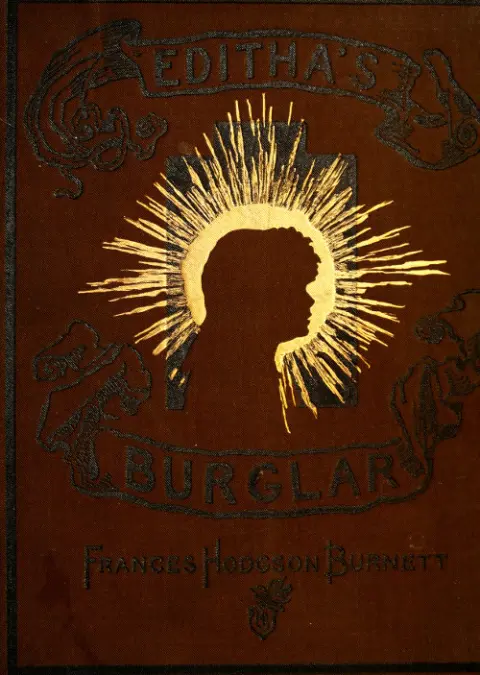
Frances Hodgson Burnett
BEHIND THE BOOK
This eBook is for the use of anyone anywhere in the United States and most other parts of the world at no cost and with almost no restrictions whatsoever. You may copy it, give it away or re-use it under the terms of the Project Gutenberg License included with this eBook or online at www.gutenberg.org. If you are not located in the United States, you will have to check the laws of the country where you are located before using this eBook. Read the source licence.
The original source file, including credits and licence, is retained by this library. Request an original-format copy at no charge. Please include the book title and Project Gutenberg identifier #58325.
KEEP YOUR CURIOSITY GOING
Coulson Kernahan

Maurice Baring
Frances Wright
Cécile Tormay

Frederic Jesup Stimson

W. H. P. (William Henry Pope) Jarvis