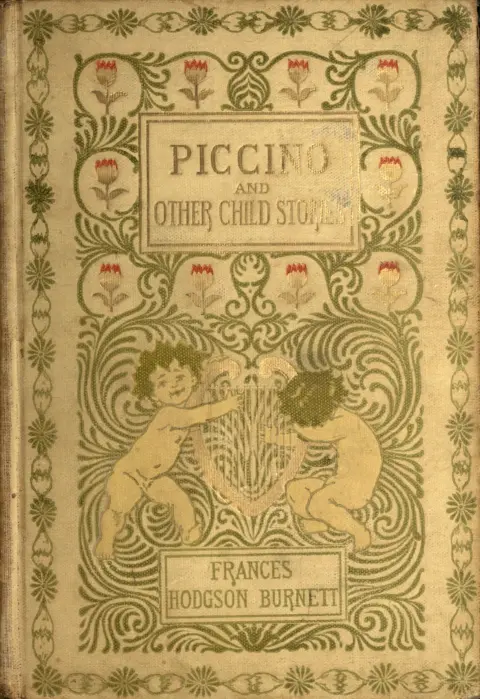
Piccino, and other child stories
Frances Hodgson Burnett
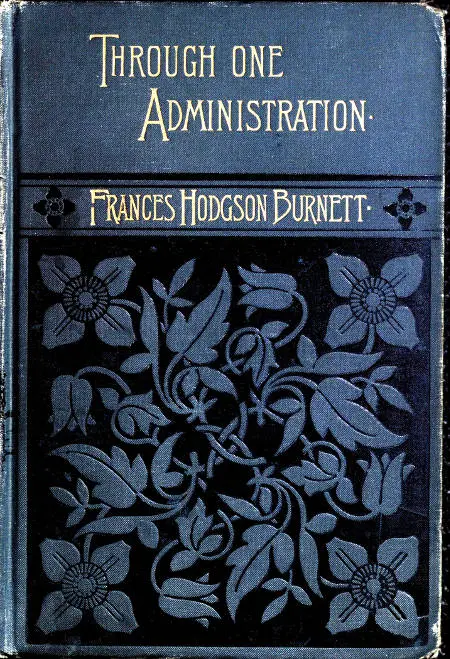
THE CLASSIC COLLECTION · 1881
"Through One Administration" by Frances Hodgson Burnett is a novel written in the late 19th century. The story centers around the young officer Philip Tredennis, who visits Washington before heading to a military post in the West. During his visit, he interacts with his relative, Professor Herrick, and learns of the professor's daughter, Bertha, who is about to 'come out' into society, a pivotal moment for young women of that era. At the start of the novel, we are introduced to the setting of Washington, D.C., eight years before the significant events unfold. Tredennis meets Professor Herrick, a quiet entomologist, and learns about his daughter Bertha, who is arriving home from school. The professor is both absent-minded and somewhat detached when discussing his daughter, revealing the dynamic between them. Bertha's arrival is marked by excitement and anticipation for her first social season, with her character depicted as lively and charming. As Tredennis interacts with Bertha, hints of deeper feelings and complexities begin to emerge, foreshadowing the emotional entanglements that will develop as the story progresses.
Introduction adapted from the source catalogue; source summaries may be automatically generated.
Free to read · English · 183,113 words · No account needed
MAKE TIME FOR A GOOD BOOK
On by default. Untick to stop anonymous reading totals. Each page counts after 10 seconds in view. How this works.
Anonymous counting is on unless you have switched it off.
"How is Bertha?" Tredennis asked.
The professor sat down in his chair and took up the poker quite
carefully.
"She is at a party to-night," he said, poking the fire, "though it is late in the season for parties. She generally is at a party--oftener than not she is at two or three parties."
"Then she must be well," suggested Tredennis.
"Oh, she is well," the professor answered. "And she gets a good deal out of life. She will always get a good deal out of it--in one way or another."
"That is a good thing," remarked Tredennis.
"Very," responded the professor, "if it's all in the one way and not in
the other."
He changed the subject almost immediately, and began to discuss Tredennis' own affairs. His kindly interest in his career touched the younger man's heart. It seemed that he had taken an interest in him from the first, and, silent as he had been, had never lost sight of him.
"It used to strike me that you would be likely to make something of your life," he said, in his quiet, half-abstracted way. "You looked like it. I used to say to myself that if you were my son I should look forward to being proud of you. I--I wish you had been my son, my boy."
"If I had been," answered Tredennis, earnestly, "I should have felt it a reason for aiming high."
The professor smiled faintly.
"Well," he said, "you aimed high without that incentive. And the best of it is that you have not failed. You are a strong fellow. I like--a--strong--fellow," he added, slowly.
He spoke of Bertha occasionally again in the course of their after conversation, but not as it had been his habit to speak of her in her girlhood. His references to her were mostly statements of facts connected with her children, her mode of life, or her household. She lived near him, her home was an attractive one, and her children were handsome, healthy, and bright.
"Amory is a bright fellow, and a handsome fellow," he said. "He is not very robust, but he is an attractive creature--sensitive, poetic temperament, fanciful. He is fanciful about Bertha, and given to admiring her."
When he went away, at the end of the evening, Tredennis carried with him the old vague sense of discomfort. The professor had been interesting and conversational, and had given him the warmest of welcomes, but he had missed something from their talk which he had expected to find. He was not aware of how he had counted upon it until he missed it, and the sense of loss which he experienced was a trouble to him.
Your reading position is saved on this browser. Take it to another device with a library code. Reading pages adapt to text, rather than matching a printed edition.
Frances Hodgson Burnett
Frances Hodgson Burnett
Frances Hodgson Burnett
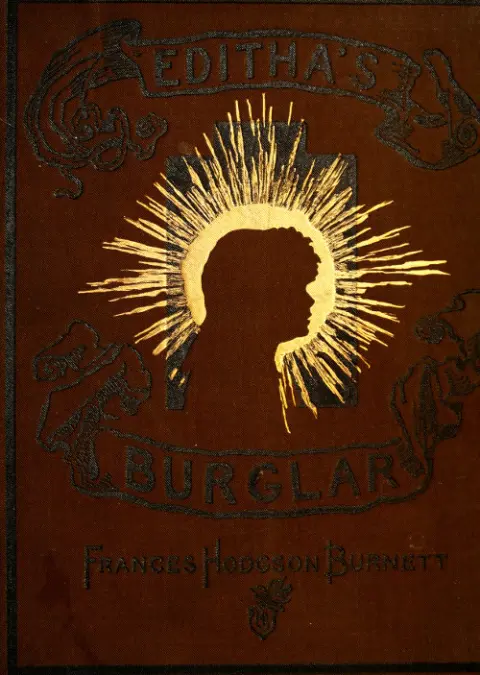
Frances Hodgson Burnett
BEHIND THE BOOK
This eBook is for the use of anyone anywhere in the United States and most other parts of the world at no cost and with almost no restrictions whatsoever. You may copy it, give it away or re-use it under the terms of the Project Gutenberg License included with this eBook or online at www.gutenberg.org. If you are not located in the United States, you will have to check the laws of the country where you are located before using this eBook. Read the source licence.
The original source file, including credits and licence, is retained by this library. Request an original-format copy at no charge. Please include the book title and Project Gutenberg identifier #58325.
KEEP YOUR CURIOSITY GOING
Coulson Kernahan

Maurice Baring
Frances Wright
Cécile Tormay

Frederic Jesup Stimson

W. H. P. (William Henry Pope) Jarvis