Piccino, and other child stories
Frances Hodgson Burnett
THE CLASSIC COLLECTION · 1881
"Through One Administration" by Frances Hodgson Burnett is a novel written in the late 19th century. The story centers around the young officer Philip Tredennis, who visits Washington before heading to a military post in the West. During his visit, he interacts with his relative, Professor Herrick, and learns of the professor's daughter, Bertha, who is about to 'come out' into society, a pivotal moment for young women of that era. At the start of the novel, we are introduced to the setting of Washington, D.C., eight years before the significant events unfold. Tredennis meets Professor Herrick, a quiet entomologist, and learns about his daughter Bertha, who is arriving home from school. The professor is both absent-minded and somewhat detached when discussing his daughter, revealing the dynamic between them. Bertha's arrival is marked by excitement and anticipation for her first social season, with her character depicted as lively and charming. As Tredennis interacts with Bertha, hints of deeper feelings and complexities begin to emerge, foreshadowing the emotional entanglements that will develop as the story progresses.
Introduction adapted from the source catalogue; source summaries may be automatically generated.
Free to read · English · 183,113 words · No account needed
MAKE TIME FOR A GOOD BOOK
On by default. Untick to stop anonymous reading totals. Each page counts after 10 seconds in view. How this works.
Anonymous counting is on unless you have switched it off.
"If you could make anything of me but Bertha Amory," she replied, "you might do a service to society; but that is out of the question, and as to there being something wrong with me, there is something wrong with all of us. There is something wrong with Mr. Arbuthnot, he is not enjoying himself; there is something wrong with Senator Planefield, who has been gloomy all the evening."
"Planefield," he said. "Ah! yes, there he is! Here pretty often, isn't
he?"
"He is a great friend of Richard's," she replied, with discretion.
"So I have heard," he returned. And then he gave his attention to Planefield for a few minutes, as if he found him also an object of deep interest. After this inspection he turned to Bertha again.
"Well," he said, "I suppose you enjoy all this, or you wouldn't do it?"
"You are not enjoying it," she replied. "It does not exhilarate you as I
hoped it would."
"I am out of humor," was his answer. "I told you so. I have just heard something I don't like. I dropped in here to stay five minutes, and take a look at you and see if"--
He checked himself and rubbed his upright hair impatiently, almost
angrily.
"I am not sure that you mightn't be enjoying yourself better," he said, "and I should like to know something more of you than I do."
"If any information I can give you"--she began.
"Come," he said, with a sudden effort at better humor, "that is the way you talk to Planefield. We are too good friends for that."
His shrewd eyes fixed themselves on her as if asking the unanswered
question again.
"Come!" he said. "I'm a blunt, old-fashioned fogy, but we are good, honest friends,--and always have been."
She glanced across the room at Richard, who was talking to a stubborn opposer of the great measure, and making himself delightful beyond description. She wished for the moment that he was not quite so picturesque and animated; then she gathered herself together.
"I think we have been," she said. "I hope you will believe so."
"Well," he answered, "I shouldn't like to believe anything else."
She thought that perhaps he had said more than he originally intended; he changed the subject abruptly, made a few comments upon people near them, asked a few questions, and finally went away, having scarcely spoken to any one but herself.
"Why did he not remain longer?" Richard asked afterward, when the guests were gone and they were talking the evening over.
Your reading position is saved on this browser. Take it to another device with a library code. Reading pages adapt to text, rather than matching a printed edition.
Frances Hodgson Burnett
Frances Hodgson Burnett
Frances Hodgson Burnett
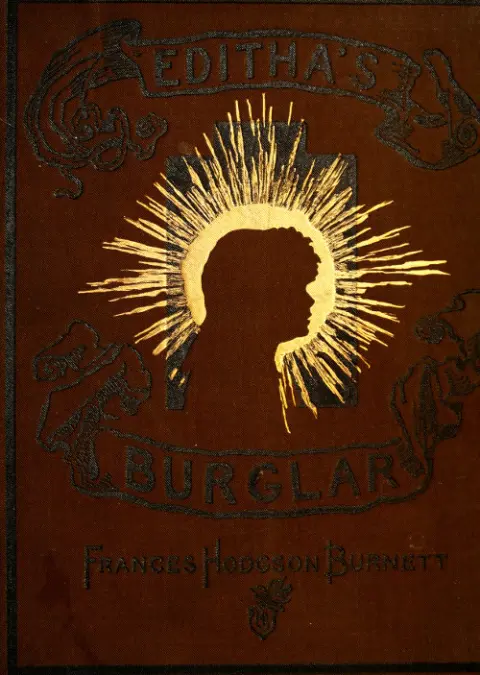
Frances Hodgson Burnett
BEHIND THE BOOK
This eBook is for the use of anyone anywhere in the United States and most other parts of the world at no cost and with almost no restrictions whatsoever. You may copy it, give it away or re-use it under the terms of the Project Gutenberg License included with this eBook or online at www.gutenberg.org. If you are not located in the United States, you will have to check the laws of the country where you are located before using this eBook. Read the source licence.
The original source file, including credits and licence, is retained by this library. Request an original-format copy at no charge. Please include the book title and Project Gutenberg identifier #58325.
KEEP YOUR CURIOSITY GOING
Coulson Kernahan

Maurice Baring
Frances Wright
Cécile Tormay

Frederic Jesup Stimson

W. H. P. (William Henry Pope) Jarvis