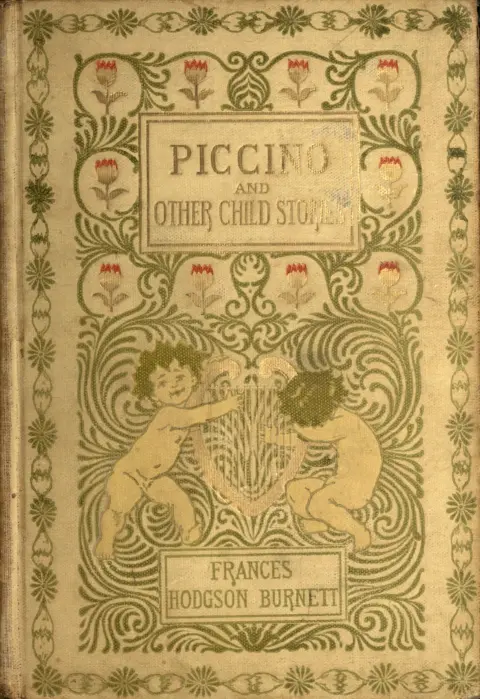
Piccino, and other child stories
Frances Hodgson Burnett
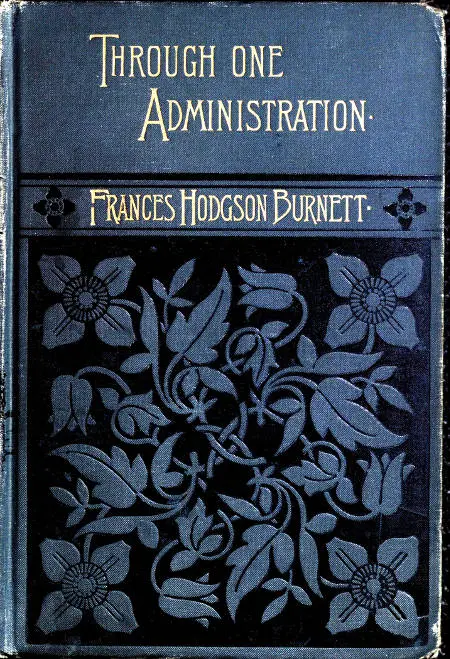
THE CLASSIC COLLECTION · 1881
"Through One Administration" by Frances Hodgson Burnett is a novel written in the late 19th century. The story centers around the young officer Philip Tredennis, who visits Washington before heading to a military post in the West. During his visit, he interacts with his relative, Professor Herrick, and learns of the professor's daughter, Bertha, who is about to 'come out' into society, a pivotal moment for young women of that era. At the start of the novel, we are introduced to the setting of Washington, D.C., eight years before the significant events unfold. Tredennis meets Professor Herrick, a quiet entomologist, and learns about his daughter Bertha, who is arriving home from school. The professor is both absent-minded and somewhat detached when discussing his daughter, revealing the dynamic between them. Bertha's arrival is marked by excitement and anticipation for her first social season, with her character depicted as lively and charming. As Tredennis interacts with Bertha, hints of deeper feelings and complexities begin to emerge, foreshadowing the emotional entanglements that will develop as the story progresses.
Introduction adapted from the source catalogue; source summaries may be automatically generated.
Free to read · English · 183,113 words · No account needed
MAKE TIME FOR A GOOD BOOK
On by default. Untick to stop anonymous reading totals. Each page counts after 10 seconds in view. How this works.
Anonymous counting is on unless you have switched it off.
"She's begun well," he said, when he had an opportunity to speak to him. "I never saw him in a better humor. She's pleased him somehow. Women don't touch him usually."
"She will end better," said Richard. "He pleases her."
He did not displease her, at all events. She saw the force and humor of his stalwart jokes, and was impressed by the shrewd, business-like good-nature which betrayed nothing. When he began to enjoy himself she liked the genuineness of his enjoyment all the more because it was a personal matter with him, and he seemed to revel in it.
"He enjoys himself," was her mental comment, "really himself, not exactly the rest of us, except as we stimulate him, and make him say good things."
Among the chief of her gifts had always been counted the power of stimulating people, and making them say their best things, and she made the most of this power now. She listened with her brightest look, she uttered her little exclamations of pleasure and interest at exactly the right moment, and the gay ring of her spontaneous sounding laugh was perfection. Miss Varien, who was one of her guests, sat and regarded her with untempered admiration.
"Your wife," she said to Amory, in an undertone, "is simply incomparable. It is not necessary to tell you that, of course; but it strikes me with fresh force this evening. She really seems to enjoy things. That air of gay, candid delight is irresistible. It makes her seem to that man like a charming little girl--a harmless, bright, sympathetic little girl. How he likes her!"
When she went in to dinner with him, and he sat by her side, he liked her still more. He had never been in better spirits in his life; he had never said so many things worth remembering; he had never heard such sparkling and vivacious talk as went on round this particular table. It never paused or lagged. There was Amory, all alight and stirred by every conversational ripple which passed him; there was Miss Varien, scintillating and casting off showers of sparks in the prettiest and most careless fashion; there was Laurence Arbuthnot, doing his share without any apparent effort, and appreciating his neighbors to the full; there was Mrs. Sylvestre, her beautiful eyes making speech almost superfluous, and Mrs. Merriam, occasionally casting into the pool some neatly weighted pebble, which sent its circles to the shore; and in the midst of the coruscations Blundel found himself, somehow, doing quite his portion of the illumination. Really these people and their dinner-party pleased him wonderfully well, and he was far from sorry that he had come, and far from sure that he should not come again if he were asked. He was shrewd enough, too, to see how much the success of everything depended upon his own little companion at the head of the table, and, respecting success beyond all things, after the manner of his kind, he liked her all the better for it. There was something about her which, as Miss Varien had said, made him feel that she was like a bright, sympathetic little girl, and engendered a feeling of fatherly patronage which was entirely comfortable. But, though she rather led others to talk than talked herself, he noticed that she said a sharp thing now and then; and he liked that, too, and was greatly amused by it. He liked women to be sharp, if they were not keen enough to interfere with masculine prerogatives. There was only one person in the company he did not find exhilarating, and that was a large, brown-faced fellow, who sat next to Mrs. Merriam, and said less than might have been expected of him, though, when he spoke, his remarks were well enough in their way. Blundel mentioned him afterward to Bertha when they returned to the parlor.
Your reading position is saved on this browser. Take it to another device with a library code. Reading pages adapt to text, rather than matching a printed edition.
Frances Hodgson Burnett
Frances Hodgson Burnett
Frances Hodgson Burnett
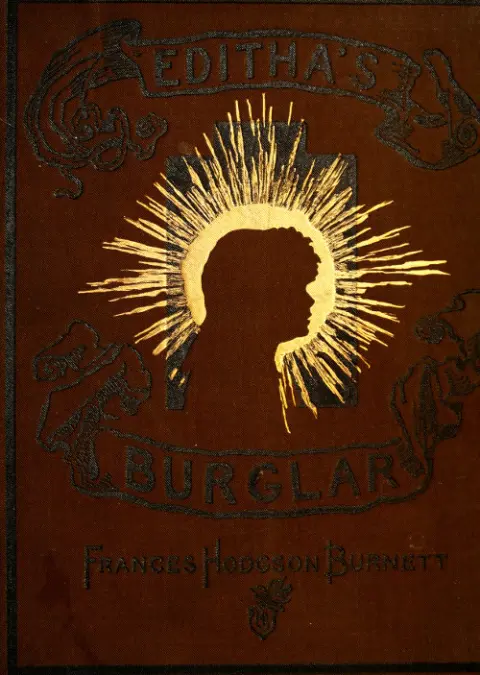
Frances Hodgson Burnett
BEHIND THE BOOK
This eBook is for the use of anyone anywhere in the United States and most other parts of the world at no cost and with almost no restrictions whatsoever. You may copy it, give it away or re-use it under the terms of the Project Gutenberg License included with this eBook or online at www.gutenberg.org. If you are not located in the United States, you will have to check the laws of the country where you are located before using this eBook. Read the source licence.
The original source file, including credits and licence, is retained by this library. Request an original-format copy at no charge. Please include the book title and Project Gutenberg identifier #58325.
KEEP YOUR CURIOSITY GOING
Coulson Kernahan

Maurice Baring
Frances Wright
Cécile Tormay

Frederic Jesup Stimson

W. H. P. (William Henry Pope) Jarvis