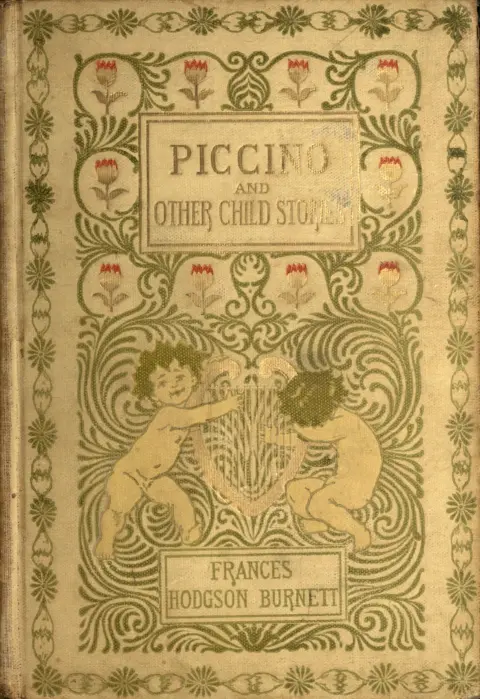
Piccino, and other child stories
Frances Hodgson Burnett
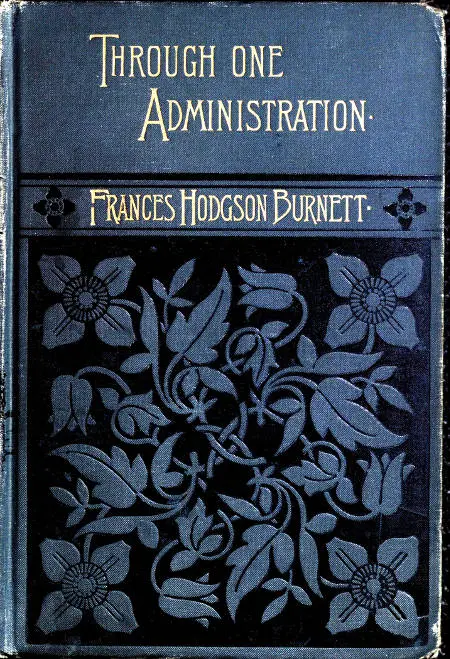
THE CLASSIC COLLECTION · 1881
"Through One Administration" by Frances Hodgson Burnett is a novel written in the late 19th century. The story centers around the young officer Philip Tredennis, who visits Washington before heading to a military post in the West. During his visit, he interacts with his relative, Professor Herrick, and learns of the professor's daughter, Bertha, who is about to 'come out' into society, a pivotal moment for young women of that era. At the start of the novel, we are introduced to the setting of Washington, D.C., eight years before the significant events unfold. Tredennis meets Professor Herrick, a quiet entomologist, and learns about his daughter Bertha, who is arriving home from school. The professor is both absent-minded and somewhat detached when discussing his daughter, revealing the dynamic between them. Bertha's arrival is marked by excitement and anticipation for her first social season, with her character depicted as lively and charming. As Tredennis interacts with Bertha, hints of deeper feelings and complexities begin to emerge, foreshadowing the emotional entanglements that will develop as the story progresses.
Introduction adapted from the source catalogue; source summaries may be automatically generated.
Free to read · English · 183,113 words · No account needed
MAKE TIME FOR A GOOD BOOK
On by default. Untick to stop anonymous reading totals. Each page counts after 10 seconds in view. How this works.
Anonymous counting is on unless you have switched it off.
"That was not necessary," responded Tredennis.
He could not remove his own eyes from her face, even while he was resenting the fact that Planefield looked at her; he himself watched her every movement and change of expression.
"It was entirely unnecessary," she returned; "but it is the truth."
"You are trying to prejudice him against her," said Planefield.
"She is my ideal of all that a beautiful woman ought to be," she replied, "and I should like to form myself upon her."
"Oh, we don't want any of that," put in Planefield. "You are good enough
for us."
She turned her attention to him. Her eyes met his with the most ingenuous candor, and yet the little smile in them was too steady not to carry suggestion with it.
"Quite?" she said.
"Yes, quite," he answered, not so entirely at ease as before.
Her little smile did not waver in the least.
"Do you know," she said, "it seems almost incredible, but I will try to believe it. Now," she said to Tredennis, "if Senator Planefield will excuse me for a moment, I will take you into the other room. You shall speak to Mrs. Sylvestre. He has already seen her. Will you come?"
"I shall be very glad," he answered. He followed as she led him to the adjoining room. On its threshold she paused an instant.
"Exactly as I expected," she said. "She is listening to Mr. Arbuthnot."
Mr. Arbuthnot was standing at the end of the low mantel. He held a cup of coffee in his hand, but had apparently forgotten it in giving his attention to his very charming companion. This companion was, of course, Mrs. Sylvestre herself. Tredennis recognized her clear, faintly tinted face and light, willowy figure at once. She wore a dress of black lace, with purple passion-flowers, and she was looking at Arbuthnot with reflective eyes, almost the color of the flowers. She did not seem to be talking herself, but she was listening beautifully, with a graceful, receptive attention. Arbuthnot evidently felt it, and was improving his shining hour with a sense of enjoyment tempered by no lack of ability to avail himself of its fleeting pleasure.
It is possible, however, that his rapture at seeing Tredennis may have been tempered by the natural weakness of man, but he bore himself with his usual unperturbed equanimity.
"There," he remarked to Mrs. Sylvestre, "is the most objectionable
creature in Washington."
"Objectionable!" Mrs. Sylvestre repeated. "Bertha is bringing him here."
"Yes," responded Arbuthnot, "that is the objection to him, and it leaves him without a redeeming quality."
Your reading position is saved on this browser. Take it to another device with a library code. Reading pages adapt to text, rather than matching a printed edition.
Frances Hodgson Burnett
Frances Hodgson Burnett
Frances Hodgson Burnett
Frances Hodgson Burnett
BEHIND THE BOOK
This eBook is for the use of anyone anywhere in the United States and most other parts of the world at no cost and with almost no restrictions whatsoever. You may copy it, give it away or re-use it under the terms of the Project Gutenberg License included with this eBook or online at www.gutenberg.org. If you are not located in the United States, you will have to check the laws of the country where you are located before using this eBook. Read the source licence.
The original source file, including credits and licence, is retained by this library. Request an original-format copy at no charge. Please include the book title and Project Gutenberg identifier #58325.
KEEP YOUR CURIOSITY GOING
Coulson Kernahan

Maurice Baring
Frances Wright
Cécile Tormay

Frederic Jesup Stimson

W. H. P. (William Henry Pope) Jarvis