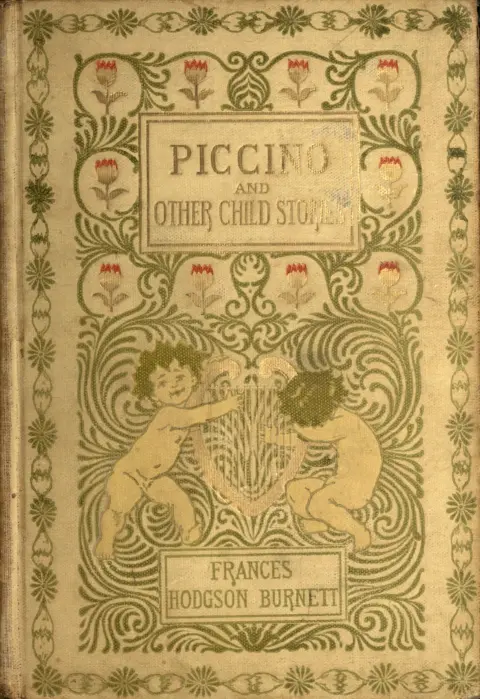
Piccino, and other child stories
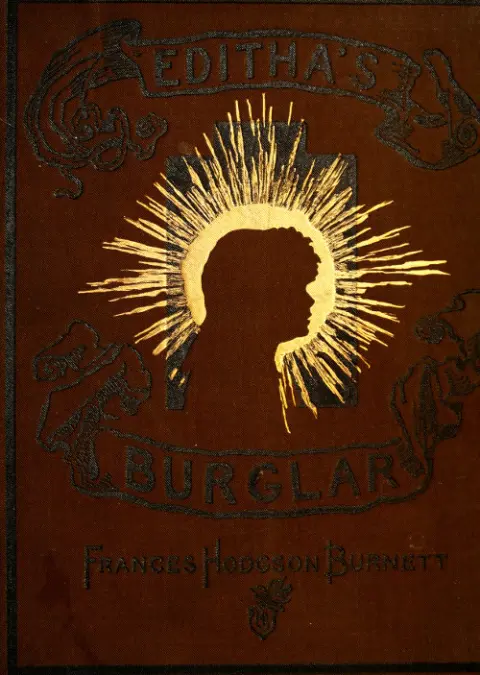
Frances Hodgson Burnett
THE CLASSIC COLLECTION · 1881
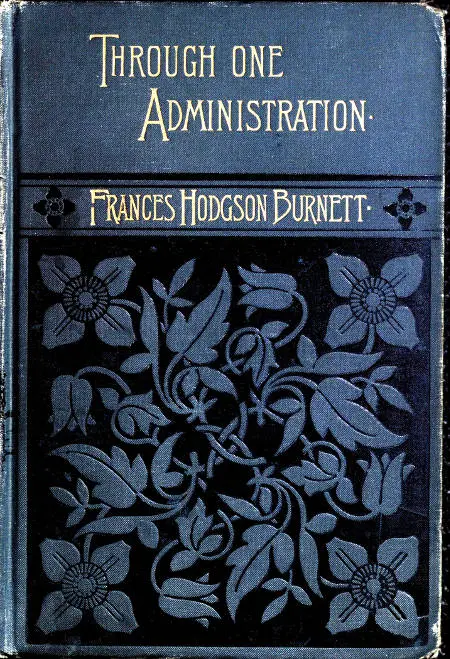
"Through One Administration" by Frances Hodgson Burnett is a novel written in the late 19th century. The story centers around the young officer Philip Tredennis, who visits Washington before heading to a military post in the West. During his visit, he interacts with his relative, Professor Herrick, and learns of the professor's daughter, Bertha, who is about to 'come out' into society, a pivotal moment for young women of that era. At the start of the novel, we are introduced to the setting of Washington, D.C., eight years before the significant events unfold. Tredennis meets Professor Herrick, a quiet entomologist, and learns about his daughter Bertha, who is arriving home from school. The professor is both absent-minded and somewhat detached when discussing his daughter, revealing the dynamic between them. Bertha's arrival is marked by excitement and anticipation for her first social season, with her character depicted as lively and charming. As Tredennis interacts with Bertha, hints of deeper feelings and complexities begin to emerge, foreshadowing the emotional entanglements that will develop as the story progresses.
Introduction adapted from the source catalogue; source summaries may be automatically generated.
Free to read · English · 183,113 words · No account needed
MAKE TIME FOR A GOOD BOOK
On by default. Untick to stop anonymous reading totals. Each page counts after 10 seconds in view. How this works.
Anonymous counting is on unless you have switched it off.
He turned away to have an interview with Bertha, whom he took to the window at the opposite end of the room, and after it was over they came back together.
"She is not so ill as she was yesterday," he said; "and she was not so ill then as you thought her." He turned and looked at Bertha herself. "She doesn't need as much care now as you do," he said, "that's my impression. What have you been doing with yourself?"
"Taking care of her," she answered, "since she began to complain of not
feeling well."
He was a bluff, kindly fellow, with a bluff, kindly way, and he shook a
big forefinger at her.
"You have been carrying her up and down in your arms," he said. "Don't
deny it."
"No," she answered, "I won't deny it."
"Of course," he said. "I know you--carrying her up and down in your arms, and singing to her and telling her stories, and holding her on your knee when you weren't doing anything worse. You'd do it if she were three times the size."
She blushed guiltily, and looked at Janey.
"Good Heaven!" he said. "You women will drive me mad! Don't let me hear any more about fashionable mothers who kill their children! I find my difficulty in fashionable children who kill their mothers, and in little simpletons who break down under the sheer weight of their maternal nonsense. Who was it who nearly died of the measles?"
"But--but," she faltered, deprecatingly, "I don't think I ever had the
measles."
"They weren't your measles," he said, with amiable sternness. "They were Jack's, and Janey's, and Meg's, and so much the worse."
"But," she interposed, with a very pretty eagerness, "they got through them beautifully, and there wasn't a cold among them."
"There wouldn't have been a cold among them if you'd let a couple of sensible nurses take care of them. Do you suppose I'm not equal to bringing three children through the measles? It's all nonsense, and sentiment, and self-indulgence. You like to do it, and you do it, and, as a natural consequence, you die of somebody else's measles--or come as near it as possible."
She blushed as guiltily as before, and looked at Janey again.
"I think she is very much better," she said.
"Yes," he answered, "she is better, and I want to see you better. Who is going to help you to take care of her?"
"I came to try to do that," said Tredennis.
Bertha turned to look at him.
"You?" she exclaimed. "Oh, no! You are very good; but now the worst is
over, I couldn't"--
Your reading position is saved on this browser. Take it to another device with a library code. Reading pages adapt to text, rather than matching a printed edition.
Frances Hodgson Burnett
Frances Hodgson Burnett
Frances Hodgson Burnett
Frances Hodgson Burnett
BEHIND THE BOOK
This eBook is for the use of anyone anywhere in the United States and most other parts of the world at no cost and with almost no restrictions whatsoever. You may copy it, give it away or re-use it under the terms of the Project Gutenberg License included with this eBook or online at www.gutenberg.org. If you are not located in the United States, you will have to check the laws of the country where you are located before using this eBook. Read the source licence.
The original source file, including credits and licence, is retained by this library. Request an original-format copy at no charge. Please include the book title and Project Gutenberg identifier #58325.
KEEP YOUR CURIOSITY GOING
Coulson Kernahan

Maurice Baring
Frances Wright
Cécile Tormay

Frederic Jesup Stimson

W. H. P. (William Henry Pope) Jarvis