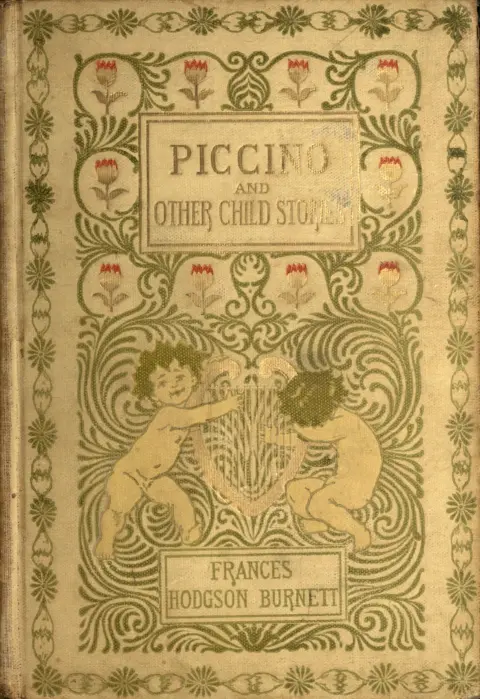
Piccino, and other child stories
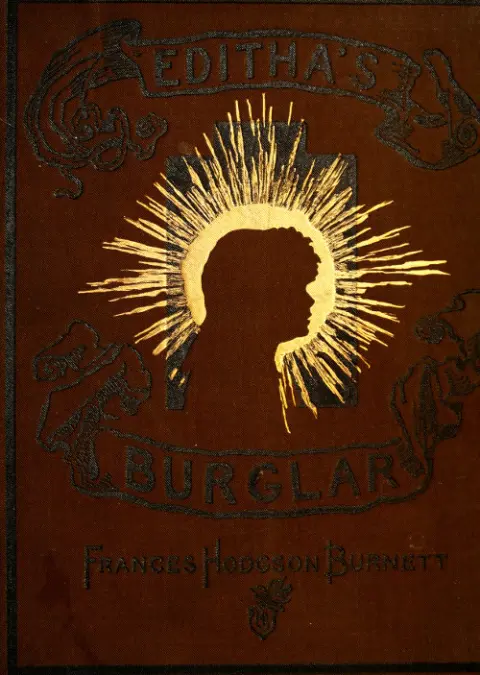
Frances Hodgson Burnett
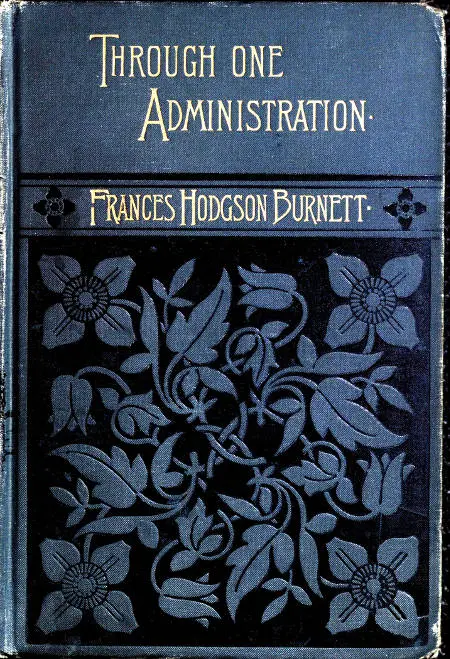
THE CLASSIC COLLECTION · 1881
"Through One Administration" by Frances Hodgson Burnett is a novel written in the late 19th century. The story centers around the young officer Philip Tredennis, who visits Washington before heading to a military post in the West. During his visit, he interacts with his relative, Professor Herrick, and learns of the professor's daughter, Bertha, who is about to 'come out' into society, a pivotal moment for young women of that era. At the start of the novel, we are introduced to the setting of Washington, D.C., eight years before the significant events unfold. Tredennis meets Professor Herrick, a quiet entomologist, and learns about his daughter Bertha, who is arriving home from school. The professor is both absent-minded and somewhat detached when discussing his daughter, revealing the dynamic between them. Bertha's arrival is marked by excitement and anticipation for her first social season, with her character depicted as lively and charming. As Tredennis interacts with Bertha, hints of deeper feelings and complexities begin to emerge, foreshadowing the emotional entanglements that will develop as the story progresses.
Introduction adapted from the source catalogue; source summaries may be automatically generated.
Free to read · English · 183,113 words · No account needed
MAKE TIME FOR A GOOD BOOK
On by default. Untick to stop anonymous reading totals. Each page counts after 10 seconds in view. How this works.
Anonymous counting is on unless you have switched it off.
"Her friendship would be a good defence for a man against any wrong that was in him," said Arbuthnot, and this time the sudden stir of feeling in him was not altogether concealed. "Let me have my way," he ended. "It will do no harm."
"It will do no good," said Tredennis.
"No," answered Arbuthnot, recovering his impervious air, "it will do no good, but one has to be sanguine to expect good. Perhaps I need pity," he added. "Suppose you are generous and show it me."
He could not help seeing the dramatic side of the situation, and with half-conscious irony abandoning himself to it. All at once he seemed to have deserted the well-regulated and decently arranged commonplaces of his ordinary life, and to be taking part in a theatrical performance of rather fine and subtle quality, and he waited with intense interest to see what Tredennis would do.
What he did was characteristic of him. He had unconsciously taken two or three hurried steps across the room, and he turned and stood still.
"It is I who must go," he said.
"You are sure of that?" said Arbuthnot.
"We have never found it easy to understand each other," Tredennis answered, "though perhaps you have understood me better than I have understood you. You are quicker and more subtle than I am. I only seem able to see one thing at a time, and do one thing. I only see one thing now. It is better that I should go."
"You mean," said Arbuthnot, "better for me?"
Tredennis looked down at the floor.
"Yes," he answered.
A second or so of silence followed, in which Arbuthnot simply stood and looked at him. The utter uselessness of the effort he had made was borne in upon him in a manner which overpowered him.
"Then," he remarked at length, "if you are considering me, there seems nothing more to be said. Will you go and tell the professor that you are called away, or shall I?"
"I will go myself," replied Tredennis.
He turned to leave the room, and Arbuthnot walked slowly toward the window. The next moment Tredennis turned from the door and followed him.
"If I have ever done you injustice," he said, "the time is past for it,
and I ask your pardon."
"Perhaps it is not justice I need," said Arbuthnot, "but mercy--and I
don't think you have ever been unjust to me. It wouldn't have been
easy."
"In my place," said Tredennis, with a visible effort, "you would find it easier than I do to say what you wished. I"--
Your reading position is saved on this browser. Take it to another device with a library code. Reading pages adapt to text, rather than matching a printed edition.
Frances Hodgson Burnett
Frances Hodgson Burnett
Frances Hodgson Burnett
Frances Hodgson Burnett
BEHIND THE BOOK
This eBook is for the use of anyone anywhere in the United States and most other parts of the world at no cost and with almost no restrictions whatsoever. You may copy it, give it away or re-use it under the terms of the Project Gutenberg License included with this eBook or online at www.gutenberg.org. If you are not located in the United States, you will have to check the laws of the country where you are located before using this eBook. Read the source licence.
The original source file, including credits and licence, is retained by this library. Request an original-format copy at no charge. Please include the book title and Project Gutenberg identifier #58325.
KEEP YOUR CURIOSITY GOING
Coulson Kernahan

Maurice Baring
Frances Wright
Cécile Tormay

Frederic Jesup Stimson

W. H. P. (William Henry Pope) Jarvis