THE CLASSIC COLLECTION✦The sprightly romance of MarsacCLASSIC FREE BOOKS
The sprightly romance of Marsac
Molly Elliot Seawell
THE CLASSIC COLLECTION · 1890
"Throckmorton: A Novel" by Molly Elliot Seawell is a fictional work written in the late 19th century. Set in a secluded Virginia neighborhood, the narrative revolves around the lives of the Temple family and their interactions with the newly returned George Throckmorton, a former soldier deemed a traitor for fighting against the Confederacy during the Civil War. The book intricately explores themes of loss, social tensions in a recovering post-war South, and the complexities of love and familial devotion through its characters, particularly focusing on Judith Temple and Jacqueline Temple, along with the general and Mrs. Temple. The opening of the novel introduces the picturesque lowland Virginia setting, highlighting its charming stillness and the quaint idiosyncrasies of its residents. It vividly describes the Temple family dynamics, exploring the effects of their son Beverley's death and the lingering shadow it casts over their lives, especially on Judith, who is left as a young widow. General Temple is depicted as a grand yet flawed figure, while Mrs. Temple is consumed with the memory of her lost son. The arrival of George Throckmorton, both a figure of nostalgia and controversy, sets the stage for a complex interplay of emotions as the characters navigate their past and the societal judgment they face, particularly regarding the war’s painful legacy. The opening intricately describes the characters' relationships and sets up the anticipated societal challenges as they confront their history and possible future connections with Throckmorton and his son, Jack.
Introduction adapted from the source catalogue; source summaries may be automatically generated.
Free to read · English · 72,319 words · No account needed
MAKE TIME FOR A GOOD BOOK
On by default. Untick to stop anonymous reading totals. Each page counts after 10 seconds in view. How this works.
Anonymous counting is on unless you have switched it off.
The pride and satisfaction this literary work of his gave the general's honest heart can not be described. He read passages of it aloud to Mrs. Temple and Judith and Jacqueline in the solemn evenings in the old country-house, his resonant voice echoing through the old-fashioned, low-pitched drawing-room. Mrs. Temple listened sedately and admiringly, and thanked Heaven for having given her this prodigy of valor and learning. Nor, after hearing the History of Temple's Brigade all the evening, was she wearied when, at two o'clock in the morning, General Temple would have a wakeful period, and striding up and down the bedroom floor, wrapped in a big blanket over his dressing-gown, declaimed and dissected all the campaigns of the war, from Big Bethel to Appomattox. Mrs. Temple, sitting up in bed, with the most placid air in the world, would listen, and thank and admire and love more than ever this hero, whom she had wrapped around her finger for the last thirty years. O blessed ignorance--O happy blindness of women! which gracious boon God has not withheld from any of the sex. But there was something else that made General Temple's long-winded war stories so deeply, tragically interesting to Mrs. Temple. There had been a son--the husband of the handsome daughter-in-law--Mrs. Temple could not yet speak his name without a sob in her voice. That was what she had given to the great fight. When the news of his death came, General Temple, who had never before dreamed of helping Mrs. Temple's stronger nature, had ridden night and day to be with her at that supreme moment, knowing that the blow would crush her if it did not kill her. She came out of the furnace alive but unforgetting. She would not herself forget Beverley, nor would she allow anybody else to forget him. She remembered his anniversaries, she cherished his belongings; she, this tender, excellent, self-sacrificing woman, sacrificed, as far as she could, herself and everybody else to the memory of the dead and gone Beverley. As fast as one crape band on the general's hat wore out, she herself, with trembling hands, sewed another one on. As for herself, she would have thought it sacrilege to have worn anything but the deepest black; and Judith, after four years of widowhood, wore, whether willingly or unwillingly, the severest widow's garb. Jacqueline alone had been suffered, out of consideration for her youth and the general's pleading, to put on colors. The girl, who was beautiful and simple, but quite different from other girls, in her heart cherished a hatred against this memory of the dead, that had made her youth so sad, so encompassed with death. Jacqueline loved life and feared death; and whenever her mother began to speak of Beverley, which she did a dozen times a day, Jacqueline's shoulders would twitch impatiently. She longed to say: "What is he to us? He is dead--and we live. Why can't he be allowed to rest in peace, like other dead people?" Jacqueline was far from heartless; she loved her sister-in-law twice as well as she had ever loved her handsome silent brother, whose death made no gap in her life, but had ruthlessly barred out all brightness from it. Jacqueline, in her soul, longed for luxury and comfort. All the discrepancies and deficiencies at Barn Elms were actually painful to her, although she had been used to them all her life. She wanted a new piano instead of the wheezy old machine in the drawing-room. She wanted a thousand things, and, to make her dissatisfaction with Barn Elms more complete, not a quarter of a mile away, across a short stretch of feathery pine-trees, on a knoll, stood a really great house, Millenbeck by name. To Jacqueline's inexperienced eyes, the large square brick house, with its stone balustrade around the roof, its broad porch, with marble steps that shone whitely through the trees around it, was quite palatial. And nobody at all lived there. It was the family place of the Throckmortons. The last Throckmorton in the county was dead and gone; but there was another--grandson to the last--a certain Major George Throckmorton, who, although Virginian born and bred, had remained in the regular army all through the war, and was still in it. This George Throckmorton had spent his boyhood at Millenbeck with his grandfather, who was evil tempered and morose, and thoroughly wicked in every way. The old man had gone to his account during the war, and since then his creditors had been fighting over his assets, which consisted of Millenbeck alone. Major Throckmorton had money, and it had been whispered about that, whenever Millenbeck was sold, this army Throckmorton would buy it. But it was freely predicted that he would never dare show his face in his native county after his turpitude during the war in fighting against his State, and he was commonly alluded to as a traitor. Nevertheless, at Severn church, one Sunday, it was said that this Throckmorton had bought Millenbeck, and would shortly make his appearance there.
Your reading position is saved on this browser. Take it to another device with a library code. Reading pages adapt to text, rather than matching a printed edition.
Molly Elliot Seawell
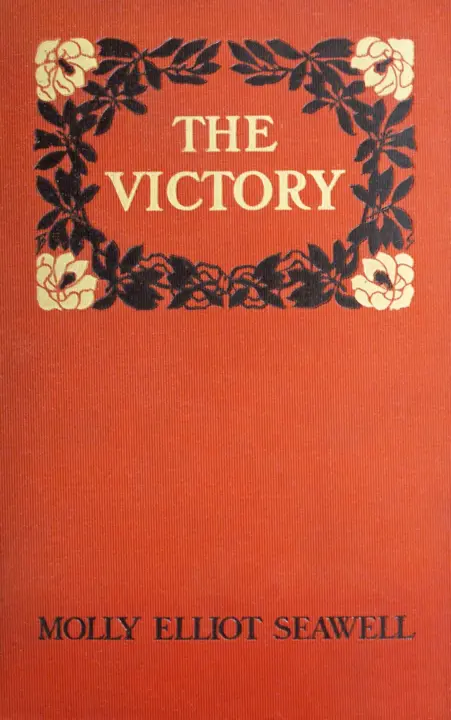
Molly Elliot Seawell

Molly Elliot Seawell
Molly Elliot Seawell
BEHIND THE BOOK
This eBook is for the use of anyone anywhere in the United States and most other parts of the world at no cost and with almost no restrictions whatsoever. You may copy it, give it away or re-use it under the terms of the Project Gutenberg License included with this eBook or online at www.gutenberg.org. If you are not located in the United States, you will have to check the laws of the country where you are located before using this eBook. Read the source licence.
The original source file, including credits and licence, is retained by this library. Request an original-format copy at no charge. Please include the book title and Project Gutenberg identifier #36829.
KEEP YOUR CURIOSITY GOING
Cécile Tormay

Moritz Busch
Coulson Kernahan
John L. Ransom

Maurice Baring
Frances Wright