THE CLASSIC COLLECTION✦The sprightly romance of MarsacCLASSIC FREE BOOKS
The sprightly romance of Marsac
Molly Elliot Seawell
THE CLASSIC COLLECTION · 1890
"Throckmorton: A Novel" by Molly Elliot Seawell is a fictional work written in the late 19th century. Set in a secluded Virginia neighborhood, the narrative revolves around the lives of the Temple family and their interactions with the newly returned George Throckmorton, a former soldier deemed a traitor for fighting against the Confederacy during the Civil War. The book intricately explores themes of loss, social tensions in a recovering post-war South, and the complexities of love and familial devotion through its characters, particularly focusing on Judith Temple and Jacqueline Temple, along with the general and Mrs. Temple. The opening of the novel introduces the picturesque lowland Virginia setting, highlighting its charming stillness and the quaint idiosyncrasies of its residents. It vividly describes the Temple family dynamics, exploring the effects of their son Beverley's death and the lingering shadow it casts over their lives, especially on Judith, who is left as a young widow. General Temple is depicted as a grand yet flawed figure, while Mrs. Temple is consumed with the memory of her lost son. The arrival of George Throckmorton, both a figure of nostalgia and controversy, sets the stage for a complex interplay of emotions as the characters navigate their past and the societal judgment they face, particularly regarding the war’s painful legacy. The opening intricately describes the characters' relationships and sets up the anticipated societal challenges as they confront their history and possible future connections with Throckmorton and his son, Jack.
Introduction adapted from the source catalogue; source summaries may be automatically generated.
Free to read · English · 72,319 words · No account needed
MAKE TIME FOR A GOOD BOOK
On by default. Untick to stop anonymous reading totals. Each page counts after 10 seconds in view. How this works.
Anonymous counting is on unless you have switched it off.
Throckmorton, who was nothing if not prompt, had infused so much life and spirit into his love-affair that at the end of a week it was settled that the wedding should take place the last of February--only a month off. Jacqueline's trousseau was not likely to be imposing, and the few, feeble reasons which Mrs. Temple urged for delay were swept away by Throckmorton's impetuosity. It was not the custom in that part of the world for engagements to be formally announced; on the contrary, it was in order to deny them up to the very last moment, and to regard them as something surreptitious and to be hid under a bushel. General Temple had magniloquently given his consent, when Throckmorton went through the form of asking it. Mrs. Temple still shook her head gravely over the matter, particularly over the brief engagement, which was quite opposed to the leisurely way in which engagements were usually conducted in her experience; but Throckmorton seemed to have mastered everybody at Barn Elms. For himself that period was one of deep joy, and yet full of harassing doubts. The more he studied Jacqueline under her new aspects, the stranger things became. It cut him to see how little real consequence either her mother or her father attached to her. Judith seemed to be the only person who was concerned to make Jacqueline love him; to regard the girl as a woman, and not as a child. For Jacqueline herself, she was as changeable as the weather. Had she been steadily indifferent to him, Throckmorton would have thought nothing necessary but a manly fight to win her; but sometimes she showed devoted fondness for him, and, without rhyme or reason, she would change into the coldest indifference or teasing irritability. Throckmorton told himself it was the coyness and fickleness of a young girl in love; but sometimes a hateful suspicion overcame him that there was in Jacqueline an innate levity and inconstancy that went to the root of her nature. The evident delight she took in the luxury and pleasures that were to be hers--the horses, carriages, pianos, and flowers at Millenbeck--was rather that of a child dazzled with the fineries of life. Her love for them was so unthinking and uncalculating that it did not shock Throckmorton; yet how could he, with his knowledge, his experience of men, women, and things, help seeing the differences between them--differences that, had his infatuation been less complete, would have appalled him? As it was, just as Judith had predicted to herself, he often came to her for sympathy and encouragement--not expressed in words, but in the subtile understanding between them. Judith always spoke in praise of Jacqueline; she artfully managed to show Throckmorton the best of her. But for Judith the marriage could never have been hastened on, as Throckmorton desired; for, as soon as she found out Throckmorton's wish, she went to work on Jacqueline's trousseau with a sort of desperate energy that carried things through. Jacqueline could have no fine silk gowns, but she was to have piles of the daintiest linen, of which the material cost little, but the beautiful handiwork lavished upon it by Judith was worth a little fortune. Jacqueline herself, spurred on by Judith's industry, sewed steadily. As for Judith, the fever of working for Jacqueline seized her, and never abated. She even neglected her child for Jacqueline, until Mrs. Temple, with stern disapproval, took her to task about it. Judith, blushing and conscience-stricken, owned to her fault, although nobody could accuse her of lacking love for the child. But still she managed to sew for Jacqueline, sitting up secretly by night, and with a pale, fixed face--stitch, stitch, stitching! Jacqueline could not understand it at all; and when she asked Judith about it once, she was so suddenly and strangely agitated that Jacqueline, a little frightened, dropped the subject at once. But, in truth, this was to Judith a time of new, strange, and terrible grief and disappointment. How she had ever permitted Throckmorton to take up her whole heart and mind she did not know any more than she could fathom now how she ever came to mistake an early and immature fancy for a deep and abiding passion, and had suffered herself to be married to Beverley Temple. She endured agonies of remorse for that, and yet hourly excused herself to herself. "How could I know," she asked herself in those long hours of the night when men and women come face to face with their sorrows. But all her remorse was for Beverley. As for the hatred she ought to feel for Throckmorton as the slayer of her husband, she had come to laugh it to scorn in her own mind. But, like all true women, she respected the world--the narrow circle which constituted her world--and she felt oppressed with shame at the idea that the whole story might all one day come out, and then what would they think of her? What would they do to her? She could not say, as she had once said, "I do not believe it." She had heard it from Throckmorton's own mouth. She would have to say, "I knew it, and went to his house, and continued to be friendly with him, and spoke no word when he wished to marry Beverley's sister." She could not divine the reason of Freke's silence, but, torn and harassed and wearied with struggles of heart and conscience, she simply yielded to the fatalism of the wretched, and let things drift. Sometimes in her own room, after she had spent the evening with Throckmorton and Jacqueline, seeing clearly under his perfectly self-possessed exterior his infatuation for Jacqueline, she would be wroth with him. Judith, the most modest and unassuming of women, would say to herself, with scorn of Throckmorton: "How blind he is! To throw away on Jacqueline, who in her turn throws it to the wind, what would make me the proudest creature under heaven! And am I unworthy of his love, or less worthy than Jacqueline?" To which her keen perceptions would answer rebelliously, "No, I am more worthy in every way." She would examine her face carefully in the glass, holding the candle first one side, then the other. "This, then, is the face that Throckmorton is indifferent to. It is not babyish, like Jacqueline's; there are no dimples, but--" Then the grotesqueness of it all would strike her, and even make her laugh. The fiercest pain, the most devouring jealousy never wrung from her the faintest admission that there was anything to be ashamed of in cherishing silently a profound and sacred love for Throckmorton. He was worthy of it, she thought, proudly. Toward him her manner never changed--she was mistress of some of the nobler arts of deception--but sometimes, although working for Jacqueline, and tending her affectionately, she would be angry and disdainful because Jacqueline did not always render to Throckmorton his due. She almost laughed to herself when she compared this horror of pain and grief which she now endured with the shock and pity of Beverley's death. She remembered that the joy her child gave her seemed almost wicked in its intensity at that time. What passions of happiness were hers when she would rise stealthily in the night and, taking him from his little crib, would hold him to her throbbing heart; and often, from the next room, she could hear Mrs. Temple pacing her floor, and could imagine the silent wringing of the hands and all the unspoken agonies the elder mother endured for her child! Then she would swiftly and guiltily put the child back in his cradle, and, with remorse and self-denial, lie near him without touching him. Often in that long-past time, when she met him in his nurse's arms, she would fly toward him with a merry, dancing step, laughing all the time--she was so happy, so proud to have him--and, looking up, would catch Mrs. Temple's eyes fixed on her with a still reproach she understood well enough. Then she would turn away from him, and, sitting down by Mrs. Temple, would not even let her eyes wander to the child, and would remain silent and unanswering to his baby wail.
Your reading position is saved on this browser. Take it to another device with a library code. Reading pages adapt to text, rather than matching a printed edition.
Molly Elliot Seawell
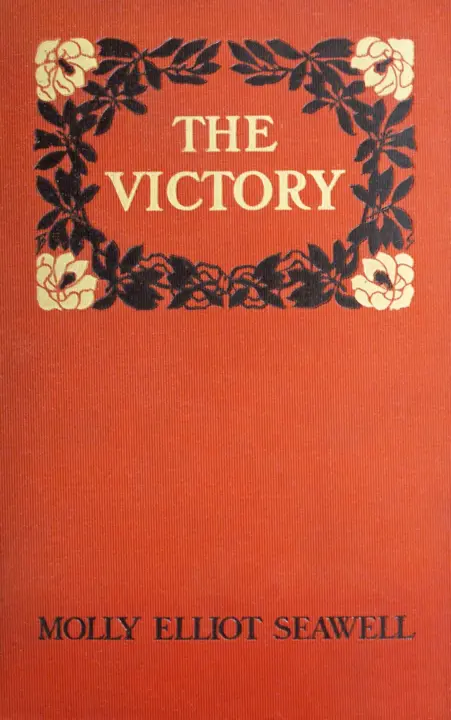
Molly Elliot Seawell

Molly Elliot Seawell
Molly Elliot Seawell
BEHIND THE BOOK
This eBook is for the use of anyone anywhere in the United States and most other parts of the world at no cost and with almost no restrictions whatsoever. You may copy it, give it away or re-use it under the terms of the Project Gutenberg License included with this eBook or online at www.gutenberg.org. If you are not located in the United States, you will have to check the laws of the country where you are located before using this eBook. Read the source licence.
The original source file, including credits and licence, is retained by this library. Request an original-format copy at no charge. Please include the book title and Project Gutenberg identifier #36829.
KEEP YOUR CURIOSITY GOING
Cécile Tormay

Moritz Busch
Coulson Kernahan
John L. Ransom

Maurice Baring
Frances Wright