THE CLASSIC COLLECTION✦The sprightly romance of MarsacCLASSIC FREE BOOKS
The sprightly romance of Marsac
Molly Elliot Seawell
THE CLASSIC COLLECTION · 1890
"Throckmorton: A Novel" by Molly Elliot Seawell is a fictional work written in the late 19th century. Set in a secluded Virginia neighborhood, the narrative revolves around the lives of the Temple family and their interactions with the newly returned George Throckmorton, a former soldier deemed a traitor for fighting against the Confederacy during the Civil War. The book intricately explores themes of loss, social tensions in a recovering post-war South, and the complexities of love and familial devotion through its characters, particularly focusing on Judith Temple and Jacqueline Temple, along with the general and Mrs. Temple. The opening of the novel introduces the picturesque lowland Virginia setting, highlighting its charming stillness and the quaint idiosyncrasies of its residents. It vividly describes the Temple family dynamics, exploring the effects of their son Beverley's death and the lingering shadow it casts over their lives, especially on Judith, who is left as a young widow. General Temple is depicted as a grand yet flawed figure, while Mrs. Temple is consumed with the memory of her lost son. The arrival of George Throckmorton, both a figure of nostalgia and controversy, sets the stage for a complex interplay of emotions as the characters navigate their past and the societal judgment they face, particularly regarding the war’s painful legacy. The opening intricately describes the characters' relationships and sets up the anticipated societal challenges as they confront their history and possible future connections with Throckmorton and his son, Jack.
Introduction adapted from the source catalogue; source summaries may be automatically generated.
Free to read · English · 72,319 words · No account needed
MAKE TIME FOR A GOOD BOOK
On by default. Untick to stop anonymous reading totals. Each page counts after 10 seconds in view. How this works.
Anonymous counting is on unless you have switched it off.
Judith, who had great self-command, could control her eyes, her voice, her manner; but happiness, the outlaw, at seeing Throckmorton again, brought the red blood surging to her cheeks. Throckmorton, who was exactly like his old self, was surprised and inwardly agitated at it. They spoke some tender words of Jacqueline, all of them sitting together in the old-fashioned drawing-room. Her little chair was in its old place, but Judith sat in it; and even the ragged footstool on which Jacqueline had toasted her little feet was near it. Throckmorton noticed all these things with tenderness in his dark eyes. He was a little grayer than before, but he was the same erect, soldierly figure; he had the same simple but commanding dignity.
He walked home in a curious state of emotion. In those two years he had not ceased thinking deeply over that short episode, so full of happiness and pain--the happiness a little unreal, and vexed with many pangs; the pain very real, but with strange suggestions that, after all, the happiness held more possibilities of wretchedness. He could think, for Jacqueline's sake, how much better off she was, lying so peacefully in the old grave-yard, than if she had lived, so weak, so captivating, so unthinking. What would life have been to her? And so, at forty-six, after having experienced more than most men, he began the analysis of his own emotions, and realized that all he had known of love was perilously like a mirage. He had entered into a fool's paradise, but he knew that he of all men could least be satisfied there. His reason, his intellect, always overmastered him in the end; and what was there in this bewitching child to satisfy either? Jacqueline, young, was a dream; Jacqueline, old, was a fantasm. All this had come to him soon after Jacqueline's death, in that period of self-searching that followed. But, when he had got thus far, which was some time before his return to Millenbeck, a great change came upon him. He began to feel a sort of acute disappointment. He had loved and suffered much for that which he felt would not have made him happy had he gained it. All that love, grief, passion, had been vain; here he checked himself; the memory of his girl-wife was sacred from even his own questionings; and so was that later love, but the necessity for checking himself told volumes. And then, by slow degrees, the image of Judith Temple had stolen upon him. It was very gradual, it was many months in coming, but, when at last it dawned upon him, it was a sort of glorious surprise. How stupid, how blind had he been! Where were his doubts and questionings? Could anybody doubt Judith Temple's sympathy and understanding? He remembered the quaint words of the Jewish king, "The heart of her husband doth safely trust." He had seen enough of the way these weaker women had striven to bend him, but Judith had the beautiful charm of bending herself. She could be whatever the man she loved desired her to be. Throckmorton at once felt that any man married to Judith Temple would indeed be free, and how sweet would it be to see that proud spirit that yielded but seldom bend to his will! That homage, so rare and precious, was what women of her type paid to the master-passion. Most women that he had ever seen yielded to the predominant influence; but women like Judith Temple bent their heads and smiled and played at humility, but yielded not one inch of their soul's standing-ground until the moment came. Throckmorton, who possessed true masculine courage, admired this kind of feminine bravery. He felt that to conquer such a woman would be like capturing a Roman standard. And how utterly those proud women surrendered when they did surrender! He could fancy Judith's brave pretenses melting away; how charming would be her sweet inexperience! How quickly she would persuade herself that there was nothing so wise, true, just as love! Throckmorton, although he had silenced his discernment, had never strangled it, and he began to study and know Judith. But there was no suspicion in his mind that she cared anything for him; and, when he made up his mind to return to Millenbeck and see her again, he was anything but sanguine. He felt that if he failed it would make infinitely more difference to him than anything that had ever happened to him in life before. He was absolutely afraid, and fear, he knew, when it came to men like him, meant something overmastering. Throckmorton sighed when he realized his want of courage. He knew it would be forthcoming in an emergency; he had felt that in battle, where his first tremors never made him doubt for an instant that when the time came to use his courage it would be there; but it was a new thing to fear his fate at the hands of a woman. But the woman had become much more to him than any other woman had ever been; she was so much to him that it rather appalled him.
Your reading position is saved on this browser. Take it to another device with a library code. Reading pages adapt to text, rather than matching a printed edition.
Molly Elliot Seawell
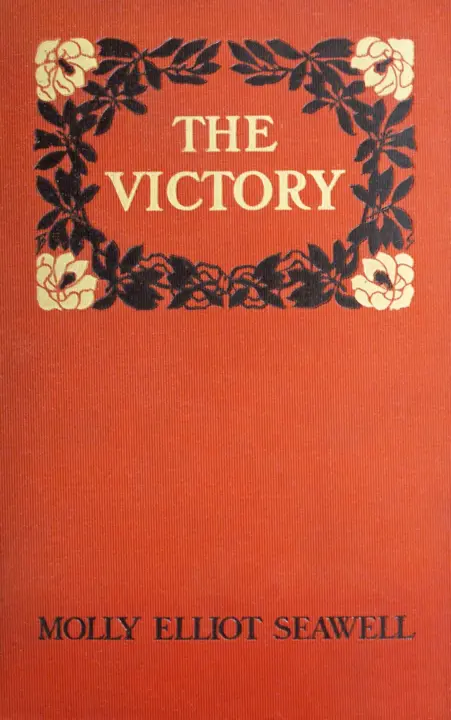
Molly Elliot Seawell

Molly Elliot Seawell
Molly Elliot Seawell
BEHIND THE BOOK
This eBook is for the use of anyone anywhere in the United States and most other parts of the world at no cost and with almost no restrictions whatsoever. You may copy it, give it away or re-use it under the terms of the Project Gutenberg License included with this eBook or online at www.gutenberg.org. If you are not located in the United States, you will have to check the laws of the country where you are located before using this eBook. Read the source licence.
The original source file, including credits and licence, is retained by this library. Request an original-format copy at no charge. Please include the book title and Project Gutenberg identifier #36829.
KEEP YOUR CURIOSITY GOING
Cécile Tormay

Moritz Busch
Coulson Kernahan
John L. Ransom

Maurice Baring
Frances Wright