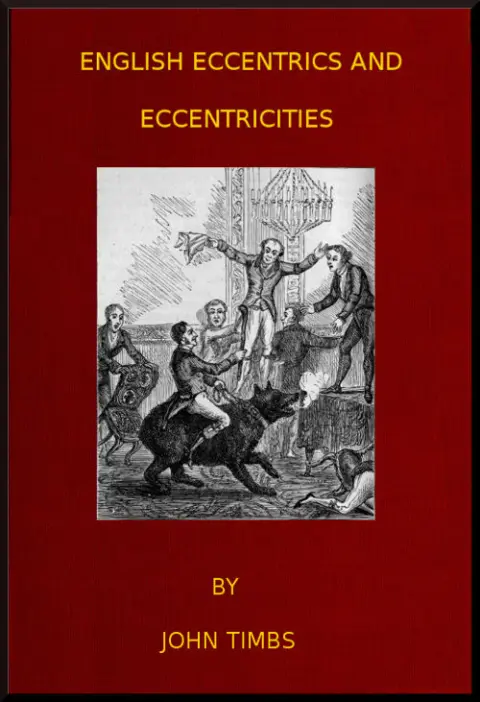
English Eccentrics and Eccentricities
John Timbs
THE CLASSIC COLLECTION · 1863
"Things to be Remembered in Daily Life" by John Timbs is a reflective guidebook written in the mid-19th century. This work examines timeless themes such as the concepts of time and human life, while providing personal experiences and historical anecdotes to illustrate practical lessons for everyday living. The aim is to distill important truths that one can apply to the complexities of daily existence. The opening of the book sets the stage by emphasizing the philosophical significance of time, likening it to a powerful force that shapes human experience and existence. Timbs introduces the personification of Time through various literary references, illustrating its relentless passage and impact on life. This section encourages readers to consider how they engage with time, urging a deeper reflection on its fleeting nature and the importance of making the most of each moment. Timbs' intention is to provide insights that resonate in the modern context while drawing from historical wisdom.
Introduction adapted from the source catalogue; source summaries may be automatically generated.
Free to read · English · 106,611 words · No account needed
MAKE TIME FOR A GOOD BOOK
On by default. Untick to stop anonymous reading totals. Each page counts after 10 seconds in view. How this works.
Anonymous counting is on unless you have switched it off.
Between February and May 1767, there died in Oxford seven persons whose ages together amount to 616, viz. 88, 93, 86, 87, 90, 82, and 90. In the same year is recorded the death of Francis Ange, in Maryland, aged 130; he was born at Stratford-upon-Avon, remembered the death of King Charles I., and left England soon after.[56]
The heads of Colleges in Oxford have frequently attained great ages: we have mentioned Dr. Routh, President of Magdalen, who died in his 100th year. There are generally very old people living in Oxford; and at Iffley the ages recorded in the churchyard commonly exceed 70.
Midhurst, in Sussex, must be a healthy locality; for, according to the Dublin Chronicle, December 2, 1788, the town, then containing only 140 houses and cottages, had seventy-eight inhabitants whose ages were above 70; thirty-two were 80 and upwards; and five were between 90 and 100; and the seventy-eight persons, except four, were in some business or occupation.
Wye, near Ashford, Kent, is another noted locality for long life; the ages of 70, 80, and even 90, being by no means rare in the parish register.
In 1800 twenty-two men died in England and Wales who had reached or passed the age of 100, and forty-seven women. The oldest woman, 111 years of age, died in Glamorganshire. With the men there was a tie: a man aged 107 died in Hampshire, and another of the same age in Pembrokeshire. Four of the centenarians died in London, two others at Camberwell, one also at Greenwich, and one at Lewisham. More men died in the year than women; but of the 595 persons who had reached the age of 95 or upwards before they died, nearly two-thirds were women.
Great longevity is attained in some of the murky streets, lanes, and alleys of London. In 1767 died Widow Prossen, of Oxford-road, in her 102d year, having passed nearly her whole life among old clothes in a pawnbroker’s shop, accumulating a large fortune. In the same year died her neighbour, Benjamin Perryn, aged 103.
In 1767 also we find Widow Waters, of Saffron-hill, dying at the age of 103; and one Wood, of Markam-court, Chandos-street, at 100.
In 1846 there died in grimy Holywell-street, Strand, one Harris, a Jew clothesman, who had lived in the same street more than seventy years: his wife died a few years before him, at the age of 93; and his eldest son was 73 at the time of his father’s death. In 1780 there died in St. Martin’s workhouse Widow Pettit, aged 114; and next year, Widow Parker, of White-Hart-yard, Drury-lane, aged 108, with all her faculties unimpaired.
Your reading position is saved on this browser. Take it to another device with a library code. Reading pages adapt to text, rather than matching a printed edition.
John Timbs
John Timbs
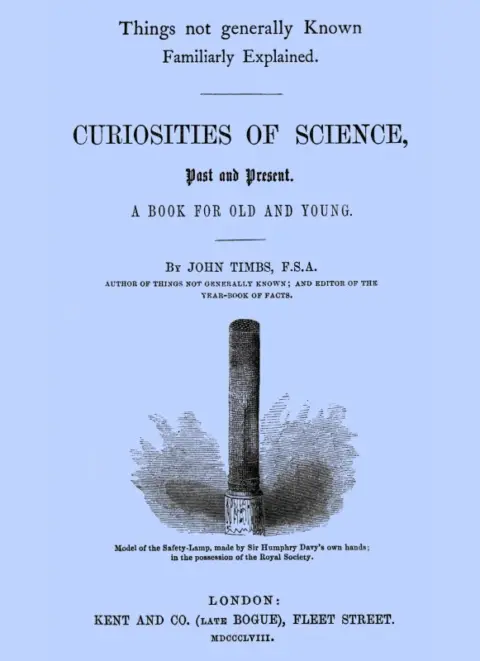
John Timbs
John Timbs
BEHIND THE BOOK
This eBook is for the use of anyone anywhere in the United States and most other parts of the world at no cost and with almost no restrictions whatsoever. You may copy it, give it away or re-use it under the terms of the Project Gutenberg License included with this eBook or online at www.gutenberg.org. If you are not located in the United States, you will have to check the laws of the country where you are located before using this eBook. Read the source licence.
The original source file, including credits and licence, is retained by this library. Request an original-format copy at no charge. Please include the book title and Project Gutenberg identifier #54703.
KEEP YOUR CURIOSITY GOING

David Patterson (Spirit) Hatch

David Patterson (Spirit) Hatch

David Patterson (Spirit) Hatch
Coulson Kernahan

Ralph Waldo Emerson

Maurice Baring