Things to be Remembered in Daily Life With Personal Experiences and Recollections
John Timbs
THE CLASSIC COLLECTION · 1869
"Eccentricities of the Animal Creation" by John Timbs is a zoological treatise written in the late 19th century. This work delves into the peculiar characteristics and behaviors of various animals, blending observations from natural history with engaging anecdotes. The book appears to aim at educating readers about fascinating facts surrounding animals, capturing both their whimsical traits and significant historical contexts. The opening of the book introduces the topic of zoological curiosities, highlighting humankind's long-standing interest in animal life across different cultures and eras. It references historical accounts of zoological gardens dating back thousands of years, discussing their origins and the exotic creatures kept within them. Timbs specifically emphasizes the rich history of zoological collections in places like China, Greece, and England, noting earlier examples such as the famous menagerie in the Tower of London. Additionally, the introduction sets the stage for subsequent chapters that promise to explore various eccentricities and remarkable habits of animals, indicating a blend of education and storytelling aimed at both young and adult audiences.
Introduction adapted from the source catalogue; source summaries may be automatically generated.
Free to read · English · 87,626 words · No account needed
MAKE TIME FOR A GOOD BOOK
On by default. Untick to stop anonymous reading totals. Each page counts after 10 seconds in view. How this works.
Anonymous counting is on unless you have switched it off.
Natural History in Scripture, and Egyptian Records, 11.--Origin of Zoological Gardens, 12.--The Greeks and Romans, 12.--Montezuma's Zoological Gardens, 13.--Menagerie in the Tower of London, 14.--Menagerie in St. James's Park, 14.--John Evelyn's Notes, 15.--Ornithological Society, 15.--Continental Gardens, 16.--Zoological Society of London instituted, 16; its most remarkable Animals, 16.--Cost of Wild Animals, 18.--Sale of Animals, 20.--Surrey Zoological Gardens, 20.--Wild-beast Shows, 21.
Ancient History, 22, 23.--One-horned and Two-horned, 25, 26.--Tractability, 25.--Bruce and Sparmann, 27.--African Rhinoceros in 1868, 27.--Description of, 29.--Burchell's Rhinoceros, 30.--Horn of the Rhinoceros, 31, 32.
Sirens of the Ancients, 33.--Classic Pictures of Mermaids, 34.--Leyden's Ballad, 35.--Ancient Evidence, 36, 37, 38.--Mermaid in the West Indies, 39.--Mermaids, Seals, and Dugongs, 41.--Mermaids and Manatee, 42.--Test for a Mermaid, 43.--Mermaid of 1822, 43.--Japanese Mermaids, 44.--Recent Evidence, 47, 48.
Ctesias and Wild Asses, 65.--Aristotle, Herodotus, and Pliny, 50.--Modern Unicorns, 50.--Ancient Evidence, 51.--Hunting the Unicorn, 52.--Antelopes, 53, 54.--Cuvier and the Oryx, 54.--Tibetan Animal, 55.--Klaproth's Evidence, 55.--Rev. John Campbell's Evidence, 57.--Baikie on, 58.--Factitious Horns in Museums, 59.--Unicorn in the Royal Arms, 60.--Catching the Unicorn, 60.--Belief in Unicorns, 61.
Economy of the Mole, 62.--Its Structure, 63.--Fairy Rings; Feeling of the Mole, 64.--Le Court's Experiments, 62, 65.--Hunting-grounds, 67.--Loves of the Moles, 68, 69.--Persecution of Moles.--Shrew Mole, 70.--Hogg, the Ettrick Shepherd, on Moles, 71.
The Ant-Bear of 1853, 72, 73.--Mr. Wallace, on the Amazon, describes the Ant-Bear, 73.--Food of the Ant-Bear, 74.--His Resorts, 75.--Habits in Captivity, by Professor Owen, 76-80.--Fossil Ant-Bear, 80, 81.--Tamandua Ant-Bear, 82--Von Sack's Ant-Bear, 83.--Porcupine Ant-Eater, 84.--Ant-Bears in the Zoological Gardens, 84.
Virgil's Harpies, 85.--Pliny on the Bat, 85.--Rere-mouse and Flitter-mouse, 86.--Bats, not Birds but Quadrupeds, 87.--Sir Charles Bell on the Wing of the Bat, 87.--Vampire Bat from Sumatra, 88.--Lord Byron and Vampire, 89.--Levant Superstition, 89.--Bat described by Heber, Waterton, and Steadman, 90.--Lesson on Bats, 91.--Bat Fowling or Folding, 91, 92.--Sowerby's Long-eared Bat, 92, 96.--Wing of the Bat, 96.--Nycteris Bat, 97.--Kalong Bat of Java, 98.--Bats, various, 100, 101.
Hedgehog Described, 102.--Habits, 103.--Eating Snakes, 105.--Poisons, 105, 106.--Battle with a Viper, 105.--Economy of the Hedgehog, 106, 107.
Living Hippopotamus brought to England in 1850, 108.--Capture and Conveyance, 111.--Professor Owen's Account, 111-115.--Described by Naturalists and Travellers, 115-118.--Utility to Man, 118-119.--Ancient History, 119.--In Scripture, 120.--Alleged Disappearance, 121.--Fossil, 122.
Character, 123.--Reputed Generosity, 125.--Burchell's Account, 125.--Lion-Tree in the Mantatee Country, 127.--Lion-hunting, 128.--Disappearance of Lions, 130, 131.--Human Prey, 132.--Maneless Lions of Guzerat, 134.--A Lion Family in Bengal, 135, 136.--Prickle on the Lion's Tail, 137-139.--Nineveh Lions, 139.--Lions in the Tower of London, 140, 141.--Feats with Lions, 142.--Lion-hunting in Algeria, by Jules Gerard, 144.--The Prudhoe Lions, 144.
Your reading position is saved on this browser. Take it to another device with a library code. Reading pages adapt to text, rather than matching a printed edition.
John Timbs
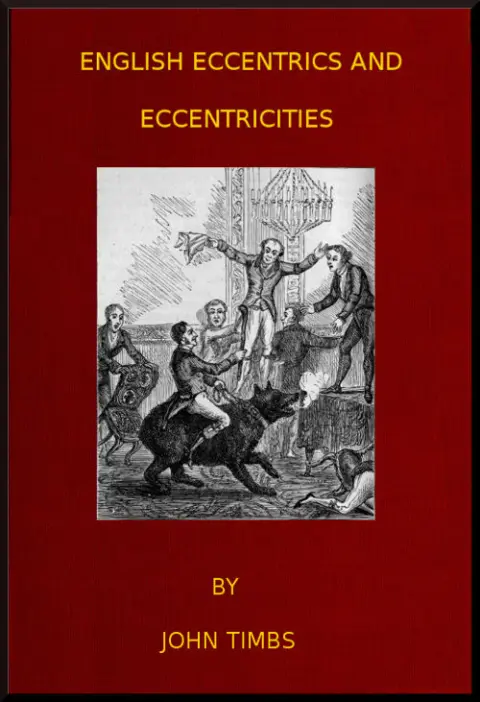
John Timbs
John Timbs
John Timbs
BEHIND THE BOOK
This eBook is for the use of anyone anywhere in the United States and most other parts of the world at no cost and with almost no restrictions whatsoever. You may copy it, give it away or re-use it under the terms of the Project Gutenberg License included with this eBook or online at www.gutenberg.org. If you are not located in the United States, you will have to check the laws of the country where you are located before using this eBook. Read the source licence.
The original source file, including credits and licence, is retained by this library. Request an original-format copy at no charge. Please include the book title and Project Gutenberg identifier #44422.
KEEP YOUR CURIOSITY GOING
Cécile Tormay

Moritz Busch
John L. Ransom
Frances Wright
Cécile Tormay

Mabel Potter Daggett