THE CLASSIC COLLECTION✦My diaries, being a personal narrative of events 1888-1914, Part 2 (1900-1914)CLASSIC FREE BOOKS
My diaries, being a personal narrative of events 1888-1914, Part 2 (1900-1914)
Wilfrid Scawen Blunt
THE CLASSIC COLLECTION · 1862
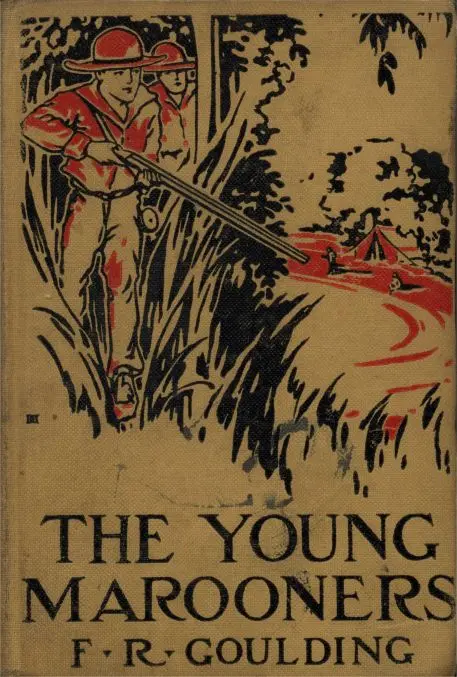
"The Young Marooners on the Florida Coast" by F. R. Goulding is a novel written in the mid-19th century. The story revolves around Dr. Gordon and his children, Robert, Mary, and Frank, who embark on an adventurous journey from Charleston to Tampa Bay, Florida. Their journey is filled with learning experiences and challenges that intertwine nature, survival skills, and familial bonds as they prepare for an expedition into the wild. The opening of the narrative introduces the Gordon family and their motivations for traveling to Florida, where Dr. Gordon believes the climate will benefit his ailing wife. As the family boards the brig, they experience the excitement of sailing, where the children, especially Mary and Frank, engage in fishing and interact with the maritime environment. The interactions among the family members reveal their personalities, showcasing Robert's thirst for knowledge, Harold's robust nature, and the close relationships they share. The initial chapters set the tone for a story steeped in adventure, reflection, and practical lessons about life on the coast, indicating that the marooning experience will be both thrilling and educational.
Introduction adapted from the source catalogue; source summaries may be automatically generated.
Free to read · English · 99,451 words · No account needed
MAKE TIME FOR A GOOD BOOK
On by default. Untick to stop anonymous reading totals. Each page counts after 10 seconds in view. How this works.
Anonymous counting is on unless you have switched it off.
"Really this is a fine country!" said Robert, referring, with the air of a feasted epicure, to the abundant marooning dinner from which he had risen. "Wild turkey, squirrel, and oysters! I doubt whether our old friend Robinson Crusoe himself fared better than we."
"It is a fine place indeed," Harold replied; "and so long as our powder and shot last, we might live like princes. But, Robert," he continued, "it is time that we begin to determine our plan of operations. What shall we do?"
"Do!" echoed Robert, "why return home as soon as possible. What else
have we to do?"
"To determine how we are to return and in what direction."
"Then I say," Robert replied, "the same way that we came, only a little
nearer shore."
"But who can tell me the course?" Harold asked.
"Yonder," replied Frank, pointing to the sea.
"No, buddy," said Robert, "that is only our last course; we came in from sea. Home is yonder," pointing nearly north.
"Now, I think you are both wrong," said Harold, "for according to my judgment home is yonder," pointing nearly east. "At least, I recollect that when I was working at the chain the sun was behind us, for my shadow fell in the water, and I do not recollect that we have changed our course since. So far as I know we started west, and kept west."
"That would have carried us into the open gulf," returned Robert.
"And that is exactly where I think we are," Harold affirmed.
"But there are no islands in the gulf," argued Robert, "nor land either, after you leave Tampa, until you reach Mexico. And we are surely not in Mexico."
"I do not know where we are," said his cousin. "I only know that we left home with our faces to the west, and that the water kept boiling under our bow for ten long hours. How fast we went, or what land we have reached, I know no more than Frank does."
"But we saw islands and points of land to our left," Robert insisted; "it is impossible for us to be in the gulf."
"Then where do you suppose we are!"
"On the coast of Florida, to the south of Tampa. There is no other place within reach, answering the description."
"But how do you know we are not on some island?"
"We may be on an island; but if so, it is still on the Florida coast," Robert replied, "for there are no islands beside these, nearer than the West Indies, and we are surely not on any of them."
Your reading position is saved on this browser. Take it to another device with a library code. Reading pages adapt to text, rather than matching a printed edition.
BEHIND THE BOOK
This eBook is for the use of anyone anywhere in the United States and most other parts of the world at no cost and with almost no restrictions whatsoever. You may copy it, give it away or re-use it under the terms of the Project Gutenberg License included with this eBook or online at www.gutenberg.org. If you are not located in the United States, you will have to check the laws of the country where you are located before using this eBook. Read the source licence.
The original source file, including credits and licence, is retained by this library. Request an original-format copy at no charge. Please include the book title and Project Gutenberg identifier #42066.
KEEP YOUR CURIOSITY GOING
Wilfrid Scawen Blunt
Wilfrid Scawen Blunt

E. W. (Edgar Watson) Howe
Cécile Tormay

Moritz Busch
Coulson Kernahan