THE CLASSIC COLLECTION✦My diaries, being a personal narrative of events 1888-1914, Part 2 (1900-1914)CLASSIC FREE BOOKS
My diaries, being a personal narrative of events 1888-1914, Part 2 (1900-1914)
Wilfrid Scawen Blunt
THE CLASSIC COLLECTION · 1862
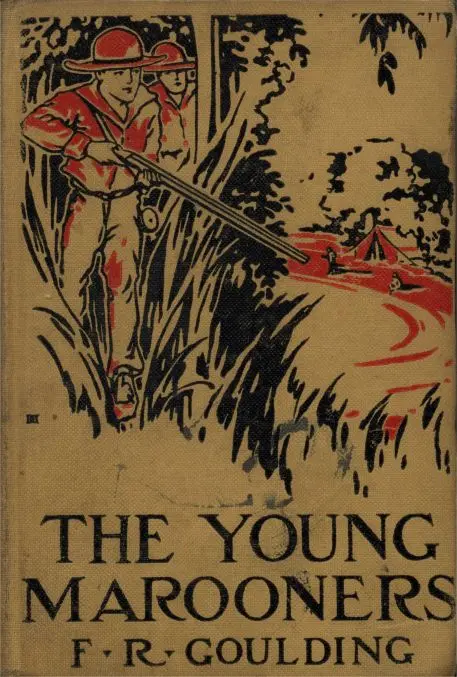
"The Young Marooners on the Florida Coast" by F. R. Goulding is a novel written in the mid-19th century. The story revolves around Dr. Gordon and his children, Robert, Mary, and Frank, who embark on an adventurous journey from Charleston to Tampa Bay, Florida. Their journey is filled with learning experiences and challenges that intertwine nature, survival skills, and familial bonds as they prepare for an expedition into the wild. The opening of the narrative introduces the Gordon family and their motivations for traveling to Florida, where Dr. Gordon believes the climate will benefit his ailing wife. As the family boards the brig, they experience the excitement of sailing, where the children, especially Mary and Frank, engage in fishing and interact with the maritime environment. The interactions among the family members reveal their personalities, showcasing Robert's thirst for knowledge, Harold's robust nature, and the close relationships they share. The initial chapters set the tone for a story steeped in adventure, reflection, and practical lessons about life on the coast, indicating that the marooning experience will be both thrilling and educational.
Introduction adapted from the source catalogue; source summaries may be automatically generated.
Free to read · English · 99,451 words · No account needed
MAKE TIME FOR A GOOD BOOK
On by default. Untick to stop anonymous reading totals. Each page counts after 10 seconds in view. How this works.
Anonymous counting is on unless you have switched it off.
"Scratch out Mother Hubbard," said his father to Robert, "and put down Jack. Your list, Master Robert, is pretty good; but I shall take the liberty of adding several volumes to the stock, in case of bad weather. And beside this, I should advise you all to carry your pocket Testaments, that you may continue your plan of daily reading. I should be sorry, and almost afraid, to let our sports interfere with our devotions."
Up to this time Frank had been listening to what had been read or spoken. But now, on a sign from Harold, he took a paper from his pocket, and, looking at its contents, commenced capering round the room, saying, "I can read it--I can read every word of it!"
"Read what?" asked his father.
"My list," replied Frank, "that cousin Harold wrote for me. I can read
it all!"
"Then let us have it."
"Here," said he, "is my hatchet."
"And here is my bow and arrows."
"And here is my dog; only it is not half so pretty as Fidelle."
"And down here at the bottom--that is--that is--I believe it is--either a block or a brick-bat. O, now I remember, it is my box of matches."
"Bravo, Frank," said his father, "you do credit to your teacher. I doubt whether I could myself have guessed what that last thing was intended for. Your list may pass also.
"Now, Miss Mary, let us have yours. You have had more to think of than all the others put together, and yet I’ll warrant you are nearly as perfect in proportion."
Mary blushed to hear the commendation bestowed upon her on trust, and replied, "I doubt it, father. For though it is very long, I am all the while thinking of something else to be added, and I am pretty sure there is a great deal yet that I have forgotten." She then read her own list, containing about thirty-five articles, and William’s, embracing half a dozen more; upon which her father continued to bestow praise for the house-wifery they showed, and to each of which he made some slight additions.
"Now, William," said he, "do you select two moderately sized boxes, and aid Miss Mary to pack everything in her line so as not to crowd the boat. Remember, too, to put in for Riley a half bushel of salt, a loaf of sugar, and a peck of wheat flour. Pack the boat, and have it complete this evening, however late it should take you, that there may be no delay in the morning."
Your reading position is saved on this browser. Take it to another device with a library code. Reading pages adapt to text, rather than matching a printed edition.
BEHIND THE BOOK
This eBook is for the use of anyone anywhere in the United States and most other parts of the world at no cost and with almost no restrictions whatsoever. You may copy it, give it away or re-use it under the terms of the Project Gutenberg License included with this eBook or online at www.gutenberg.org. If you are not located in the United States, you will have to check the laws of the country where you are located before using this eBook. Read the source licence.
The original source file, including credits and licence, is retained by this library. Request an original-format copy at no charge. Please include the book title and Project Gutenberg identifier #42066.
KEEP YOUR CURIOSITY GOING
Wilfrid Scawen Blunt
Wilfrid Scawen Blunt

E. W. (Edgar Watson) Howe
Cécile Tormay

Moritz Busch
Coulson Kernahan