THE CLASSIC COLLECTION✦My diaries, being a personal narrative of events 1888-1914, Part 2 (1900-1914)CLASSIC FREE BOOKS
My diaries, being a personal narrative of events 1888-1914, Part 2 (1900-1914)
Wilfrid Scawen Blunt
THE CLASSIC COLLECTION · 1862
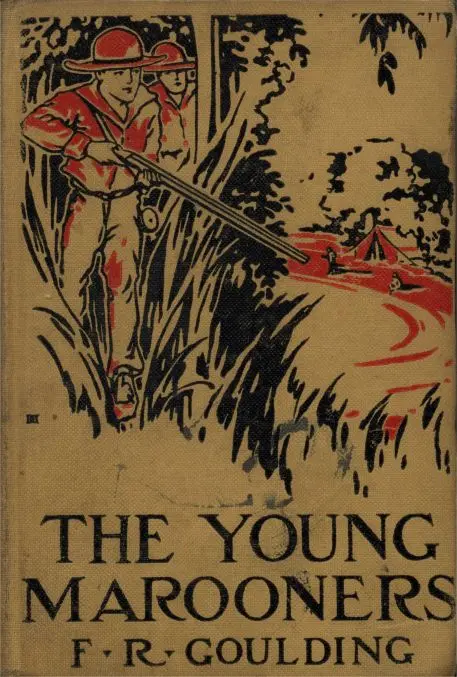
"The Young Marooners on the Florida Coast" by F. R. Goulding is a novel written in the mid-19th century. The story revolves around Dr. Gordon and his children, Robert, Mary, and Frank, who embark on an adventurous journey from Charleston to Tampa Bay, Florida. Their journey is filled with learning experiences and challenges that intertwine nature, survival skills, and familial bonds as they prepare for an expedition into the wild. The opening of the narrative introduces the Gordon family and their motivations for traveling to Florida, where Dr. Gordon believes the climate will benefit his ailing wife. As the family boards the brig, they experience the excitement of sailing, where the children, especially Mary and Frank, engage in fishing and interact with the maritime environment. The interactions among the family members reveal their personalities, showcasing Robert's thirst for knowledge, Harold's robust nature, and the close relationships they share. The initial chapters set the tone for a story steeped in adventure, reflection, and practical lessons about life on the coast, indicating that the marooning experience will be both thrilling and educational.
Introduction adapted from the source catalogue; source summaries may be automatically generated.
Free to read · English · 99,451 words · No account needed
MAKE TIME FOR A GOOD BOOK
On by default. Untick to stop anonymous reading totals. Each page counts after 10 seconds in view. How this works.
Anonymous counting is on unless you have switched it off.
While Robert and Harold were occupied with kind offices around the couch, Mary and Frank went to see after the fawn. Its neck was somewhat sore to the touch, but otherwise it appeared to be doing well. They gave it more water, hay and sassafras leaves. Frank offered it also a piece of bread; but wild deer are not used to cookery, and the fawn rejected it; though, after becoming thoroughly tamed, it became so fond of bread of every kind, that it would follow Frank all over the woods for a piece no bigger than his finger. "What shall we call her?" asked Frank.
"We will have a consultation about that," replied Mary, as she saw the others approaching. "Cousin Harold, what name would you give?"
"Snow or Lily, I think, would suit her colour very well," he answered.
"Brother Robert, what is yours?"
"As she came from among the flowers," he said, "I think Flora would do
very well."
"Yes," added Mary, "and very pretty names all Frank, what is yours?"
"Anna," said he, "I would like to talk to her sometimes, and to make believe that she was Sister Anna."
"That would sound almost too much like Nannie," Mary objected, and then asked, "Did you say, brother, that you gave her to me?" He replied, "Yes." "Then," she added, "I will call her Dora, for I heard father say that that name means a gift."
"Dora let it be," said Robert, patting its delicate head. "Miss Dora, I wish you a speedy cure, and a pleasant captivity."
About nine o’clock Sam awakened from a refreshing sleep, and the anxious company assembled at his side to hear what he had to tell about home. "I a’nt got much to tell," said Sam, "I lef so soon a’ter you all, dat you know most all sept what happen to me and Riley on de way."
"Let us hear it all," said Robert.
"But before you begin," interrupted Mary, "do tell us about William.
Was he drowned or not?"
(For the sake of the reader who may not be familiar with the lingo of southern and sea-coast negroes, the narrative will be given in somewhat better English, retaining, however, the peculiarities of thought and drapery.)
"O, no, Misses," he replied to Mary’s question. "He only fell backward into the water, and was a little strangled. He rose directly, and gave the alarm. I suppose the reason that you did not hear him was that he was under the wharf, holding tight to a post, for fear some of the fish might come and take hold of him too. He came with me to Riley’s Island."
Your reading position is saved on this browser. Take it to another device with a library code. Reading pages adapt to text, rather than matching a printed edition.
BEHIND THE BOOK
This eBook is for the use of anyone anywhere in the United States and most other parts of the world at no cost and with almost no restrictions whatsoever. You may copy it, give it away or re-use it under the terms of the Project Gutenberg License included with this eBook or online at www.gutenberg.org. If you are not located in the United States, you will have to check the laws of the country where you are located before using this eBook. Read the source licence.
The original source file, including credits and licence, is retained by this library. Request an original-format copy at no charge. Please include the book title and Project Gutenberg identifier #42066.
KEEP YOUR CURIOSITY GOING
Wilfrid Scawen Blunt
Wilfrid Scawen Blunt

E. W. (Edgar Watson) Howe
Cécile Tormay

Moritz Busch
Coulson Kernahan