
Forest Glen; or, The Mohawk’s Friendship
Elijah Kellogg

THE CLASSIC COLLECTION · 1871
"The Young Deliverers of Pleasant Cove" by Elijah Kellogg is a historical novel written in the late 19th century. The book follows the adventures of young protagonists, particularly focusing on Arthur Brown and his companions as they embark on daring voyages amidst the backdrop of historical maritime challenges and personal tribulations. Themes of camaraderie, courage, and the exploration of new lands are prominent as the characters engage with their environments and face various moral dilemmas. The opening of the narrative introduces readers to key characters and sets the stage for their upcoming adventures. Arthur Brown, a young man recently appointed captain of the brigantine named after his father, is joined by his friend Ned Gates, a smaller but determined sailor. The chapter establishes their camaraderie and introduces secondary characters, including Jacques, a local Frenchman knowledgeable about the coastline, and James Peterson, who is remembered fondly despite his struggles with alcohol. The narrative captures the boys' mixed feelings about their maritime duties and the profound impact of loss, particularly the death of Uncle Isaac. As preparations for another voyage to Marseilles begin, the young deliverers engage in tasks that reveal their ingenuity and resilience, laying the groundwork for the adventures and challenges that await them in the surrounding unfamiliar territories.
Introduction adapted from the source catalogue; source summaries may be automatically generated.
Free to read · English · 57,850 words · No account needed
MAKE TIME FOR A GOOD BOOK
On by default. Untick to stop anonymous reading totals. Each page counts after 10 seconds in view. How this works.
Anonymous counting is on unless you have switched it off.
They lay thus for an hour, when an order was given to man the windlass. The crew, all young, athletic men, having enjoyed a long repose,--stimulated by the strongest motives, self-interest, pride of seamanship, and manly emulation,--sprang like tigers to their work, and "catted" the anchor by hand.
"There's your bed, Mr. Griffin," said Ned, as they shot by the high
bluff.
"Never mind; I've had one good night's sleep in it."
"There's Nelson," said Jacques, as they rounded the first prominent headland; "he means to hold on. I had a good look at him yesterday with a glass. He has sent his top hamper down; his yards are pointed to the wind, and, I've no doubt, two anchors ahead."
"Nelson hates the Yankees," said the captain. "How he would grit his teeth if he knew who we are!"
Nelson's dislike for the Yankees was based upon very solid grounds.
After the war of independence, the United States were prohibited by Great Britain from all trade with her West India colonies. Before the war that trade had been exceedingly profitable, and the Americans were loath to relinquish it. It had been no less so to the inhabitants of the islands, custom-house officers, and all holding office under the crown, since that shrewd and persistent people, fully appreciating the importance of the principle illustrated by the old saw of "throwing a sprat to catch a herring," had never shown themselves ungrateful. With a shrewd suspicion of this, the home government sent out a fleet to look after matters in general, and enforce prohibition.
But the naval officers, from the admiral to his midshipmen, dearly loved dinner-parties given by the civil magistrates and wealthy merchants, and were much influenced by them. The officers of his majesty's customs--governor, generals, and presidents of council--missed many a box of spermaceti candles, and were often feelingly reminded of their old friends by their empty pockets. When, therefore, a down-east brig, displaying the stars and stripes, and laden scuppers to with lumber, spermaceti candles, codfish, butter, hoops, apples, and live stock, entered the harbor of a British island, and the boarding officer saw the sharp face of some Yankee friend peering over the rail, with an expression, "It's me, and no mistake," it was certainly natural that he should greet him cordially; and when the captain presented a protest, setting forth that he had sprung his mast, or sprung a leak, was in distress, and wished to discharge enough of his cargo to enable him to get at the leak, and sell enough to pay his repairs, the official could not refuse so reasonable a request. Thus it happened that a great many American vessels sprung a leak; and whatever number of vessels went in loaded, they always came out light, and the Yankee master, with his pocket full of British gold, then sailed for Martinico to buy molasses.
Your reading position is saved on this browser. Take it to another device with a library code. Reading pages adapt to text, rather than matching a printed edition.
Elijah Kellogg
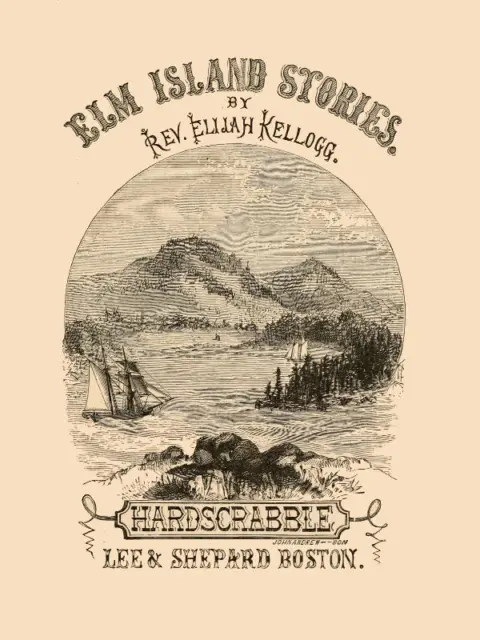
Elijah Kellogg

Elijah Kellogg

Elijah Kellogg
BEHIND THE BOOK
This eBook is for the use of anyone anywhere in the United States and most other parts of the world at no cost and with almost no restrictions whatsoever. You may copy it, give it away or re-use it under the terms of the Project Gutenberg License included with this eBook or online at www.gutenberg.org. If you are not located in the United States, you will have to check the laws of the country where you are located before using this eBook. Read the source licence.
The original source file, including credits and licence, is retained by this library. Request an original-format copy at no charge. Please include the book title and Project Gutenberg identifier #49745.
KEEP YOUR CURIOSITY GOING
Cécile Tormay

Moritz Busch
Coulson Kernahan
John L. Ransom

Maurice Baring
Frances Wright