Forest Glen; or, The Mohawk’s Friendship
Elijah Kellogg
THE CLASSIC COLLECTION · 1871
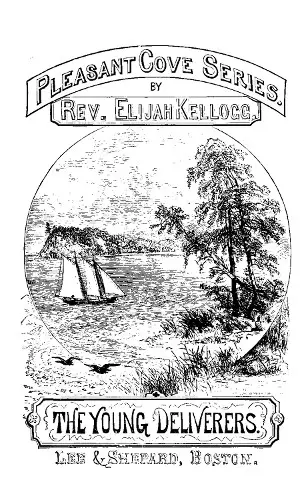
"The Young Deliverers of Pleasant Cove" by Elijah Kellogg is a historical novel written in the late 19th century. The book follows the adventures of young protagonists, particularly focusing on Arthur Brown and his companions as they embark on daring voyages amidst the backdrop of historical maritime challenges and personal tribulations. Themes of camaraderie, courage, and the exploration of new lands are prominent as the characters engage with their environments and face various moral dilemmas. The opening of the narrative introduces readers to key characters and sets the stage for their upcoming adventures. Arthur Brown, a young man recently appointed captain of the brigantine named after his father, is joined by his friend Ned Gates, a smaller but determined sailor. The chapter establishes their camaraderie and introduces secondary characters, including Jacques, a local Frenchman knowledgeable about the coastline, and James Peterson, who is remembered fondly despite his struggles with alcohol. The narrative captures the boys' mixed feelings about their maritime duties and the profound impact of loss, particularly the death of Uncle Isaac. As preparations for another voyage to Marseilles begin, the young deliverers engage in tasks that reveal their ingenuity and resilience, laying the groundwork for the adventures and challenges that await them in the surrounding unfamiliar territories.
Introduction adapted from the source catalogue; source summaries may be automatically generated.
Free to read · English · 57,850 words · No account needed
MAKE TIME FOR A GOOD BOOK
On by default. Untick to stop anonymous reading totals. Each page counts after 10 seconds in view. How this works.
Anonymous counting is on unless you have switched it off.
Hail, mixed with snow, began to fall, and everything wore the garb of winter. When the squall struck, the captain was half way up the tree; the rope-ladder being on the weather-side, the lashings that held the bull's eyes to the ground were parted, and the shrouds, with the captain clinging to them, blew out at an acute angle with the tree.
"Ned!" shouted Walter.
"All right, Wal, I am now," was the reply, as he succeeded in getting hold of the limb over which that to which he clung was chafing.
"This beautiful climate of Provence," said Ned--"see the snow!"
"This wind is right from the Alps," said Walter. "Cuts like a knife."
It was indeed the terrible mistral, the scourge of Provence.
Sliding down the trunk of the tree, they found one of the lashings dangling. Catching hold of it, aided by Jacques, who had now arrived, they pulled down the shrouds, and relieved the captain.
There was not a hat on the head of any one save the pilot, and their hair was plastered with snow, and faces cut by the hail.
"Where were the blockaders when you left, Jacques?" asked the captain the moment he could get breath.
"Some of them were cruising, some at anchor."
"Two frigates went by here with a cutter yesterday. Where was Nelson?"
"Yesterday he chased a French ship, cut her off from Marseilles, and she ran under the guns of a very heavy battery, an earth-work, half way between here and Marseilles; and he is watching her."
"Can they hold on?"
"No, except the Agamemnon. She is more under the lee. Nothing can hold against this except they are under a lee, and strongly-moored with anchors well bedded. They generally lie at a single anchor, and the topsail yards swayed up, so as to be ready to get under way in a moment."
"We will hold on a while, to let the 'fiery edge' get off the wind, and give them a chance to get out of the way."
In the mean time the mainsail was balance-reefed, the scope hove in, the fore topmast and main staysails loosed, ready to set, which was all the sail the brigantine would bear, so great was the violence of the wind.
Jacques now said to the boys, "Why didn't you come down when I was making signs to you, hallooing 'mistral' enough to split my throat?"
"We couldn't hear you."
"Couldn't you hear the crows, and see the sheep all huddled together?"
"We didn't know what it meant."
"I rather think you know now."
Your reading position is saved on this browser. Take it to another device with a library code. Reading pages adapt to text, rather than matching a printed edition.
Elijah Kellogg
Elijah Kellogg

Elijah Kellogg

Elijah Kellogg
BEHIND THE BOOK
This eBook is for the use of anyone anywhere in the United States and most other parts of the world at no cost and with almost no restrictions whatsoever. You may copy it, give it away or re-use it under the terms of the Project Gutenberg License included with this eBook or online at www.gutenberg.org. If you are not located in the United States, you will have to check the laws of the country where you are located before using this eBook. Read the source licence.
The original source file, including credits and licence, is retained by this library. Request an original-format copy at no charge. Please include the book title and Project Gutenberg identifier #49745.
KEEP YOUR CURIOSITY GOING
Cécile Tormay

Moritz Busch
Coulson Kernahan
John L. Ransom

Maurice Baring
Frances Wright