THE CLASSIC COLLECTION✦The Disappearing EyeCLASSIC FREE BOOKS
The Disappearing Eye
Fergus Hume
THE CLASSIC COLLECTION · 1903
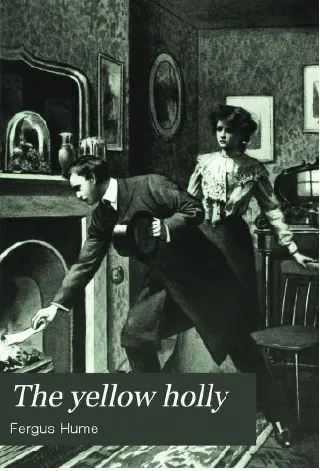
"The Yellow Holly" by Fergus Hume is a novel written in the early 20th century. The story sets the stage for a murder mystery that revolves around the mysterious death of Mrs. Jersey, the owner of a boarding house filled with colorful, eccentric characters. As the narrative unfolds, we are introduced to a young visitor named Leonard Train who becomes entangled in the intrigue, particularly in connection to George Brendon, who has a hidden past and a complicated relationship with the deceased. At the start of the novel, we find Mrs. Jersey hosting a casual gathering for her boarders in her drawing room. The atmosphere is filled with old-fashioned charm and an underlying tension, hinting at the complicated lives of those in attendance, including the intriguing newcomer, Leonard Train. As the night progresses, we learn that Mrs. Jersey harbors secrets that connect her to one of the attendees, George Brendon. The opening concludes with the sudden and shocking murder of Mrs. Jersey, setting off a series of events that will challenge the relationships and motives of all characters involved, leaving readers eager to discover who may be responsible for the tragedy that has befallen Amelia Square.
Introduction adapted from the source catalogue; source summaries may be automatically generated.
Free to read · English · 100,057 words · No account needed
MAKE TIME FOR A GOOD BOOK
On by default. Untick to stop anonymous reading totals. Each page counts after 10 seconds in view. How this works.
Anonymous counting is on unless you have switched it off.
It was quite a banquet, for Derrington lived in a most expensive manner, and in spite of a sadly diminished income he would never abate the splendor of the style in which he had lived all his life. The table was a round one, laid with exquisite taste, and was placed under a kind of velvet tent, which shut off the rest of the room and made the meal particularly cosy. George, who had a taste for art, admired the finish of the silver, the beauty of the Crown Derby service, the glitter of the cut glass, which was unusually massive, and the adornments of the table. It was a perfect little banquet, and after the somewhat stale food of his lodgings, George enjoyed the meal greatly. Derrington himself did not eat much, but he took great pleasure in seeing George enjoy his viands.
"I had a fine appetite myself once," he observed; "you have inherited it from me. Never be ashamed to eat, George--it means good work. The man who starves himself, starves his public."
"You mean in the quality of his work, sir?"
"Of course. Poor living means poor thoughts."
"Well," said Brendon, with a smile, "I don't think rich living means
rich thoughts."
"Certainly not. Whoever said it did? Remember the saying of the
Greeks, and, egad, they were the only people who ever knew how to
live."
"What saying is that?" asked George.
"Moderation is the corner-stone of dissipation."
"Ah, that's good, sir. But were the Greeks ever dissipated?"
"No, because they followed the advice of that epigram. George, if you expect me to explain epigrams I shall lose my respect for you."
"Have you any, sir?"
"You wouldn't be here if I had not," said Derrington, pulling his huge mustache. "There's your Cousin Walter----"
"My cousin, sir?"
"Of course. You know that." George thought it wiser, to say nothing, although it was strange that Derrington should mention the relationship himself. The old man gave him a quick glance and continued: "As I say, there is your Cousin Walter. I wouldn't ask him to dinner on any account. He's a fool, sir."
"He means well."
"If there is one class of people I hate more than another it is that Pharisaic lot who mean well. They make all the mischief."
"With the best intentions," put in Brendon, taking some wine.
"Best intentions are fatal. How many plans have come to naught because of best intentions? Take some of that port."
"No more, thank you, sir."
"I insist. There are walnuts."
"I don't mind the nuts, but the port----" George shook his head.
Your reading position is saved on this browser. Take it to another device with a library code. Reading pages adapt to text, rather than matching a printed edition.
Fergus Hume

Fergus Hume

Fergus Hume
Fergus Hume
BEHIND THE BOOK
This eBook is for the use of anyone anywhere in the United States and most other parts of the world at no cost and with almost no restrictions whatsoever. You may copy it, give it away or re-use it under the terms of the Project Gutenberg License included with this eBook or online at www.gutenberg.org. If you are not located in the United States, you will have to check the laws of the country where you are located before using this eBook. Read the source licence.
The original source file, including credits and licence, is retained by this library. Request an original-format copy at no charge. Please include the book title and Project Gutenberg identifier #54979.
KEEP YOUR CURIOSITY GOING
Coulson Kernahan

Maurice Baring
Frances Wright
Cécile Tormay

Frederic Jesup Stimson

W. H. P. (William Henry Pope) Jarvis