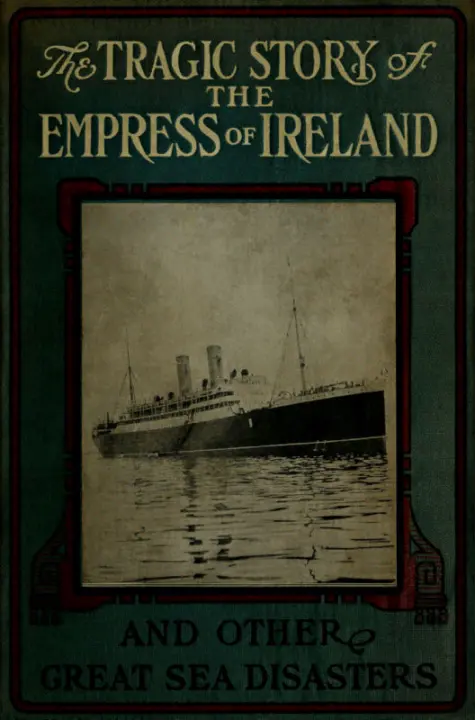
The Tragic Story of the Empress of Ireland, and Other Great Sea Disasters
Logan Marshall
THE CLASSIC COLLECTION · 1915
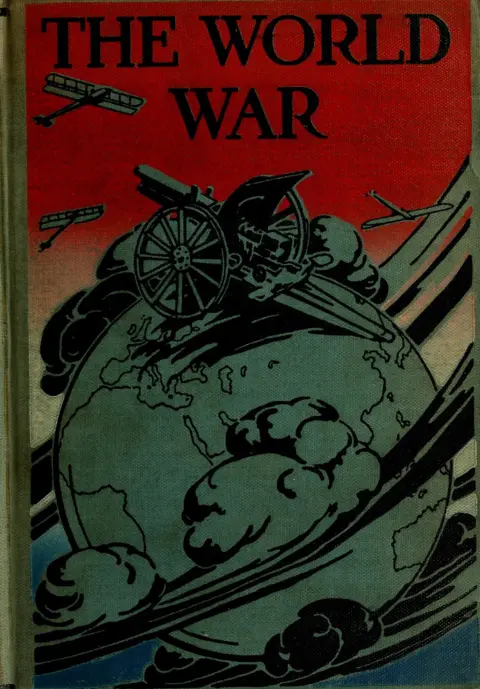
"The World War" by Logan Marshall is a historical account written in the early 20th century. The text explores the events leading up to World War I, detailing the complex political landscape and the various nations and empires involved in the conflict. It focuses on the dramatic suddenness with which Europe was plunged into war following the assassination of Archduke Franz Ferdinand and the subsequent reactions of the involved nations. The opening of the book sets the stage for the historical narrative that follows, describing the peace that pervaded Europe just before the outbreak of war. It highlights the shock and turmoil experienced across the continent as nations quickly mobilized for conflict. Marshall discusses the deep-rooted causes of the war, emphasizing that the assassination of the archduke served as a catalyst for long-standing tensions between nations. He delves into the political environment, the impacts of militarism, and the catastrophic consequences that ensued, painting a vivid picture of a world on the brink of devastation.
Introduction adapted from the source catalogue; source summaries may be automatically generated.
Free to read · English · 100,105 words · No account needed
MAKE TIME FOR A GOOD BOOK
On by default. Untick to stop anonymous reading totals. Each page counts after 10 seconds in view. How this works.
Anonymous counting is on unless you have switched it off.
The Balkan wars proved and strengthened the power of Germany in diplomacy and in the Eastern Question, while it showed that a deadly struggle between nations might spring to an issue in a few days and a million armed men leap into war at a word. The enormous German special taxation of $250,000,000 authorized in the first part of 1913 for an additional military establishment of 4,000 officers, 15,000 non-commissioned officers and 117,000 men indicated the basic strength of the people’s military feeling, and ensured the still greater predominance of its army.
When war broke out on August 1, 1914, between the five greater Powers of Europe—Great Britain, Russia and France, on the one side and Germany and Austria on the other—the issue was at once brought home to about 450 millions of people in America, Asia and Africa who were connected with these nations by ties of allegiance or government, by racial association, or historic conquest. Of these peoples and lands by far the greater proportion were in the British Empire and included India, Burmah, South Africa, Australia, Canada and a multitude of smaller states and countries. Not the least remarkable of the events which ensued in the succeeding early weeks of the great War was the extraordinary way in which this vast and complex Empire found itself as a unit in fighting force, a unit in sentiment, a unit in co-operative action. Irish sedition, whether “loyal or disloyal,” Protestant or Catholic, largely vanished like the shadow of an evil dream; Indian talk of civil war and trouble disappeared; South African threats of rebellion took form in a feeble effort which melted away under the pressure of a Boer statesman and leader—General Botha; the idea that Colonial Dominions were seeking separation and would now find it proved as evanescent as a light mist before the sun. The following table indicates the nature of the resources of opposing nations and the character of their Colonial sources of support:
Wealth Population Total Army Navy Population of Colonies Great Britain $80,000,000,000 45,000,000 800,000 681 368,000,000 France 65,000,000,000 39,000,000 2,100,000 382 41,000,000 Russia 40,000,000,000 171,000,000 8,000,000 249 5,000,000 Germany 60,000,000,000 65,000,000 5,000,000 354 12,000,000 Austria 25,000,000,000 49,000,000 2,200,000 155
It was a curious characteristic of the press comments and magazine articles and book studies of the War during these months that while varied fighting was going on in the various Colonies of these Powers and in the case of Great Britain, notably, countries like Canada, Australia, New Zealand and India were pouring out men and gifts to aid the Empire, statistical calculations usually rated Great Britain as not an Empire but simply a nation with the wealth and population of its two little islands in the North Sea.
Your reading position is saved on this browser. Take it to another device with a library code. Reading pages adapt to text, rather than matching a printed edition.
BEHIND THE BOOK
This eBook is for the use of anyone anywhere in the United States and most other parts of the world at no cost and with almost no restrictions whatsoever. You may copy it, give it away or re-use it under the terms of the Project Gutenberg License included with this eBook or online at www.gutenberg.org. If you are not located in the United States, you will have to check the laws of the country where you are located before using this eBook. Read the source licence.
The original source file, including credits and licence, is retained by this library. Request an original-format copy at no charge. Please include the book title and Project Gutenberg identifier #3779.
KEEP YOUR CURIOSITY GOING
Cécile Tormay

Moritz Busch
John L. Ransom
Frances Wright
Cécile Tormay

Mabel Potter Daggett