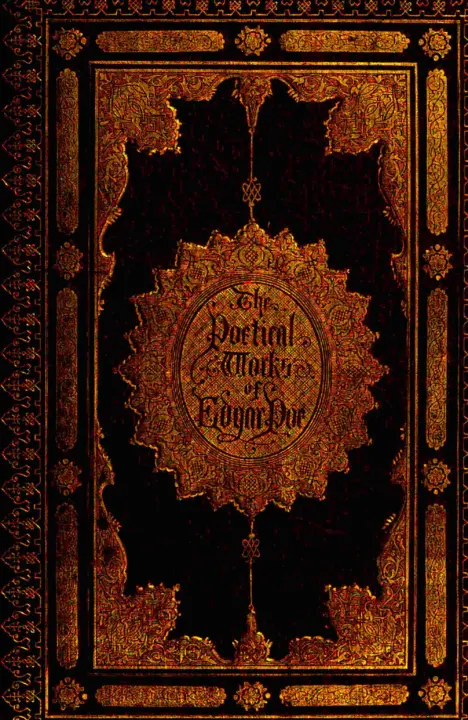
The poetical works of Edgar Allan Poe
Edgar Allan Poe
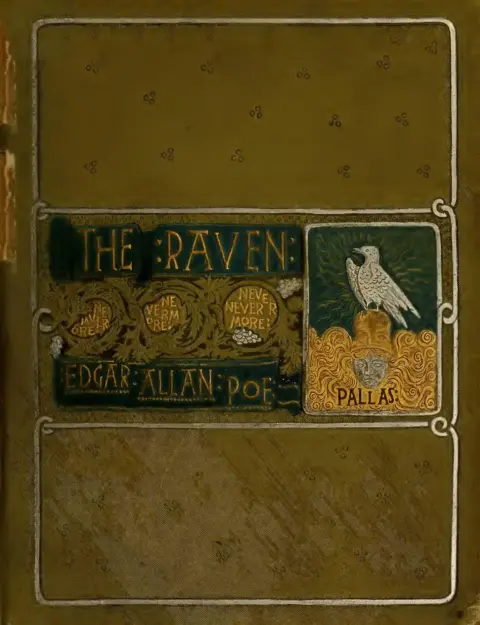
THE CLASSIC COLLECTION · 1845
"The Works of Edgar Allan Poe, The Raven Edition" by Edgar Allan Poe is a comprehensive collection of his literary output, likely compiled in the late 19th century. This collection spans various genres, including poetry, essays, and gothic tales, showcasing Poe's distinctive style and exploration of themes like love, death, and the macabre. The book presents significant works such as "The Raven," "The Tell-Tale Heart," "The Fall of the House of Usher," and many others, illustrating Poe's profound influence on American literature and his mastery of suspense and psychological depth. At the start of this collection, the reader is introduced to a preface that sets the stage for understanding Poe's life and literary journey, giving insights into the struggles he faced, both personally and professionally. The subsequent sections outline key works and achievements in his career, detailing his early poetry, notable prose tales, and his lasting impact on both poetry and fiction. The opening expresses deep admiration for Poe's unique genius, highlighting the interplay between his troubled life and his art, thus creating an engaging entry point for readers new to Poe's work or revisiting it with a fresh perspective.
Introduction adapted from the source catalogue; source summaries may be automatically generated.
Free to read · English · 450,336 words · No account needed
MAKE TIME FOR A GOOD BOOK
On by default. Untick to stop anonymous reading totals. Each page counts after 10 seconds in view. How this works.
Anonymous counting is on unless you have switched it off.
29. Such portions of “Politian” as are known to the public first saw the light of publicity in the “Southern Literary Messenger” for December, 1835, and January, 1836, being styled “Scenes from Politian: an unpublished drama.” These scenes were included, unaltered, in the 1845 collection of Poems, by Poe. The larger portion of the original draft subsequently became the property of the present editor, but it is not considered just to the poet’s memory to publish it. The work is a hasty and unrevised production of its author’s earlier days of literary labor; and, beyond the scenes already known, scarcely calculated to enhance his reputation. As a specimen, however, of the parts unpublished, the following fragment from the first scene of Act II. may be offered. The Duke, it should be premised, is uncle to Alessandra, and father of Castiglione her betrothed.
Duke. Why do you laugh?
Castiglione. Indeed
I hardly know myself. Stay! Was it not
On yesterday we were speaking of the Earl?
Of the Earl Politian? Yes! it was yesterday.
Alessandra, you and 1, you must remember!
We were walking in the garden.
Duke, Perfectly.
I do remember it-what of it-what then?
Cas. 0 nothing-nothing at all.
Duke. Nothing at all!
It is most singular that you should laugh
‘At nothing at all!
Cas. Most singular-singular!
Duke. Look you, Castiglione, be so kind
As tell me, sir, at once what ’tis you mean.
What are you talking of?
Cas. Was it not so?
We differed in opinion touching him.
Duke. Him!—Whom?
Cas. Why, sir, the Earl Politian.
Duke. The Earl of Leicester! Yes!—is it he you mean?
We differed, indeed. If I now recollect
The words you used were that the Earl you knew
Was neither learned nor mirthful.
Cas. Ha! ha!—now did I?
Duke. That did you, sir, and well I knew at the time
You were wrong, it being not the character
Of the Earl-whom all the world allows to be
A most hilarious man. Be not, my son,
Too positive again.
Cas. ’Tis singular!
Most singular! I could not think it possible
So little time could so much alter one!
To say the truth about an hour ago,
As I was walking with the Count San Ozzo,
All arm in arm, we met this very man
The Earl-he, with his friend Baldazzar,
Having just arrived in Rome. Hal ha! he is altered!
Such an account he gave me of his journey!
’Twould have made you die with laughter-such tales he told
Of his caprices and his merry freaks
Along the road-such oddity-such humor—
Such wit-such whim-such flashes of wild merriment
Set off too in such full relief by the grave
Demeanor of his friend-who, to speak the truth,
Was gravity itself—
Duke. Did I not tell you?
Cas. You did-and yet ’tis strange! but true as strange,
How much I was mistaken! I always thought
The Earl a gloomy man.
Duke. So, so, you see! Be not too positive. Whom have we here?
It can not be the Earl?
Cas. The Earl! Oh, no! ’Tis not the Earl-but yet it is-and leaning
Upon his friend Baldazzar. AM welcome, sir!
(Enter Politian and Baldazzar.)
My lord, a second welcome let me give you
To Rome-his Grace the Duke of Broglio.
Father! this is the Earl Politian, Earl
Of Leicester in Great Britain. [Politian bows haughtily.]
That, his friend
Baldazzar, Duke of Surrey. The Earl has letters,
So please you, for Your Grace.
Duke. Hal ha! Most welcome
To Rome and to our palace, Earl Politian!
And you, most noble Duke! I am glad to see you!
I knew your father well, my Lord Politian.
Castiglione! call your cousin hither,
And let me make the noble Earl acquainted
With your betrothed. You come, sir, at a time
Most seasonable. The wedding—
Politian. Touching those letters, sir,
Your son made mention of—your son, is he not?
Touching those letters, sir, I wot not of them.
If such there be, my friend Baldazzar here—
Baldazzar! ah!—my friend Baldazzar here
Will hand them to Your Grace. I would retire.
Duke. Retire!—So soon?
Came What ho! Benito! Rupert!
His lordship’s chambers-show his lordship to them!
His lordship is unwell. (Enter Benito.)
Ben. This way, my lord! (Exit, followed by Politian.)
Duke. Retire! Unwell!
Bal. So please you, sir. I fear me
’Tis as you say—his lordship is unwell.
The damp air of the evening-the fatigue
Of a long journey—the—indeed I had better
Follow his lordship. He must be unwell.
I will return anon.
Duke. Return anon!
Now this is very strange! Castiglione!
This way, my son, I wish to speak with thee.
You surely were mistaken in what you said
Of the Earl, mirthful, indeed!—which of us said
Politian was a melancholy man? (Exeunt.)
Your reading position is saved on this browser. Take it to another device with a library code. Reading pages adapt to text, rather than matching a printed edition.
Edgar Allan Poe

Rebecca Harding Davis & Thomas De Quincey & Charles Dickens & Nathaniel Hawthorne & Edward Bulwer Lytton, Baron Lytton & Edgar Allan Poe & Harriet Elizabeth Prescott Spofford
Edgar Allan Poe
Edgar Allan Poe
BEHIND THE BOOK
This eBook is for the use of anyone anywhere in the United States and most other parts of the world at no cost and with almost no restrictions whatsoever. You may copy it, give it away or re-use it under the terms of the Project Gutenberg License included with this eBook or online at www.gutenberg.org. If you are not located in the United States, you will have to check the laws of the country where you are located before using this eBook. Read the source licence.
The original source file, including credits and licence, is retained by this library. Request an original-format copy at no charge. Please include the book title and Project Gutenberg identifier #25525.
KEEP YOUR CURIOSITY GOING

David Patterson (Spirit) Hatch

David Patterson (Spirit) Hatch

David Patterson (Spirit) Hatch
Coulson Kernahan

Ralph Waldo Emerson

Maurice Baring