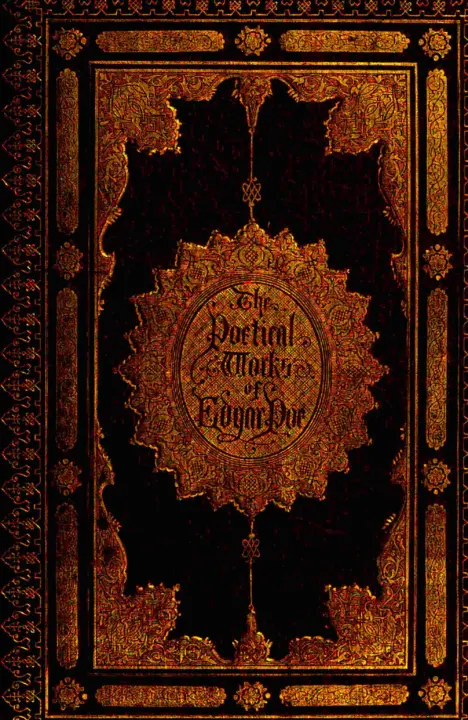
The poetical works of Edgar Allan Poe
Edgar Allan Poe
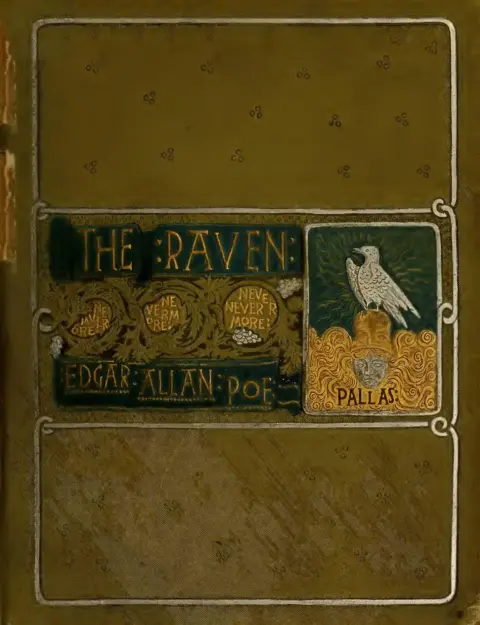
THE CLASSIC COLLECTION · 1845
"The Works of Edgar Allan Poe, The Raven Edition" by Edgar Allan Poe is a comprehensive collection of his literary output, likely compiled in the late 19th century. This collection spans various genres, including poetry, essays, and gothic tales, showcasing Poe's distinctive style and exploration of themes like love, death, and the macabre. The book presents significant works such as "The Raven," "The Tell-Tale Heart," "The Fall of the House of Usher," and many others, illustrating Poe's profound influence on American literature and his mastery of suspense and psychological depth. At the start of this collection, the reader is introduced to a preface that sets the stage for understanding Poe's life and literary journey, giving insights into the struggles he faced, both personally and professionally. The subsequent sections outline key works and achievements in his career, detailing his early poetry, notable prose tales, and his lasting impact on both poetry and fiction. The opening expresses deep admiration for Poe's unique genius, highlighting the interplay between his troubled life and his art, thus creating an engaging entry point for readers new to Poe's work or revisiting it with a fresh perspective.
Introduction adapted from the source catalogue; source summaries may be automatically generated.
Free to read · English · 450,336 words · No account needed
MAKE TIME FOR A GOOD BOOK
On by default. Untick to stop anonymous reading totals. Each page counts after 10 seconds in view. How this works.
Anonymous counting is on unless you have switched it off.
At morn—at noon—at twilight dim—
Maria! thou hast heard my hymn!
In joy and wo—in good and ill—
Mother of God, be with me still!
When the Hours flew brightly by
And not a cloud obscured the sky,
My soul, lest it should truant be,
Thy grace did guide to thine and thee;
Now, when storms of Fate o’ercast
Darkly my Present and my Past,
Let my Future radiant shine
With sweet hopes of thee and thine!
Fair isle, that from the fairest of all flowers, Thy gentlest of all gentle names dost take How many memories of what radiant hours At sight of thee and thine at once awake! How many scenes of what departed bliss! How many thoughts of what entombed hopes! How many visions of a maiden that is No more—no more upon thy verdant slopes! No more! alas, that magical sad sound Transfomring all! Thy charms shall please no more— Thy memory no more! Accursed ground Henceforth I hold thy flower-enamelled shore, O hyacinthine isle! O purple Zante! “Isoa d’oro! Fior di Levante!”
I.
Rome.—A Hall in a Palace Alessandra and Castiglione.
Alessandra. Thou art sad, Castiglione.
Castiglione. Sad!—not I.
Oh, I’m the happiest, happiest man in Rome!
A few days more, thou knowest, my Alessandra,
Will make thee mine. Oh, I am very happy!
Aless. Methinks thou hast a singular way of showing
Thy happiness!—what ails thee, cousin of mine?
Why didst thou sigh so deeply?
Cas. Did I sign?
I was not conscious of it. It is a fashion,
A silly—a most silly fashion I have
When I am very happy. Did I sigh? (sighing.)
Aless. Thou didst. Thou art not well. Thou hast indulged
Too much of late, and I am vexed to see it.
Late hours and wine, Castiglione,—these
Will ruin thee! thou art already altered—
Thy looks are haggard—nothing so wears away
The constitution as late hours and wine.
Cas. (musing.) Nothing, fair cousin, nothing—not even deep
sorrow—
Wears it away like evil hours and wine.
I will amend.
Aless. Do it! I would have thee drop
Thy riotous company, too—fellows low born—
Ill suit the like with old Di Broglio’s heir
And Alessandra’s husband.
Cas. I will drop them.
Aless. Thou wilt—thou must. Attend thou also more
To thy dress and equipage—they are over plain
For thy lofty rank and fashion—much depends
Upon appearances.
Cas. I’ll see to it.
Aless. Then see to it!—pay more attention, sir,
To a becoming carriage—much thou wantest
In dignity.
Cas. Much, much, oh! much I want
In proper dignity.
Aless.(haughtily) Thou mockest me, sir!
Cas. (abstractedly.) Sweet, gentle Lalage!
Aless. Heard I aright?
I speak to him—he speaks of Lalage!
Sir Count! (places her hand on his shoulder) what art thou dreaming?
he’s not well!
What ails thee, sir?
Cas. (startling.) Cousin! fair cousin!—madam!
I crave thy pardon—indeed I am not well—
Your hand from off my shoulder, if you please.
This air is most oppressive!—Madam—the Duke!
Enter Di Broglio.
Di Broglio. My son, I’ve news for thee!—hey?—what’s the
matter? (observing Alessandra)
I’ the pouts? Kiss her, Castiglione! kiss her,
You dog! and make it up, I say, this minute!
I’ve news for you both. Politian is expected
Hourly in Rome—Politian, Earl of Leicester!
We’ll have him at the wedding. ’Tis his first visit
To the imperial city.
Aless. What! Politian
Of Britain, Earl of Leicester?
Di Brog. The same, my love.
We’ll have him at the wedding. A man quite young
In years, but grey in fame. I have not seen him,
But Rumour speaks of him as of a prodigy
Pre-eminent in arts and arms, and wealth,
And high descent. We’ll have him at the wedding.
Aless. I have heard much of this Politian.
Gay, volatile and giddy—is he not?
And little given to thinking.
Di Brog. Far from it, love.
No branch, they say, of all philosophy
So deep abstruse he has not mastered it.
Learned as few are learned.
Aless. ’Tis very strange!
I have known men have seen Politian
And sought his company. They speak of him
As of one who entered madly into life,
Drinking the cup of pleasure to the dregs.
Cas. Ridiculous! Now I have seen Politian
And know him well—nor learned nor mirthful he.
He is a dreamer and a man shut out
From common passions.
Di Brog. Children, we disagree.
Let us go forth and taste the fragrant air
Of the garden. Did I dream, or did I hear
Politian was a melancholy man? (exeunt.)
II
ROME. A Lady’s apartment, with a window open and looking into a garden.
Lalage, in deep mourning, reading at a table on which lie some books and a
hand mirror. In the background Jacinta (a servant maid) leans carelessly
upon a chair.
Lal. [Lalage] Jacinta! is it thou?
Jac. [Jacinta] (pertly.) Yes, Ma’am, I’m here.
Lal. I did not know, Jacinta, you were in waiting.
Sit down!—Let not my presence trouble you—
Sit down!—for I am humble, most humble.
Jac. (aside.) ’Tis time.
(Jacinta seats herself in a side-long manner upon the chair, resting her
elbows upon the back, and regarding her mistress with a contemptuous look.
Lalage continues to read. )
Lal. “It in another climate, so he said,
“Bore a bright golden flower, but not i’ this soil!”
(pauses—turns over some leaves, and resumes)
“No lingering winters there, nor snow, nor shower—
“But Ocean ever to refresh mankind
“Breathes the shrill spirit of the western wind.”
O, beautiful!—most beautiful—how like
To what my fevered soul doth dream of Heaven!
O happy land (pauses) She died!—the maiden died!
A still more happy maiden who couldst die!
Jacinta!
(Jacinta returns no answer, and Lalage presently resumes.)
Again!—a similar tale
Told of a beauteous dame beyond the sea!
Thus speaketh one Ferdinand in the words of the play—
“She died full young”—one Bossola answers him—
“I think not so—her infelicity
“Seemed to have years too many”—Ah luckless lady!
Jacinta! (still no answer)
Here ‘s a far sterner story,
But like—oh, very like in its despair—
Of that Egyptian queen, winning so easily
A thousand hearts—losing at length her own.
She died. Thus endeth the history—and her maids
Lean over and weep—two gentle maids
With gentle names—Eiros and Charmion!
Rainbow and Dove!——Jacinta!
Jac. (pettishly.) Madam, what is it?
Lal. Wilt thou, my good Jacinta, be so kind
As go down in the library and bring me
The Holy Evangelists.
Jac. Pshaw! (exit.)
Lal. If there be balm
For the wounded spirit in Gilead it is there!
Dew in the night time of my bitter trouble
Will there be found—“dew sweeter far than that
Which hangs like chains of pearl on Hermon hill.”
(re-enter Jacinta, and throws a volume on the table.)
There, ma’am, ‘s the book. Indeed she is very troublesome. (aside.)
Lal. (astonished.) What didst thou say, Jacinta? Have I done aught
To grieve thee or to vex thee?—I am sorry.
For thou hast served me long and ever been
Trust-worthy and respectful. (resumes her reading.)
Jac. I can’t believe
She has any more jewels—no—no—she gave me all. (aside.)
Lal. What didst thou say, Jacinta? Now I bethink me
Thou hast not spoken lately of thy wedding.
How fares good Ugo?—and when is it to be?
Can I do aught?—is there no farther aid
Thou needest, Jacinta?
Jac. Is there no farther aid!
That’s meant for me. (aside) I’m sure, madam, you need not
Be always throwing those jewels in my teeth.
Lal. Jewels! Jacinta,—now indeed, Jacinta,
I thought not of the jewels.
Jac. Oh! perhaps not!
But then I might have sworn it. After all,
There ‘s Ugo says the ring is only paste,
For he ‘s sure the Count Castiglione never
Would have given a real diamond to such as you;
And at the best I’m certain, Madam, you cannot
Have use for jewels now. But I might have sworn it. (exit.)
(Lalage bursts into tears and leans her head upon the table—after a
short pause raises it.)
Lal. Poor Lalage!—and is it come to this?
Thy servant maid!—but courage!—’tis but a viper
Whom thou hast cherished to sting thee to the soul!
(taking up the mirror)
Ha! here at least ‘s a friend—too much a friend
In earlier days—a friend will not deceive thee.
Fair mirror and true! now tell me (for thou canst)
A tale—a pretty tale—and heed thou not
Though it be rife with woe: It answers me.
It speaks of sunken eyes, and wasted cheeks,
And Beauty long deceased—remembers me
Of Joy departed—Hope, the Seraph Hope,
Inurned and entombed:—now, in a tone
Low, sad, and solemn, but most audible,
Whispers of early grave untimely yawning
For ruined maid. Fair mirror and true—thou liest not!
Thou hast no end to gain—no heart to break—
Castiglione lied who said he loved—
Thou true—he false!—false!—false!
(While she speaks, a monk enters her apartment, and approaches
unobserved.)
Monk. Refuge thou hast,
Sweet daughter, in Heaven. Think of eternal things!
Give up thy soul to penitence, and pray!
Lal. (arising hurriedly.) I cannot pray!—My soul is at war
with God!
The frightful sounds of merriment below
Disturb my senses—go! I cannot pray—
The sweet airs from the garden worry me!
Thy presence grieves me—go!—thy priestly raiment
Fills me with dread—thy ebony crucifix
With horror and awe!
Monk. Think of thy precious soul!
Lal. Think of my early days!—think of my father
And mother in Heaven think of our quiet home,
And the rivulet that ran before the door!
Think of my little sisters!—think of them!
And think of me!—think of my trusting love
And confidence—his vows—my ruin—think—think
Of my unspeakable misery!—begone!
Yet stay! yet stay!—what was it thou saidst of prayer
And penitence? Didst thou not speak of faith
And vows before the throne?
Monk. I did.
Lal. Lal. ’Tis well.
There is a vow were fitting should be made—
A sacred vow, imperative, and urgent,
A solemn vow!
Monk. Daughter, this zeal is well!
Lal. Father, this zeal is anything but well!
Hast thou a crucifix fit for this thing?
A crucifix whereon to register
This sacred vow? (he hands her his own)
Not that—Oh! no!—no!—no! (shuddering)
Not that! Not that!—I tell thee, holy man,
Thy raiments and thy ebony cross affright me!
Stand back! I have a crucifix myself,—
I have a crucifix Methinks ’twere fitting
The deed—the vow—the symbol of the deed—
And the deed’s register should tally, father!
(draws a cross-handled dagger, and raises it on high)
Behold the cross wherewith a vow like mine
Is written in Heaven!
Monk. Thy words are madness, daughter,
And speak a purpose unholy—thy lips are livid—
Thine eyes are wild—tempt not the wrath divine!
Pause ere too late!—oh, be not—be not rash!
Swear not the oath—oh, swear it not!
Lal. ’Tis sworn!
III.
An apartment in a Palace. Politian and Baldazzar.
Baldazzar.———Arouse thee now, Politian!
Thou must not—nay indeed, indeed, shalt not
Give away unto these humors. Be thyself!
Shake off the idle fancies that beset thee,
And live, for now thou diest!
Politian. Not so, Baldazzar! Surely I live.
Bal. Politian, it doth grieve me
To see thee thus.
Pol. Baldazzar, it doth grieve me
To give thee cause for grief, my honoured friend.
Command me, sir! what wouldst thou have me do?
At thy behest I will shake off that nature
Which from my, forefathers I did inherit,
Which with my mother’s milk I did imbibe,
And be no more Politian, but some other.
Command me, sir!
Bal. To the field, then—to the field—
To the senate or the field.
Pol. Alas! Alas!
There is an imp would follow me even there!
There is an imp hath followed me even there!
There is—what voice was that?
Bal. I heard it not.
I heard not any voice except thine own,
And the echo of thine own.
Pol. Then I but dreamed.
Bal. Give not thy soul to dreams: the camp—the court,
Befit thee—Fame awaits thee—Glory calls—
And her the trumpet-tongued thou wilt not hear
In hearkening to imaginary sounds
And phantom voices.
Pol. It is a phantom voice!
Didst thou not hear it then?
Bal. I heard it not.
Pol. Thou heardst it not!—Baldazaar, speak no more
To me, Politian, of thy camps and courts.
Oh! I am sick, sick, sick, even unto death,
Of the hollow and high-sounding vanities
Of the populous Earth! Bear with me yet awhile!
We have been boys together—schoolfellows—
And now are friends—yet shall not be so long—
For in the eternal city thou shalt do me
A kind and gentle office, and a Power—
A Power august, benignant and supreme—
Shall then absolve thee of all further duties
Unto thy friend.
Bal. Thou speakest a fearful riddle
I will not understand.
Pol. Yet now as Fate
Approaches, and the Hours are breathing low,
The sands of Time are changed to golden grains,
And dazzle me, Baldazzar. Alas! alas!
I cannot die, having within my heart
So keen a relish for the beautiful
As hath been kindled within it. Methinks the air
Is balmier now than it was wont to be—
Rich melodies are floating in the winds—
A rarer loveliness bedecks the earth—
And with a holier lustre the quiet moon
Sitteth in Heaven.—Hist! hist! thou canst not say
Thou hearest not now, Baldazzar?
Bal. Indeed I hear not.
Pol. Not hear it!—listen now!—listen!—the faintest sound
And yet the sweetest that ear ever heard!
A lady’s voice!—and sorrow in the tone!
Baldazzar, it oppresses me like a spell!
Again!—again!—how solemnly it falls
Into my heart of hearts! that eloquent voice
Surely I never heard—yet it were well
Had I but heard it with its thrilling tones
In earlier days!
Bal. I myself hear it now.
Be still!—the voice, if I mistake not greatly,
Proceeds from yonder lattice—which you may see
Very plainly through the window—it belongs,
Does it not? unto this palace of the Duke.
The singer is undoubtedly beneath
The roof of his Excellency—and perhaps
Is even that Alessandra of whom he spoke
As the betrothed of Castiglione,
His son and heir.
Pol. Be still!—it comes again!
Voice “And is thy heart so strong
(very faintly) As for to leave me thus
Who hath loved thee so long
In wealth and woe among?
And is thy heart so strong
As for to leave me thus?
Say nay—say nay!”
Bal. The song is English, and I oft have heard it
In merry England—never so plaintively—
Hist! hist! it comes again!
Voice “Is it so strong
(more loudly) As for to leave me thus
Who hath loved thee so long
In wealth and woe among?
And is thy heart so strong
As for to leave me thus?
Say nay—say nay!”
Bal. ’Tis hushed and all is still!
Pol. All is not still!
Bal. Let us go down.
Pol. Go down, Baldazzar, go!
Bal. The hour is growing late—the Duke awaits use—
Thy presence is expected in the hall
Below. What ails thee, Earl Politian?
Voice “Who hath loved thee so long
(distinctly) In wealth and woe among,
And is thy heart so strong?
Say nay—say nay!”
Bal. Let us descend!—’tis time. Politian, give
These fancies to the wind. Remember, pray,
Your bearing lately savored much of rudeness
Unto the Duke. Arouse thee! and remember
Pol. Remember? I do. Lead on! I do remember.
(going.)
Let us descend. Believe me I would give,
Freely would give the broad lands of my earldom
To look upon the face hidden by yon lattice—
“To gaze upon that veiled face, and hear
Once more that silent tongue.”
Bal. Let me beg you, sir,
Descend with me—the Duke may be offended.
Let us go down, I pray you.
(Voice loudly) Say nay!—say nay!
Pol. (aside) ’Tis strange!—’tis very strange—methought the
voice
Chimed in with my desires, and bade me stay!
(approaching the window.)
Sweet voice! I heed thee, and will surely stay.
Now be this Fancy, by Heaven, or be it Fate,
Still will I not descend. Baldazzar, make
Apology unto the Duke for me;
I go not down to-night.
Bal. Your lordship’s pleasure
Shall be attended to. Good-night, Politian.
Pol. Good-night, my friend, good-night.
IV.
The gardens of a Palace—Moonlight Lalage and Politian.
Lalge. And dost thou speak of love
To me, Politian?—dost thou speak of love
To Lalage?—ah, woe—ah, woe is me!
This mockery is most cruel—most cruel indeed!
Politian. Weep not! oh, sob not thus!—thy bitter tears
Will madden me. Oh, mourn not, Lalage—
Be comforted! I know—I know it all,
And still I speak of love. Look at me, brightest
And beautiful Lalage!—turn here thine eyes!
Thou askest me if I could speak of love,
Knowing what I know, and seeing what I have seen.
Thou askest me that—and thus I answer thee—
Thus on my bended knee I answer thee. (kneeling.)
Sweet Lalage, I love thee—love thee—love thee;
Thro’ good and ill—thro’ weal and wo I love thee.
Not mother, with her first-born on her knee,
Thrills with intenser love than I for thee.
Not on God’s altar, in any time or clime,
Burned there a holier fire than burneth now
Within my spirit for thee. And do I love? (arising.)
Even for thy woes I love thee—even for thy woes-
Thy beauty and thy woes.
Lal. Alas, proud Earl,
Thou dost forget thyself, remembering me!
How, in thy father’s halls, among the maidens
Pure and reproachless of thy princely line,
Could the dishonored Lalage abide?
Thy wife, and with a tainted memory-
MY seared and blighted name, how would it tally
With the ancestral honors of thy house,
And with thy glory?
Pol. Speak not to me of glory!
I hate—I loathe the name; I do abhor
The unsatisfactory and ideal thing.
Art thou not Lalage and I Politian?
Do I not love—art thou not beautiful-
What need we more? Ha! glory!—now speak not of it.
By all I hold most sacred and most solemn-
By all my wishes now—my fears hereafter-
By all I scorn on earth and hope in heaven-
There is no deed I would more glory in,
Than in thy cause to scoff at this same glory
And trample it under foot. What matters it-
What matters it, my fairest, and my best,
That we go down unhonored and forgotten
Into the dust—so we descend together.
Descend together—and then—and then, perchance-
Lal. Why dost thou pause, Politian?
Pol. And then, perchance
Arise together, Lalage, and roam
The starry and quiet dwellings of the blest,
And still-
Lal. Why dost thou pause, Politian?
Pol. And still together—together.
Lal. Now Earl of Leicester!
Thou lovest me, and in my heart of hearts
I feel thou lovest me truly.
Pol. Oh, Lalage!
(throwing himself upon his knee.)
And lovest thou me?
Lal. Hist! hush! within the gloom
Of yonder trees methought a figure passed-
A spectral figure, solemn, and slow, and noiseless-
Like the grim shadow Conscience, solemn and noiseless.
(walks across and returns.)
I was mistaken—’twas but a giant bough
Stirred by the autumn wind. Politian!
Pol. My Lalage—my love! why art thou moved?
Why dost thou turn so pale? Not Conscience’ self,
Far less a shadow which thou likenest to it,
Should shake the firm spirit thus. But the night wind
Is chilly—and these melancholy boughs
Throw over all things a gloom.
Lal. Politian!
Thou speakest to me of love. Knowest thou the land
With which all tongues are busy—a land new found—
Miraculously found by one of Genoa—
A thousand leagues within the golden west?
A fairy land of flowers, and fruit, and sunshine,
And crystal lakes, and over-arching forests,
And mountains, around whose towering summits the winds
Of Heaven untrammelled flow—which air to breathe
Is Happiness now, and will be Freedom hereafter
In days that are to come?
Pol. O, wilt thou—wilt thou
Fly to that Paradise—my Lalage, wilt thou
Fly thither with me? There Care shall be forgotten,
And Sorrow shall be no more, and Eros be all.
And life shall then be mine, for I will live
For thee, and in thine eyes—and thou shalt be
No more a mourner—but the radiant Joys
Shall wait upon thee, and the angel Hope
Attend thee ever; and I will kneel to thee
And worship thee, and call thee my beloved,
My own, my beautiful, my love, my wife,
My all;—oh, wilt thou—wilt thou, Lalage,
Fly thither with me?
Lal. A deed is to be done—
Castiglione lives!
Pol. And he shall die! (exit)
Lal. (after a pause.) And—he—shall—die!—alas!
Castiglione die? Who spoke the words?
Where am I?—what was it he said?—Politian!
Thou art not gone—thou are not gone, Politian!
I feel thou art not gone—yet dare not look,
Lest I behold thee not; thou couldst not go
With those words upon thy lips—O, speak to me!
And let me hear thy voice—one word—one word,
To say thou art not gone,—one little sentence,
To say how thou dost scorn—how thou dost hate
My womanly weakness. Ha! ha! thou art not gone-
O speak to me! I knew thou wouldst not go!
I knew thou wouldst not, couldst not, durst not go.
Villain, thou art not gone—thou mockest me!
And thus I clutch thee—thus!—He is gone, he is gone
Gone—gone. Where am I?—’tis well—’tis very well!
So that the blade be keen—the blow be sure,
’Tis well, ’tis very well—alas! alas!
V.
The suburbs. Politian alone.
Politian. This weakness grows upon me. I am faint,
And much I fear me ill—it will not do
To die ere I have lived!—Stay, stay thy hand,
O Azrael, yet awhile!—Prince of the Powers
Of Darkness and the Tomb, O pity me!
O pity me! let me not perish now,
In the budding of my Paradisal Hope!
Give me to live yet—yet a little while:
’Tis I who pray for life—I who so late
Demanded but to die!—what sayeth the Count?
Enter Baldazzar.
Baldazzar. That knowing no cause of quarrel or of feud
Between the Earl Politian and himself.
He doth decline your cartel.
Pol. What didst thou say?
What answer was it you brought me, good Baldazzar?
With what excessive fragrance the zephyr comes
Laden from yonder bowers!—a fairer day,
Or one more worthy Italy, methinks
No mortal eyes have seen!—what said the Count?
Bal. That he, Castiglione’ not being aware
Of any feud existing, or any cause
Of quarrel between your lordship and himself,
Cannot accept the challenge.
Pol. It is most true—
All this is very true. When saw you, sir,
When saw you now, Baldazzar, in the frigid
Ungenial Britain which we left so lately,
A heaven so calm as this—so utterly free
From the evil taint of clouds?—and he did say?
Bal. No more, my lord, than I have told you, sir:
The Count Castiglione will not fight,
Having no cause for quarrel.
Pol. Now this is true-
All very true. Thou art my friend, Baldazzar,
And I have not forgotten it—thou’lt do me
A piece of service; wilt thou go back and say
Unto this man, that I, the Earl of Leicester,
Hold him a villain?—thus much, I prythee, say
Unto the Count—it is exceeding just
He should have cause for quarrel.
Bal. My lord!—my friend!-
Pol. (aside.) ’Tis he!—he comes himself? (aloud) Thou reasonest
well.
I know what thou wouldst say—not send the message-
Well!—I will think of it—I will not send it.
Now prythee, leave me—hither doth come a person
With whom affairs of a most private nature
I would adjust.
Bal. I go—to-morrow we meet,
Do we not?—at the Vatican.
Pol. At the Vatican. (exit
Bal.)
Enter Castigilone.
Cas. The Earl of Leicester here!
Pol. I am the Earl of Leicester, and thou seest,
Dost thou not? that I am here.
Cas. My lord, some strange,
Some singular mistake—misunderstanding—
Hath without doubt arisen: thou hast been urged
Thereby, in heat of anger, to address
Some words most unaccountable, in writing,
To me, Castiglione; the bearer being
Baldazzar, Duke of Surrey. I am aware
Of nothing which might warrant thee in this thing,
Having given thee no offence. Ha!—am I right?
’Twas a mistake?—undoubtedly—we all
Do err at times.
Pol. Draw, villain, and prate no more!
Cas. Ha!—draw?—and villain? have at thee then at once,
Proud Earl! (draws.)
Pol. (drawing.) Thus to the expiatory tomb,
Untimely sepulchre, I do devote thee
In the name of Lalage!
Cas. (letting fall his sword and recoiling to the extremity of the
stage)
Of Lalage!
Hold off—thy sacred hand!—avaunt, I say!
Avaunt—I will not fight thee—indeed I dare not.
Pol. Thou wilt not fight with me didst say, Sir Count?
Shall I be baffled thus?—now this is well;
Didst say thou darest not? Ha!
Cas. I dare not—dare not—
Hold off thy hand—with that beloved name
So fresh upon thy lips I will not fight thee—
I cannot—dare not.
Pol. Now by my halidom
I do believe thee!—coward, I do believe thee!
Cas. Ha!—coward!—this may not be!
(clutches his sword and staggers towards POLITIAN, but his purpose
is changed before reaching him, and he falls upon his knee at the feet of
the Earl)
Alas! my lord,
It is—it is—most true. In such a cause
I am the veriest coward. O pity me!
Pol. (greatly softened.) Alas!—I do—indeed I pity thee.
Cas. And Lalage-
Pol. Scoundrel!—arise and die!
Cas. It needeth not be—thus—thus—O let me die
Thus on my bended knee. It were most fitting
That in this deep humiliation I perish.
For in the fight I will not raise a hand
Against thee, Earl of Leicester. Strike thou home—
(baring his bosom.)
Here is no let or hindrance to thy weapon-
Strike home. I will not fight thee.
Pol. Now, s’ Death and Hell!
Am I not—am I not sorely—grievously tempted
To take thee at thy word? But mark me, sir,
Think not to fly me thus. Do thou prepare
For public insult in the streets—before
The eyes of the citizens. I’ll follow thee
Like an avenging spirit I’ll follow thee
Even unto death. Before those whom thou lovest-
Before all Rome I’ll taunt thee, villain,—I’ll taunt thee,
Dost hear? with cowardice—thou wilt not fight me?
Thou liest! thou shalt! (exit.)
Cas. Now this indeed is just!
Most righteous, and most just, avenging Heaven!
{In the book there is a gap in numbering the notes between 12 and 29.
—ED}
Your reading position is saved on this browser. Take it to another device with a library code. Reading pages adapt to text, rather than matching a printed edition.
Edgar Allan Poe

Rebecca Harding Davis & Thomas De Quincey & Charles Dickens & Nathaniel Hawthorne & Edward Bulwer Lytton, Baron Lytton & Edgar Allan Poe & Harriet Elizabeth Prescott Spofford
Edgar Allan Poe
Edgar Allan Poe
BEHIND THE BOOK
This eBook is for the use of anyone anywhere in the United States and most other parts of the world at no cost and with almost no restrictions whatsoever. You may copy it, give it away or re-use it under the terms of the Project Gutenberg License included with this eBook or online at www.gutenberg.org. If you are not located in the United States, you will have to check the laws of the country where you are located before using this eBook. Read the source licence.
The original source file, including credits and licence, is retained by this library. Request an original-format copy at no charge. Please include the book title and Project Gutenberg identifier #25525.
KEEP YOUR CURIOSITY GOING

David Patterson (Spirit) Hatch

David Patterson (Spirit) Hatch

David Patterson (Spirit) Hatch
Coulson Kernahan

Ralph Waldo Emerson

Maurice Baring