
The poetical works of Edgar Allan Poe
Edgar Allan Poe
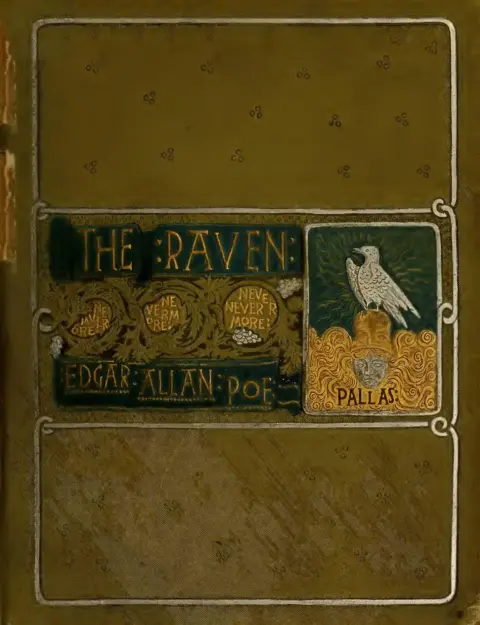
THE CLASSIC COLLECTION · 1845
"The Works of Edgar Allan Poe, The Raven Edition" by Edgar Allan Poe is a comprehensive collection of his literary output, likely compiled in the late 19th century. This collection spans various genres, including poetry, essays, and gothic tales, showcasing Poe's distinctive style and exploration of themes like love, death, and the macabre. The book presents significant works such as "The Raven," "The Tell-Tale Heart," "The Fall of the House of Usher," and many others, illustrating Poe's profound influence on American literature and his mastery of suspense and psychological depth. At the start of this collection, the reader is introduced to a preface that sets the stage for understanding Poe's life and literary journey, giving insights into the struggles he faced, both personally and professionally. The subsequent sections outline key works and achievements in his career, detailing his early poetry, notable prose tales, and his lasting impact on both poetry and fiction. The opening expresses deep admiration for Poe's unique genius, highlighting the interplay between his troubled life and his art, thus creating an engaging entry point for readers new to Poe's work or revisiting it with a fresh perspective.
Introduction adapted from the source catalogue; source summaries may be automatically generated.
Free to read · English · 450,336 words · No account needed
MAKE TIME FOR A GOOD BOOK
On by default. Untick to stop anonymous reading totals. Each page counts after 10 seconds in view. How this works.
Anonymous counting is on unless you have switched it off.
The three men went away in about an hour, and no one else entered the forecastle all day. Augustus lay quiet until nearly night. He then freed himself from the rope and irons, and prepared for his attempt. A bottle was found in one of the berths, and this he filled with water from the pitcher left by Peters, storing his pockets at the same time with cold potatoes. To his great joy he also came across a lantern, with a small piece of tallow candle in it. This he could light at any moment, as he had in his possession a box of phosphorus matches. When it was quite dark, he got through the hole in the bulkhead, having taken the precaution to arrange the bedclothes in the berth so as to convey the idea of a person covered up. When through, he hung up the pea-jacket on his knife, as before, to conceal the aperture—this manoeuvre being easily effected, as he did not readjust the piece of plank taken out until afterward. He was now on the main orlop deck, and proceeded to make his way, as before, between the upper deck and the oil-casks to the main hatchway. Having reached this, he lit the piece of candle, and descended, groping with extreme difficulty among the compact stowage of the hold. In a few moments he became alarmed at the insufferable stench and the closeness of the atmosphere. He could not think it possible that I had survived my confinement for so long a period breathing so oppressive an air. He called my name repeatedly, but I made him no reply, and his apprehensions seemed thus to be confirmed. The brig was rolling violently, and there was so much noise in consequence, that it was useless to listen for any weak sound, such as those of my breathing or snoring. He threw open the lantern, and held it as high as possible, whenever an opportunity occurred, in order that, by observing the light, I might, if alive, be aware that succor was approaching. Still nothing was heard from me, and the supposition of my death began to assume the character of certainty. He determined, nevertheless, to force a passage, if possible, to the box, and at least ascertain beyond a doubt the truth of his surmises. He pushed on for some time in a most pitiable state of anxiety, until, at length, he found the pathway utterly blocked up, and that there was no possibility of making any farther way by the course in which he had set out. Overcome now by his feelings, he threw himself among the lumber in despair, and wept like a child. It was at this period that he heard the crash occasioned by the bottle which I had thrown down. Fortunate, indeed, was it that the incident occurred—for, upon this incident, trivial as it appears, the thread of my destiny depended. Many years elapsed, however, before I was aware of this fact. A natural shame and regret for his weakness and indecision prevented Augustus from confiding to me at once what a more intimate and unreserved communion afterward induced him to reveal. Upon finding his further progress in the hold impeded by obstacles which he could not overcome, he had resolved to abandon his attempt at reaching me, and return at once to the forecastle. Before condemning him entirely on this head, the harassing circumstances which embarrassed him should be taken into consideration. The night was fast wearing away, and his absence from the forecastle might be discovered; and indeed would necessarily be so, if he should fail to get back to the berth by daybreak. His candle was expiring in the socket, and there would be the greatest difficulty in retracing his way to the hatchway in the dark. It must be allowed, too, that he had every good reason to believe me dead; in which event no benefit could result to me from his reaching the box, and a world of danger would be encountered to no purpose by himself. He had repeatedly called, and I had made him no answer. I had been now eleven days and nights with no more water than that contained in the jug which he had left with me—a supply which it was not at all probable I had hoarded in the beginning of my confinement, as I had every cause to expect a speedy release. The atmosphere of the hold, too, must have appeared to him, coming from the comparatively open air of the steerage, of a nature absolutely poisonous, and by far more intolerable than it had seemed to me upon my first taking up my quarters in the box—the hatchways at that time having been constantly open for many months previous. Add to these considerations that of the scene of bloodshed and terror so lately witnessed by my friend; his confinement, privations, and narrow escapes from death, together with the frail and equivocal tenure by which he still existed—circumstances all so well calculated to prostrate every energy of mind—and the reader will be easily brought, as I have been, to regard his apparent falling off in friendship and in faith with sentiments rather of sorrow than of anger.
Your reading position is saved on this browser. Take it to another device with a library code. Reading pages adapt to text, rather than matching a printed edition.
Edgar Allan Poe

Rebecca Harding Davis & Thomas De Quincey & Charles Dickens & Nathaniel Hawthorne & Edward Bulwer Lytton, Baron Lytton & Edgar Allan Poe & Harriet Elizabeth Prescott Spofford
Edgar Allan Poe
Edgar Allan Poe
BEHIND THE BOOK
This eBook is for the use of anyone anywhere in the United States and most other parts of the world at no cost and with almost no restrictions whatsoever. You may copy it, give it away or re-use it under the terms of the Project Gutenberg License included with this eBook or online at www.gutenberg.org. If you are not located in the United States, you will have to check the laws of the country where you are located before using this eBook. Read the source licence.
The original source file, including credits and licence, is retained by this library. Request an original-format copy at no charge. Please include the book title and Project Gutenberg identifier #25525.
KEEP YOUR CURIOSITY GOING

David Patterson (Spirit) Hatch

David Patterson (Spirit) Hatch

David Patterson (Spirit) Hatch
Coulson Kernahan

Ralph Waldo Emerson

Maurice Baring