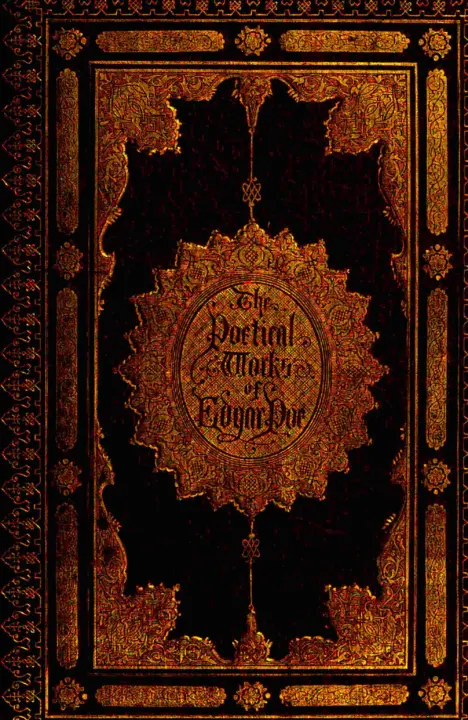
The poetical works of Edgar Allan Poe
Edgar Allan Poe
THE CLASSIC COLLECTION · 1845
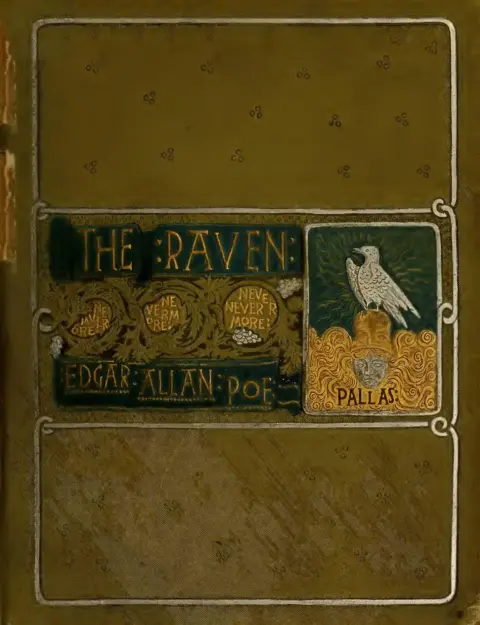
"The Works of Edgar Allan Poe, The Raven Edition" by Edgar Allan Poe is a comprehensive collection of his literary output, likely compiled in the late 19th century. This collection spans various genres, including poetry, essays, and gothic tales, showcasing Poe's distinctive style and exploration of themes like love, death, and the macabre. The book presents significant works such as "The Raven," "The Tell-Tale Heart," "The Fall of the House of Usher," and many others, illustrating Poe's profound influence on American literature and his mastery of suspense and psychological depth. At the start of this collection, the reader is introduced to a preface that sets the stage for understanding Poe's life and literary journey, giving insights into the struggles he faced, both personally and professionally. The subsequent sections outline key works and achievements in his career, detailing his early poetry, notable prose tales, and his lasting impact on both poetry and fiction. The opening expresses deep admiration for Poe's unique genius, highlighting the interplay between his troubled life and his art, thus creating an engaging entry point for readers new to Poe's work or revisiting it with a fresh perspective.
Introduction adapted from the source catalogue; source summaries may be automatically generated.
Free to read · English · 450,336 words · No account needed
MAKE TIME FOR A GOOD BOOK
On by default. Untick to stop anonymous reading totals. Each page counts after 10 seconds in view. How this works.
Anonymous counting is on unless you have switched it off.
Having concluded to write, the difficulty was now to procure the materials for so doing. An old toothpick was soon made into a pen; and this by means of feeling altogether, for the between-decks was as dark as pitch. Paper enough was obtained from the back of a letter—a duplicate of the forged letter from Mr. Ross. This had been the original draught; but the handwriting not being sufficiently well imitated, Augustus had written another, thrusting the first, by good fortune, into his coat-pocket, where it was now most opportunely discovered. Ink alone was thus wanting, and a substitute was immediately found for this by means of a slight incision with the pen-knife on the back of a finger just above the nail—a copious flow of blood ensuing, as usual, from wounds in that vicinity. The note was now written, as well as it could be in the dark and under the circumstances. It briefly explained that a mutiny had taken place; that Captain Barnard was set adrift; and that I might expect immediate relief as far as provisions were concerned, but must not venture upon making any disturbance. It concluded with these words: “I have scrawled this with blood—your life depends upon lying close.”
This slip of paper being tied upon the dog, he was now put down the hatchway, and Augustus made the best of his way back to the forecastle, where he found no reason to believe that any of the crew had been in his absence. To conceal the hole in the partition, he drove his knife in just above it, and hung up a pea-jacket which he found in the berth. His handcuffs were then replaced, and also the rope around his ankles.
These arrangements were scarcely completed when Dirk Peters came below, very drunk, but in excellent humour, and bringing with him my friend’s allowance of provision for the day. This consisted of a dozen large Irish potatoes roasted, and a pitcher of water. He sat for some time on a chest by the berth, and talked freely about the mate and the general concerns of the brig. His demeanour was exceedingly capricious, and even grotesque. At one time Augustus was much alarmed by odd conduct. At last, however, he went on deck, muttering a promise to bring his prisoner a good dinner on the morrow. During the day two of the crew (harpooners) came down, accompanied by the cook, all three in nearly the last stage of intoxication. Like Peters, they made no scruple of talking unreservedly about their plans. It appeared that they were much divided among themselves as to their ultimate course, agreeing in no point, except the attack on the ship from the Cape Verd Islands, with which they were in hourly expectation of meeting. As far as could be ascertained, the mutiny had not been brought about altogether for the sake of booty; a private pique of the chief mate’s against Captain Barnard having been the main instigation. There now seemed to be two principal factions among the crew—one headed by the mate, the other by the cook. The former party were for seizing the first suitable vessel which should present itself, and equipping it at some of the West India Islands for a piratical cruise. The latter division, however, which was the stronger, and included Dirk Peters among its partisans, were bent upon pursuing the course originally laid out for the brig into the South Pacific; there either to take whale, or act otherwise, as circumstances should suggest. The representations of Peters, who had frequently visited these regions, had great weight, apparently, with the mutineers, wavering, as they were, between half-engendered notions of profit and pleasure. He dwelt on the world of novelty and amusement to be found among the innumerable islands of the Pacific, on the perfect security and freedom from all restraint to be enjoyed, but, more particularly, on the deliciousness of the climate, on the abundant means of good living, and on the voluptuous beauty of the women. As yet, nothing had been absolutely determined upon; but the pictures of the hybrid line-manager were taking strong hold upon the ardent imaginations of the seamen, and there was every possibility that his intentions would be finally carried into effect.
Your reading position is saved on this browser. Take it to another device with a library code. Reading pages adapt to text, rather than matching a printed edition.
Edgar Allan Poe

Rebecca Harding Davis & Thomas De Quincey & Charles Dickens & Nathaniel Hawthorne & Edward Bulwer Lytton, Baron Lytton & Edgar Allan Poe & Harriet Elizabeth Prescott Spofford
Edgar Allan Poe
Edgar Allan Poe
BEHIND THE BOOK
This eBook is for the use of anyone anywhere in the United States and most other parts of the world at no cost and with almost no restrictions whatsoever. You may copy it, give it away or re-use it under the terms of the Project Gutenberg License included with this eBook or online at www.gutenberg.org. If you are not located in the United States, you will have to check the laws of the country where you are located before using this eBook. Read the source licence.
The original source file, including credits and licence, is retained by this library. Request an original-format copy at no charge. Please include the book title and Project Gutenberg identifier #25525.
KEEP YOUR CURIOSITY GOING

David Patterson (Spirit) Hatch

David Patterson (Spirit) Hatch

David Patterson (Spirit) Hatch
Coulson Kernahan

Ralph Waldo Emerson

Maurice Baring