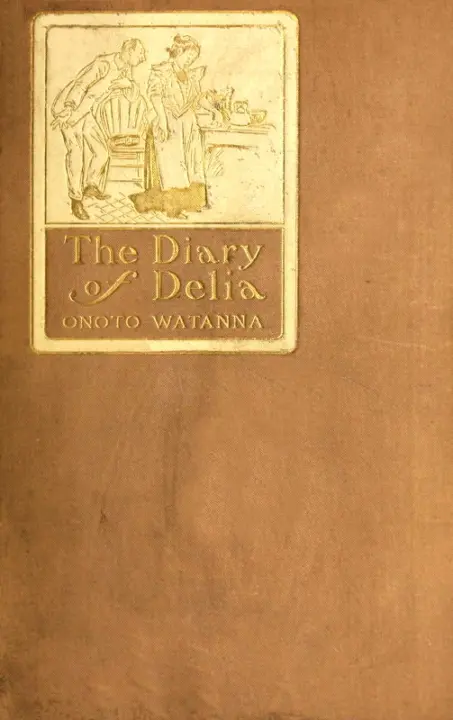
The diary of Delia : Being a veracious chronicle of the kitchen, with some side-lights on the parlour
Onoto Watanna
THE CLASSIC COLLECTION · 1902
"The Wooing of Wistaria" by Onoto Watanna is a novel written in the early 20th century. The story centers on Lady Wistaria, a young Japanese woman navigating the complexities of love, family duty, and societal expectations against the backdrop of a feudal Japan fraught with political intrigue and personal vendettas. Through her interactions, particularly with her lover, Keiki—whose identity as a member of the rival Mori clan complicates their romance—the narrative explores themes of loyalty, identity, and the impact of familial obligations. At the start of the novel, we are introduced to Lady Wistaria as she reflects on her tumultuous childhood, marked by tragedy and loss, particularly the memory of witnessing her father's anger towards a nobleman he deemed responsible for her mother's death. This early trauma shapes not only her personality but also her subsequent experiences at the court. As she matures into a beautiful young woman, Lady Wistaria is prepared for court life under the watchful eye of her strict aunt. However, a chance encounter with Keiki ignites a forbidden romance that leads her into the throes of political drama and familial conflicts as her father demands her to betray her lover for personal vengeance against the Mori clan. The opening chapters set the stage for a story steeped in emotional turmoil and the looming threat of conflict between love and duty.
Introduction adapted from the source catalogue; source summaries may be automatically generated.
Free to read · English · 76,023 words · No account needed
MAKE TIME FOR A GOOD BOOK
On by default. Untick to stop anonymous reading totals. Each page counts after 10 seconds in view. How this works.
Anonymous counting is on unless you have switched it off.
“What, the Lady Wistaria? Impossible.”
“It is true,” said the Prince, thoughtfully.
“Why, she sings half the day like a bird—”
“Whose heart is broken,” quickly ended the Prince.
“She plays like a child—”
“Who is commanded to rejoice.”
“Her soul is as gay—”
“As a priestess whom the black temple shuts from life.”
“Pugh! She laughs—”
“With tears in her throat”; again the Prince finished the sentence. “Yes, it is so, I tell you. I am not deceived.”
“Your affection, my lord, causes you to imagine things that do not
exist.”
“No, my affection but increases the acuteness of my perceptions.”
“If you will permit an unworthy vassal to venture an opinion, I would say, my lord, that for one about to wed in a day, your excellency wears a most funereal countenance.”
The Prince arose abruptly, as though he would shake off some oppression
that beset him.
“Let me tell you, my good fellow,” he said, approaching Genji more closely, “when one we love appears to us to be cloaking behind a mask of painful gayety some secret sadness, the world is apt to wear a haggard aspect which one’s own self must reflect. If you repeat that my imagination but conjures up such fancies, then I will say that I must be insane.”
Silently, for the space of a few moments, the two men remained looking into each other’s faces. They started simultaneously at the soft patting of approaching footsteps.
“One request, Sir Genji,” whispered Keiki, as the footsteps drew nearer. “Will you for once relax your guard and permit me to be alone with—”
“But—”
“You can guard my person just as well outside, and should any one attempt to attack me you will certainly be made aware of the fact by whatever noise a pair of lungs can force.”
“Her aunt would consider it unseemly,” said the samurai, with some
hesitation.
“I do not make it a request,” said the Prince, patiently, “but merely
beg the favor.”
A light tap on the door, and the next moment Wistaria had entered the room. Her arms were full of flowers, flaming red and yellow blossoms that grew wild on the hills, while about her garments clung the odors of the fields and the mountain. She was damp and sweet with the morning dew shining on her hair, clinging even to her face and arms.
“What!” cried Gen. “You have been out already?”
She nodded, smiling wistfully over the flowers, which the Prince silently took from her arms and set upon the floor. His eyes never relaxed their gaze from her sweet face.
Your reading position is saved on this browser. Take it to another device with a library code. Reading pages adapt to text, rather than matching a printed edition.
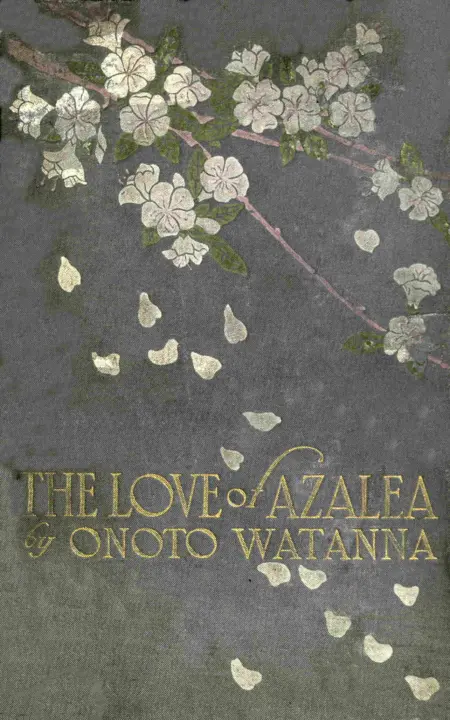
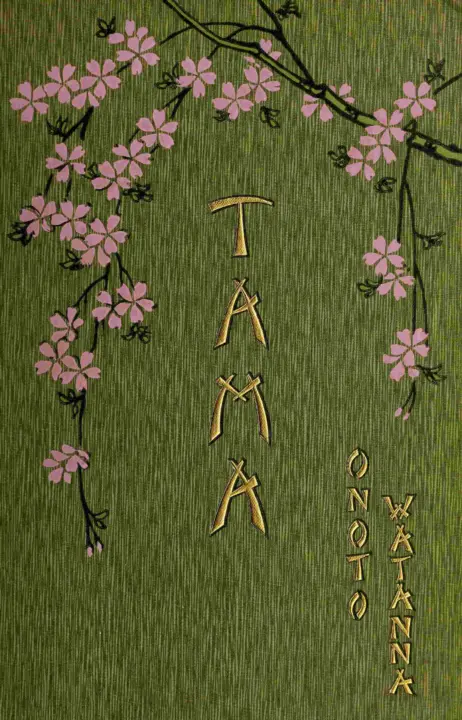
Onoto Watanna
Onoto Watanna
Onoto Watanna
Onoto Watanna
BEHIND THE BOOK
This eBook is for the use of anyone anywhere in the United States and most other parts of the world at no cost and with almost no restrictions whatsoever. You may copy it, give it away or re-use it under the terms of the Project Gutenberg License included with this eBook or online at www.gutenberg.org. If you are not located in the United States, you will have to check the laws of the country where you are located before using this eBook. Read the source licence.
The original source file, including credits and licence, is retained by this library. Request an original-format copy at no charge. Please include the book title and Project Gutenberg identifier #59413.
KEEP YOUR CURIOSITY GOING
Cécile Tormay

Moritz Busch
Coulson Kernahan
John L. Ransom

Maurice Baring
Frances Wright