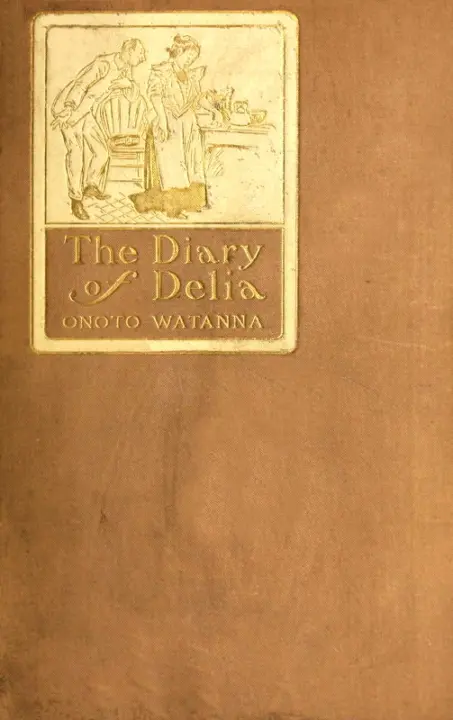
The diary of Delia : Being a veracious chronicle of the kitchen, with some side-lights on the parlour
Onoto Watanna
THE CLASSIC COLLECTION · 1902
"The Wooing of Wistaria" by Onoto Watanna is a novel written in the early 20th century. The story centers on Lady Wistaria, a young Japanese woman navigating the complexities of love, family duty, and societal expectations against the backdrop of a feudal Japan fraught with political intrigue and personal vendettas. Through her interactions, particularly with her lover, Keiki—whose identity as a member of the rival Mori clan complicates their romance—the narrative explores themes of loyalty, identity, and the impact of familial obligations. At the start of the novel, we are introduced to Lady Wistaria as she reflects on her tumultuous childhood, marked by tragedy and loss, particularly the memory of witnessing her father's anger towards a nobleman he deemed responsible for her mother's death. This early trauma shapes not only her personality but also her subsequent experiences at the court. As she matures into a beautiful young woman, Lady Wistaria is prepared for court life under the watchful eye of her strict aunt. However, a chance encounter with Keiki ignites a forbidden romance that leads her into the throes of political drama and familial conflicts as her father demands her to betray her lover for personal vengeance against the Mori clan. The opening chapters set the stage for a story steeped in emotional turmoil and the looming threat of conflict between love and duty.
Introduction adapted from the source catalogue; source summaries may be automatically generated.
Free to read · English · 76,023 words · No account needed
MAKE TIME FOR A GOOD BOOK
On by default. Untick to stop anonymous reading totals. Each page counts after 10 seconds in view. How this works.
Anonymous counting is on unless you have switched it off.
“But, my lord, his Imperial Majesty is, indeed, already upon the throne,
is he not?”
“Only nominally. I fear, my lady, that you have not read the Dai Nihon Shi of the Prince of Mori?”
“No, but I am much interested in it.”
“The history,” continued the young man, with vehement bitterness, “was purged repeatedly by the Yedo censor of the Shogun. It dared to speak the truth to the people. I do assure you it was not destroyed, however, before it had done its work well.”
“How? Pray do tell me all about it.”
“Have you never heard that pious—fanatical, if you will—cry, a barely half-muffled war-cry now, ‘Daigi Heibunor!’” [the King and the subject].
His voice rose with a growing passion. Into his eyes leaped the gleam of
the patriot.
An exclamation escaped the lips of the young girl.
“Oh, my lord, do not speak so loudly. I would feign warn you. I—I—”
She broke off in her agitation. But her apparent fear for him only filled her lover with a great joy. His voice softened.
“Fuji-wara, will you suffer yourself to listen hereafter to a confessed
traitor?”
“Dear lord, traitor to the wrong?”
“Oh, dearest girl, can it actually be that you sympathize with our noble
cause?”
“I—I—Tell me, do, pray tell me, with whom does the young Prince of Mori
sympathize?”
“Oh, the rascal is a descendant of the Mori of whom I spoke just now.”
“And an adherent to his views?”
“Possibly.”
“You do not know for a fact,” she urged, tremulously, “just to what party the Prince does adhere?”
“My lady,” replied the lover, with some constraint, “the Prince has his pride of caste. He is also not without the inherited germs of patriotism in his soul.”
“And still they do say that he is as silly as a butterfly, and so given to frivolity that his head can hold no serious thought.”
“I do assure you,” replied the other, flushing warmly, “that our prince is not all he may seem.”
“My lord, I have conceived the most overwhelming interest in this young
Prince Mori.”
“Indeed!” The young man started back in humorous dismay. The girl smiled now, a little, dreary smile.
“Be assured, my lord, that the interest is not of a sentimental nature. But it would seem that the young Prince was surely born for a great purpose.”
“Yes?” inquired the other, eagerly.
“And that is, to follow in the steps of his honorable ancestor.”
“Oh, dearest girl, you fill my soul with joy! I am ready to swear that your sweet heart beats for the right—the noble cause to which—”
Your reading position is saved on this browser. Take it to another device with a library code. Reading pages adapt to text, rather than matching a printed edition.
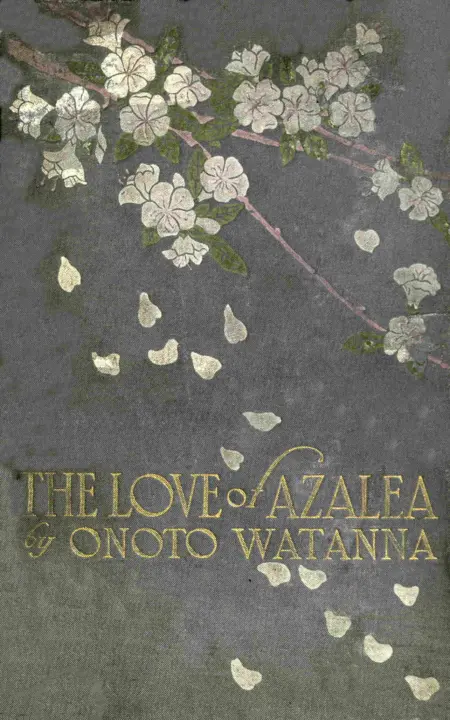
Onoto Watanna
Onoto Watanna
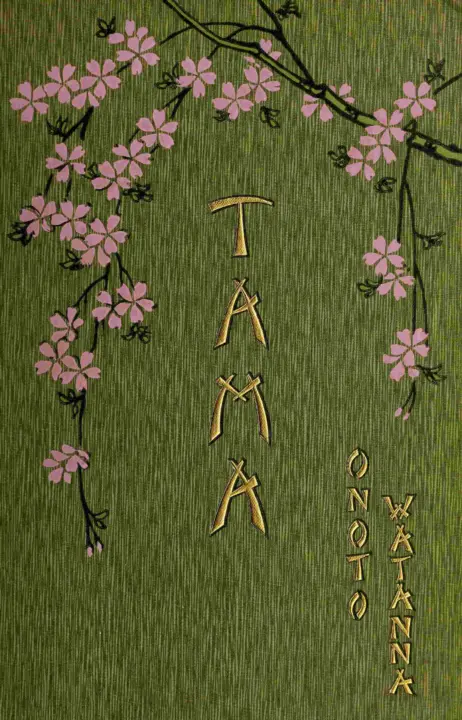
Onoto Watanna
Onoto Watanna
BEHIND THE BOOK
This eBook is for the use of anyone anywhere in the United States and most other parts of the world at no cost and with almost no restrictions whatsoever. You may copy it, give it away or re-use it under the terms of the Project Gutenberg License included with this eBook or online at www.gutenberg.org. If you are not located in the United States, you will have to check the laws of the country where you are located before using this eBook. Read the source licence.
The original source file, including credits and licence, is retained by this library. Request an original-format copy at no charge. Please include the book title and Project Gutenberg identifier #59413.
KEEP YOUR CURIOSITY GOING
Cécile Tormay

Moritz Busch
Coulson Kernahan
John L. Ransom

Maurice Baring
Frances Wright