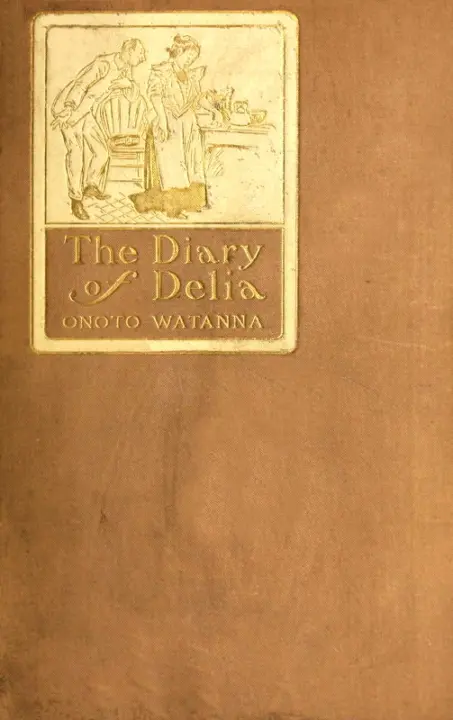
The diary of Delia : Being a veracious chronicle of the kitchen, with some side-lights on the parlour
Onoto Watanna
THE CLASSIC COLLECTION · 1902
"The Wooing of Wistaria" by Onoto Watanna is a novel written in the early 20th century. The story centers on Lady Wistaria, a young Japanese woman navigating the complexities of love, family duty, and societal expectations against the backdrop of a feudal Japan fraught with political intrigue and personal vendettas. Through her interactions, particularly with her lover, Keiki—whose identity as a member of the rival Mori clan complicates their romance—the narrative explores themes of loyalty, identity, and the impact of familial obligations. At the start of the novel, we are introduced to Lady Wistaria as she reflects on her tumultuous childhood, marked by tragedy and loss, particularly the memory of witnessing her father's anger towards a nobleman he deemed responsible for her mother's death. This early trauma shapes not only her personality but also her subsequent experiences at the court. As she matures into a beautiful young woman, Lady Wistaria is prepared for court life under the watchful eye of her strict aunt. However, a chance encounter with Keiki ignites a forbidden romance that leads her into the throes of political drama and familial conflicts as her father demands her to betray her lover for personal vengeance against the Mori clan. The opening chapters set the stage for a story steeped in emotional turmoil and the looming threat of conflict between love and duty.
Introduction adapted from the source catalogue; source summaries may be automatically generated.
Free to read · English · 76,023 words · No account needed
MAKE TIME FOR A GOOD BOOK
On by default. Untick to stop anonymous reading totals. Each page counts after 10 seconds in view. How this works.
Anonymous counting is on unless you have switched it off.
“Oh, Son of Heaven, yield thyself to me. I shall care reverently for thy
person,” he said.
The figure raised a pallid face, while trembling lips murmured:
“Wouldst thou lay profane hands upon the sacred person of thy Emperor?”
“It is he!” cried Toro, delighted. “Seize him, my men, and carry him off.” He modified his command to add: “Touch him with respect, I command you.”
To Oguri they bore the still trembling man. The lieutenant ordered him placed in a norimon, where his sacred person might be shielded from the scrutiny of his men.
“Is it indeed he?” Oguri questioned Toro.
“No doubt of it,” returned Toro. “He himself admitted it.”
Oguri and Toro now consulted together as to their next course. Mori was still insensible, despite their efforts to arouse him. In the reduced condition of their force, Oguri did not deem it wise to remain longer, lest returning bakufu hosts should spoil all. He could not spare the men to carry an additional norimon. He spoke thoughtfully:
“His highness, our beloved Prince of Mori, is of royal lineage and blood himself, as thou knowest, my Lord of Catzu. It will, therefore, be meet that we place him within the same norimon with the Son of Heaven.”
The body of their senseless leader was placed in the norimon, while Oguri, in order to attend to his wishes when he should regain consciousness, was forced also to crowd into the vehicle. Eight strong samurai lifted the carriage.
“Back to Choshui,” ordered Oguri, mindful of the last order of his chief. Moreover, the long march back to their base of supplies was the best, and indeed the only course left to them.
Three miles outside the city, Mori, moaning, struggled in the arms of
Oguri.
“All is lost! All is lost!” cried Mori, with heart-breaking bitterness.
“Nay, my prince, my dear lord,” said Oguri, in a voice as tender and soft as a woman’s, “all is not lost. We were but a portion of our one clan of Choshui. Our southern allies, our friends, are only waiting to rally to thy aid. Moreover, we have achieved a great triumph over our enemies.” He lowered his voice. “Your highness, we have honorably captured the person of the Son of Heaven. See!”
He lifted with one hand the head of Mori, while with the other he parted the curtains of the norimon, letting in the strong light of day, which shone upon the face of the figure reclining on the opposite seat in the norimon.
Painfully Mori looked. His head fell back.
“Fools! Fools!” he mumbled. “You have been tricked by the cunning Aidzu. That is not the Emperor.”
Your reading position is saved on this browser. Take it to another device with a library code. Reading pages adapt to text, rather than matching a printed edition.
Onoto Watanna
Onoto Watanna
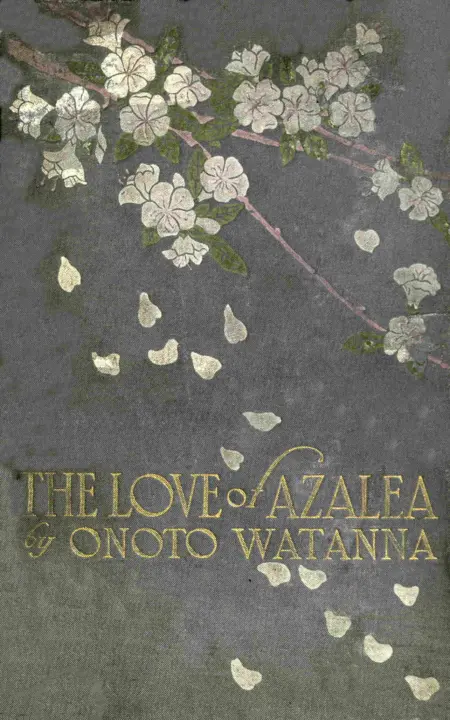
Onoto Watanna
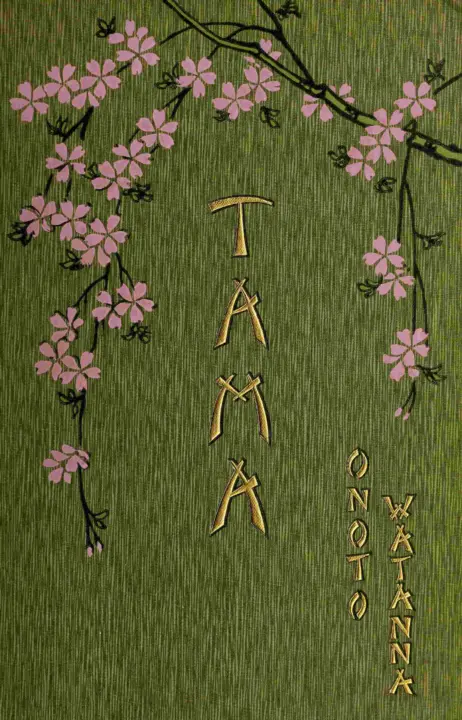
Onoto Watanna
BEHIND THE BOOK
This eBook is for the use of anyone anywhere in the United States and most other parts of the world at no cost and with almost no restrictions whatsoever. You may copy it, give it away or re-use it under the terms of the Project Gutenberg License included with this eBook or online at www.gutenberg.org. If you are not located in the United States, you will have to check the laws of the country where you are located before using this eBook. Read the source licence.
The original source file, including credits and licence, is retained by this library. Request an original-format copy at no charge. Please include the book title and Project Gutenberg identifier #59413.
KEEP YOUR CURIOSITY GOING
Cécile Tormay

Moritz Busch
Coulson Kernahan
John L. Ransom

Maurice Baring
Frances Wright