THE CLASSIC COLLECTION✦A dead man’s diaryCLASSIC FREE BOOKS
A dead man’s diary
Coulson Kernahan
THE CLASSIC COLLECTION · 1904
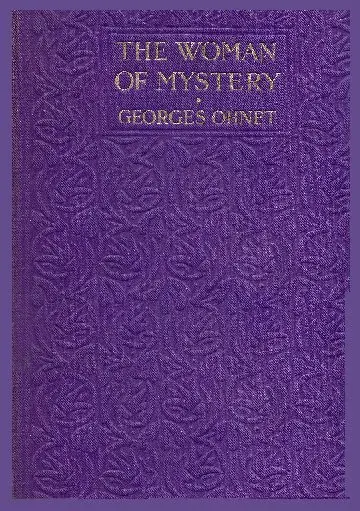
"The Woman of Mystery" by Georges Ohnet is a novel written in the early 20th century. The story revolves around themes of intrigue, political machinations, and the mysterious circumstances surrounding the death of a prominent general. The narrative is set against a backdrop of military and scientific endeavors, hinting at elements of suspense and potential betrayal. The opening of the novel introduces the Minister of War, who is in a state of agitation due to the mysterious explosion at the residence of General de Trémont, which resulted in his death. Colonel Vallenot reports to the Minister about the chaotic scene and strange findings, including a severed arm discovered amidst the ruins. As the investigation unfolds, various characters—including detectives and the General's loyal servant, Baudoin—converge around the sinister elements at play, implying that the tragedy may not have been a mere accident but rather a calculated crime involving espionage. Through this scene, the story sets a tone of intrigue that foreshadows the complex relationships and motivations that will be explored throughout the novel.
Introduction adapted from the source catalogue; source summaries may be automatically generated.
Free to read · English · 106,778 words · No account needed
MAKE TIME FOR A GOOD BOOK
On by default. Untick to stop anonymous reading totals. Each page counts after 10 seconds in view. How this works.
Anonymous counting is on unless you have switched it off.
Lichtenbach looked steadily at her, then he replied rudely—
“No.”
“Why not?”
“Because it is useless.”
“Are you afraid that I shall corrupt her by speaking a few words to her?”
“Perhaps.”
“Bravo! Well, you are frank now, at any rate.”
Lichtenbach raised himself to his full height, and, repaying Sophia in a single moment for all the insolent expressions she had been so prodigal with the last hour, said—
“Mademoiselle Lichtenbach can have nothing in common with the Baroness
Grodsko.”
Sophia gave a gesture of indifference.
“Very well. As you please. Au revoir, Lichtenbach.”
She was going in the direction of the hall when he stopped her.
“Not that way.”
Opening a door, concealed behind some folds of tapestry, he said—
“Go down this staircase, you will meet no one.”
“There is no trap-dungeon at the bottom?” she asked, laughingly.
“No; there is only the concierge’s room.”
“Adieu. No ill will?”
“I should think not; you ought to be well satisfied. You carry away with you indulgences to the extent of a hundred thousand francs. Au revoir.”
She disappeared. He returned to his desk in dreamy mood. This woman, so dangerous and depraved, always disturbed him, though he knew her well.
A knock at the door threw him from his reverie. Rising to open it, an expression of pleasure came into his face. It was his daughter, who had come to see him.
“Am I not disturbing you?” she asked, with a shade of uneasiness in her
voice.
“No, my darling, you never disturb me. Have you had a pleasant visit?”
“Very pleasant. They were all very kind to me.”
Lichtenbach said nothing; his eyes fell on the ground. He did not wish his daughter to catch their expression.
“Madeline is very fortunate to find such devoted friends in her trouble. Madame Baradier is an excellent lady. She is going to keep the poor girl with them. Although I am very sorry she is leaving the convent, since we shall be separated in future, I am very glad to know that she has found such good friends. It will be like a renewal of life for her.”
“You are so sympathetic, my little Marianne.”
“The blow which has struck Madeline is so terrible. Can anything more terrible happen to a child than to lose its parents? And when one has no longer one’s mother, as was the case with both of us.”
The young girl’s voice shook, tears stood in her eyes. Lichtenbach turned pale, but kept his eyes still fixed on the ground.
Your reading position is saved on this browser. Take it to another device with a library code. Reading pages adapt to text, rather than matching a printed edition.
BEHIND THE BOOK
This eBook is for the use of anyone anywhere in the United States and most other parts of the world at no cost and with almost no restrictions whatsoever. You may copy it, give it away or re-use it under the terms of the Project Gutenberg License included with this eBook or online at www.gutenberg.org. If you are not located in the United States, you will have to check the laws of the country where you are located before using this eBook. Read the source licence.
The original source file, including credits and licence, is retained by this library. Request an original-format copy at no charge. Please include the book title and Project Gutenberg identifier #69149.
KEEP YOUR CURIOSITY GOING
Coulson Kernahan

Maurice Baring
Frances Wright
Cécile Tormay

Frederic Jesup Stimson

W. H. P. (William Henry Pope) Jarvis