THE CLASSIC COLLECTION✦A dead man’s diaryCLASSIC FREE BOOKS
A dead man’s diary
Coulson Kernahan
THE CLASSIC COLLECTION · 1904
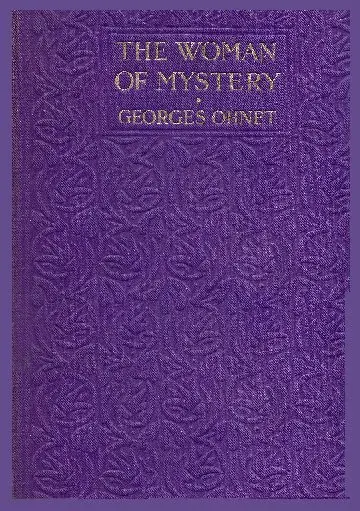
"The Woman of Mystery" by Georges Ohnet is a novel written in the early 20th century. The story revolves around themes of intrigue, political machinations, and the mysterious circumstances surrounding the death of a prominent general. The narrative is set against a backdrop of military and scientific endeavors, hinting at elements of suspense and potential betrayal. The opening of the novel introduces the Minister of War, who is in a state of agitation due to the mysterious explosion at the residence of General de Trémont, which resulted in his death. Colonel Vallenot reports to the Minister about the chaotic scene and strange findings, including a severed arm discovered amidst the ruins. As the investigation unfolds, various characters—including detectives and the General's loyal servant, Baudoin—converge around the sinister elements at play, implying that the tragedy may not have been a mere accident but rather a calculated crime involving espionage. Through this scene, the story sets a tone of intrigue that foreshadows the complex relationships and motivations that will be explored throughout the novel.
Introduction adapted from the source catalogue; source summaries may be automatically generated.
Free to read · English · 106,778 words · No account needed
MAKE TIME FOR A GOOD BOOK
On by default. Untick to stop anonymous reading totals. Each page counts after 10 seconds in view. How this works.
Anonymous counting is on unless you have switched it off.
“Ah! I was forgetting. Have you heard of that frightful catastrophe which took place at Vanves? The explosion even shook the buildings here at Issy. Were you not acquainted with this General de Trémont?”
Lichtenbach looked paler and more sombre than ever, as he replied
stammeringly—
“Yes, Monsieur l’Abbé, I knew him a long time ago.”
“It appears he was a dangerous maniac, dabbling with chemical experiments which were destined to kill him in time. A person of doubtful morality as well, according to public rumour, and who, even at his advanced age, gave himself up to the most degrading debauchery. He will not be missed. They say he was assassinated and robbed, before his house blew up. That is what comes of investigating in explosives! Well, au revoir, my dear Lichtenbach. When you come to see the patient give me due notice, and I will introduce you to him privately.”
Lichtenbach made no reply. He showed out his visitor with a semblance of respectful humility. Then he bowed, as to a superior, and said—
“Assure your friends, Monsieur l’Abbé, of my devotion to their
interests.”
“Good! Though it is scarcely necessary,” replied the young priest, carelessly; and, slowly descending the staircase, he disappeared.
Lichtenbach, in thoughtful mood, returned to his study. It was now almost dark. Where the Abbé had just been sitting, a female form now sat stretched out in the armchair. A fresh, clear voice said—
“It is as dark as in an oven here, Lichtenbach; let us have a little
light.”
“What! You are here, Baroness!” exclaimed the banker, eagerly.
“Yes, I have just arrived. Was that the little Abbé d’Escayrac you were just taking leave of?”
Lichtenbach had turned on the electric light, bringing into view the unceremonious visitor Elias had just called Baroness. She was a light-complexioned young woman, of exceeding beauty, with proud profile, blue eyes, intelligent forehead, though there was an expression of harshness in her small mouth, with its charming red lips, as well as in her strong chin. She was very elegantly clothed in black, and wore a hooded lace cloak. Patent leather shoes covered her charming feet.
“Have you been here long?” asked Elias abstractedly.
“No, I have only just come, I say. Your servant showed me into the salon, and I came in here when I heard your visitor leave. Do not be uneasy, I was not listening to what he said.”
“Oh! I have no need to be on my guard against you.”
Your reading position is saved on this browser. Take it to another device with a library code. Reading pages adapt to text, rather than matching a printed edition.
BEHIND THE BOOK
This eBook is for the use of anyone anywhere in the United States and most other parts of the world at no cost and with almost no restrictions whatsoever. You may copy it, give it away or re-use it under the terms of the Project Gutenberg License included with this eBook or online at www.gutenberg.org. If you are not located in the United States, you will have to check the laws of the country where you are located before using this eBook. Read the source licence.
The original source file, including credits and licence, is retained by this library. Request an original-format copy at no charge. Please include the book title and Project Gutenberg identifier #69149.
KEEP YOUR CURIOSITY GOING
Coulson Kernahan

Maurice Baring
Frances Wright
Cécile Tormay

Frederic Jesup Stimson

W. H. P. (William Henry Pope) Jarvis