THE CLASSIC COLLECTION✦A dead man’s diaryCLASSIC FREE BOOKS
A dead man’s diary
Coulson Kernahan
THE CLASSIC COLLECTION · 1904
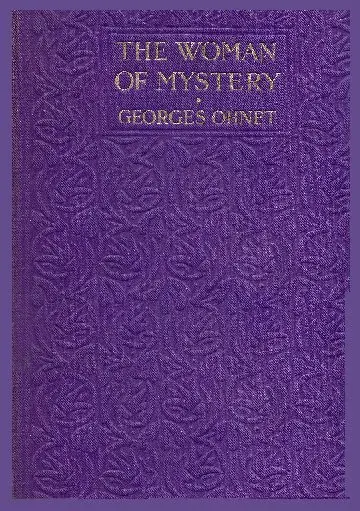
"The Woman of Mystery" by Georges Ohnet is a novel written in the early 20th century. The story revolves around themes of intrigue, political machinations, and the mysterious circumstances surrounding the death of a prominent general. The narrative is set against a backdrop of military and scientific endeavors, hinting at elements of suspense and potential betrayal. The opening of the novel introduces the Minister of War, who is in a state of agitation due to the mysterious explosion at the residence of General de Trémont, which resulted in his death. Colonel Vallenot reports to the Minister about the chaotic scene and strange findings, including a severed arm discovered amidst the ruins. As the investigation unfolds, various characters—including detectives and the General's loyal servant, Baudoin—converge around the sinister elements at play, implying that the tragedy may not have been a mere accident but rather a calculated crime involving espionage. Through this scene, the story sets a tone of intrigue that foreshadows the complex relationships and motivations that will be explored throughout the novel.
Introduction adapted from the source catalogue; source summaries may be automatically generated.
Free to read · English · 106,778 words · No account needed
MAKE TIME FOR A GOOD BOOK
On by default. Untick to stop anonymous reading totals. Each page counts after 10 seconds in view. How this works.
Anonymous counting is on unless you have switched it off.
Baradier’s face turned crimson, as he asked with a frown—
“Then it is—?”
His wife did not give him time to continue. They understood one another
at a glance.
“Yes, my dear, it is Mademoiselle Lichtenbach.”
A silence fell throughout the room. Marcel had gone straight to his mother, to embrace her. He now stood looking at his father, who, standing before the mantelpiece, was endeavouring to fathom the meaning of this unexpected visit.
“What is she like?” asked Marcel.
“I scarcely looked at her, I must confess, my child. When her name was announced I was very much astonished. Amélie and Geneviève were with me at the time. I left them in the salon as soon as Mademoiselle Lichtenbach entered. She appeared to me to be tall, and rather good looking. It was, however, her voice, a sweet, charming voice, which impressed me most favourably.”
“It is different from her father’s, then,” growled Baradier.
“And how long has she been here?”
“Half an hour, at least.”
“And my sister is with them?”
“She could not help staying with them, otherwise it would have been a show of hostility quite out of place. Parents’ enmities, I hope, form no necessary part of children’s inheritances.”
“Mother, what you are now saying is contrary to all poetical tradition. Look at Romeo and Juliet. What would become of literature were there no hereditary enmities? They form part and parcel of romantic stock-in-trade. The deuce! We must not diminish it, as it is becoming less and less quite fast enough!”
Baradier was not listening to his son; he remained still plunged in his own reflections. At last he murmured—
“What has she come for? Why has Lichtenbach permitted her to come?”
“Shall I go and ask her?” asked Marcel.
“Try to be serious, Marcel,” exclaimed the banker. “This is no matter for
jest.”
“Oh, I know that well enough. I wonder what it is that upsets you so much? Here is my mother as pale as death, and yourself in a fever-heat, and all because a young girl has come to sympathize with her school-mate! There is something extraordinary going on.”
Baradier glanced sideways at his son, and replied in a tone of
irritation—
“Don’t be such a fool, Marcel. You are incapable of understanding!”
Marcel bowed, in mock humility.
“Thanks! What do I owe you for that?”
But Baradier had no time to give way to his increasing irritation. The door of the salon opened, and Amélie appeared on the threshold.
“Mamma, Mademoiselle Lichtenbach would like to say good-bye to you before
leaving.”
Your reading position is saved on this browser. Take it to another device with a library code. Reading pages adapt to text, rather than matching a printed edition.
BEHIND THE BOOK
This eBook is for the use of anyone anywhere in the United States and most other parts of the world at no cost and with almost no restrictions whatsoever. You may copy it, give it away or re-use it under the terms of the Project Gutenberg License included with this eBook or online at www.gutenberg.org. If you are not located in the United States, you will have to check the laws of the country where you are located before using this eBook. Read the source licence.
The original source file, including credits and licence, is retained by this library. Request an original-format copy at no charge. Please include the book title and Project Gutenberg identifier #69149.
KEEP YOUR CURIOSITY GOING
Coulson Kernahan

Maurice Baring
Frances Wright
Cécile Tormay

Frederic Jesup Stimson

W. H. P. (William Henry Pope) Jarvis